
Tree roots are one of the most common reasons concrete sidewalks crack, lift, and shift over time in Pittsburgh neighborhoods. As trees mature, their root systems spread outward in search of water and oxygen, often growing directly beneath nearby walkways. The pressure these roots generate is surprisingly strong, and over the years they can push entire concrete slabs upward by several inches. Homeowners frequently notice this damage as raised edges, sudden cracks, or trip hazards that seem to appear overnight. Understanding how this process works helps you take action before the damage spreads to your driveway, patio, or foundation. At RMK Concrete Services, we repair root-damaged sidewalks across the Pittsburgh region every year, and the warning signs are almost always the same once you know what to look for.
Why Tree Roots Damage Concrete Sidewalks So Easily
Concrete is strong under compression, but it has very little flexibility when something pushes against it from below. Tree roots take advantage of this weakness by growing into small gaps, expanding gradually, and lifting the slab as they thicken. Most root damage starts in the soil beneath the sidewalk, where moisture collects and creates ideal growing conditions. Roots follow the path of least resistance, which often runs right along the base of a concrete walkway. Once a root finds a seam, joint, or hairline crack, it widens that opening every season. The result is a sidewalk that no longer sits flat, drains properly, or feels safe to walk on.
How Tree Root Pressure Damages Concrete Sidewalks Underground
Roots grow in diameter year after year, and that slow expansion produces enormous lifting force against any surface above them. A mature maple or oak can generate hundreds of pounds of pressure per square inch as its roots thicken, which is more than enough to break poured concrete. The damage usually begins where the soil is softest, typically near the edges of the slab or close to expansion joints. Once the slab starts to rise, water begins pooling in the new low spots, which softens the soil further and accelerates the cycle. Frost heave during Pittsburgh winters then magnifies the problem, since trapped water expands when it freezes and pushes the slab even higher. Homeowners often blame the freeze-thaw cycle alone, but in many cases the underlying issue is a root that started the damage years earlier. By the time you see surface cracks, the root system below has usually been working against the concrete for a long time.
Soil compaction also plays a major role in how quickly roots can damage a sidewalk. When soil is loose and rich in organic material, roots grow freely and tend to stay deeper underground. When soil is compacted or rocky, roots travel sideways toward easier paths, and the underside of a sidewalk provides exactly that kind of corridor. The concrete acts like a roof that traps moisture, which draws roots even closer to the surface. Over time, this creates a dense mat of roots pressed directly against the bottom of the slab. Every rainstorm adds water to that pocket, and every dry spell pulls roots in tighter as they search for moisture. The combination of pressure, moisture, and soil movement is what makes tree roots such a persistent threat to concrete.
Species matters more than many homeowners realize when it comes to sidewalk damage. Silver maples, willows, sweetgums, and poplars are known for aggressive surface roots that cause repeated problems for walkways. Oaks, sycamores, and elms can also create issues, especially when planted within ten feet of a sidewalk. Smaller ornamental trees like dogwoods or Japanese maples tend to cause far less damage because their root systems stay shallow and contained. If you are planning new landscaping, choosing the right species and planting distance can prevent thousands of dollars in future repairs. Need help assessing damage to your walkway? Click here for our sidewalk paving service.
Common Signs Tree Roots Are Damaging Your Concrete Sidewalk
The earliest sign of root damage is usually a slight unevenness between two adjoining slabs, often less than half an inch at first. You might notice it when pushing a stroller, riding a bike, or simply walking from one section to the next. As the root continues to grow, that small lip becomes a clear trip hazard that catches shoes and creates a safety concern for guests. Cracks then begin radiating outward from the raised area, usually in jagged patterns rather than straight lines. These cracks tend to widen quickly because water enters them, freezes, and forces the concrete apart even more during winter. Most Pittsburgh homeowners first notice this damage in early spring, once the snow melts and the full extent becomes visible.
Pooling water is another reliable indicator that roots have shifted the slab beneath your sidewalk. A properly poured walkway is graded so water runs off to the sides, but root pressure changes that slope and creates low spots where puddles form. Standing water then seeps into the cracks, weakens the soil base further, and speeds up the breakdown of the concrete. In winter, that same water freezes and turns into a sheet of ice, which makes the walkway dangerous for anyone using it. You may also notice moss or algae growing in the damp areas, which is a clear sign of poor drainage. These symptoms rarely fix themselves, and they almost always worsen with each passing season.
Visible roots at the surface are the most obvious warning sign, and by that point the damage is usually significant. You might see roots emerging through cracks, lifting the edges of the slab, or breaking through the soil right next to the walkway. Some homeowners try to cut these roots back themselves, but doing so can harm the tree and may not stop the underlying damage. In some cases, removing a large root can also destabilize the slab further, since the root was acting as a partial support. A professional concrete contractor can evaluate the situation, determine whether the slab can be saved, and recommend the best course of action. Catching the problem early almost always saves money compared with waiting until full replacement is needed.
How Pittsburgh Weather Worsens Tree Root Damage to Concrete Sidewalks
Pittsburgh experiences a strong freeze-thaw cycle every winter, and this climate is especially hard on concrete that has already been compromised by tree roots. When temperatures drop below freezing, water trapped in cracks expands by roughly nine percent, which creates internal pressure inside the slab. That pressure widens existing cracks, breaks off small chunks of concrete, and exposes more of the slab to moisture. Each thaw allows new water to seep in, and each freeze pushes the damage further. By the end of a typical winter, a sidewalk that was only slightly cracked in November can look severely damaged by March. This pattern repeats year after year, which is why root-damaged sidewalks deteriorate so quickly in our region.
Heavy spring rains add another layer of stress to already weakened concrete. Saturated soil becomes heavier and shifts more easily, which means root pressure can move the slab even further out of alignment. The added moisture also encourages faster root growth during the spring and summer months, when trees do most of their expansion. Combined with the lingering effects of winter damage, this seasonal cycle makes Pittsburgh sidewalks particularly vulnerable. Homeowners who delay repairs often find that a small problem in April becomes a major one by July. Acting early in the season usually results in a cleaner repair and a longer-lasting outcome.
Summer heat and dry spells can also contribute to sidewalk damage in unexpected ways. When the soil dries out, it shrinks and pulls away from the concrete, leaving voids beneath the slab. Roots then push into those voids in search of remaining moisture, which can shift the slab even when the weather seems calm. The next heavy rain saturates the area again, the soil expands, and the cycle continues. This back-and-forth movement gradually weakens the concrete and the soil base supporting it. Pittsburgh’s mix of humid summers and freezing winters makes our area one of the more challenging climates for maintaining flat, level sidewalks over the long term.
How to Prevent and Repair Tree Root Damage to Concrete Sidewalks
Preventing tree root damage starts with smart planning before a sidewalk is even poured, but there are also steps you can take with an existing walkway. Root barriers, proper soil preparation, and strategic tree placement all play important roles in protecting concrete. When damage has already occurred, the right repair method depends on how far the problem has progressed. Minor lifting can sometimes be corrected with slab leveling, while severe damage usually requires full replacement of the affected section. A professional inspection helps you understand which option makes the most sense for your property. The earlier you address the issue, the more repair options remain available.
Preventing Tree Root Damage to Your Concrete Sidewalk Before It Starts
Installing a root barrier is one of the most effective ways to keep tree roots away from your concrete sidewalk. These barriers are typically made of high-density plastic or metal and are buried vertically between the tree and the walkway. They redirect roots downward instead of allowing them to grow sideways into the slab area. Root barriers work best when installed during new construction or shortly after a tree is planted. Retrofitting a barrier near a mature tree is possible, but it requires careful excavation to avoid damaging large roots. A qualified contractor can recommend the right depth and material based on the tree species and soil conditions on your property.
Proper soil preparation under a new sidewalk also makes a significant difference in long-term durability. A well-compacted gravel base allows water to drain away from the slab and discourages roots from growing directly beneath it. Skipping this step or using poor-quality fill is one of the most common reasons sidewalks fail prematurely. Adequate slab thickness matters as well, with four inches being the minimum for residential walkways and six inches recommended in areas with heavy tree coverage. Expansion joints should be placed at regular intervals to allow for natural movement without cracking. These small details during installation can extend the life of a sidewalk by decades.
Choosing the right trees for areas near walkways is another simple but powerful prevention strategy. Avoid planting fast-growing species with aggressive surface roots within fifteen feet of any concrete surface. Instead, consider smaller ornamental trees or deep-rooted varieties that pose less risk to nearby slabs. Regular pruning of the tree canopy can also help limit root growth, since canopy size and root size are closely connected. Mulching properly around trees encourages deeper root development by retaining moisture below the surface rather than at the top. Want a stronger, longer-lasting walkway? Click here for our concrete sealing service to add extra protection.
Repairing Concrete Sidewalks Already Damaged by Tree Roots
Slab jacking, sometimes called mudjacking, is a popular repair method for sidewalks that have been lifted by tree roots but are otherwise in good condition. The process involves drilling small holes in the raised slab and pumping a slurry mixture underneath to level it back into place. This method works well when the concrete itself is still structurally sound and the lifting is relatively minor. Slab jacking is usually faster and less expensive than full replacement, and it can be completed in a single visit. The repaired section is typically ready for foot traffic within a day or two. For many Pittsburgh homeowners, this is the most cost-effective way to restore a damaged walkway.
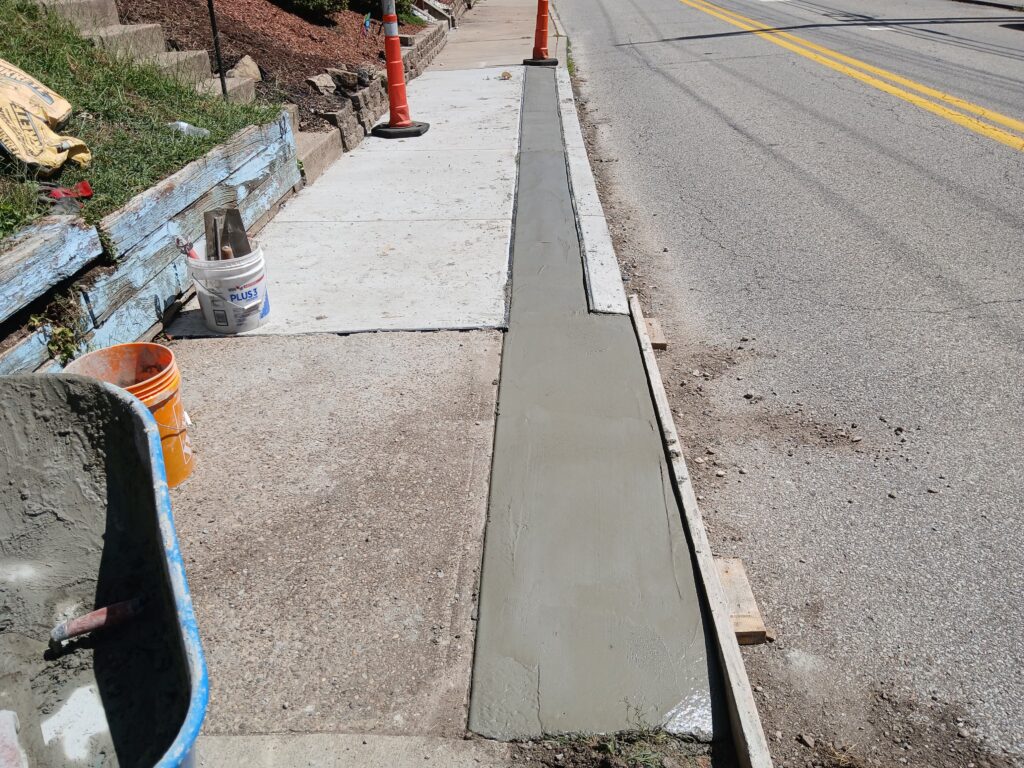
When cracks are widespread or the slab has been broken into multiple pieces, full replacement is usually the better option. The damaged section is removed, the underlying soil is regraded and compacted, and a new slab is poured in its place. Before the new concrete goes down, the contractor can address the root problem by trimming offending roots or installing a barrier. This is also the perfect time to upgrade the slab thickness, add reinforcement, or improve drainage around the walkway. A properly installed replacement can last thirty years or more with routine maintenance. Skipping these steps and pouring new concrete over the same root system almost guarantees the problem will return.
Grinding is another option for sidewalks with minor lifting but no significant cracking. A specialized grinder removes the raised edge of the slab, eliminating the trip hazard without replacing the entire section. This approach is quick and affordable, but it does not address the underlying root issue. Grinding is best viewed as a temporary fix rather than a long-term solution, since the root will continue to grow and lift the slab again over time. For homeowners who need an immediate safety improvement before a full repair can be scheduled, grinding can be a reasonable interim step. A professional contractor can help you weigh the pros and cons based on your specific situation.
When to Call a Professional About Tree Root Damage to Concrete Sidewalks
You should call a concrete contractor as soon as you notice a trip hazard, a widening crack, or pooling water on your sidewalk. Early intervention almost always costs less than waiting until the damage spreads to adjacent slabs or nearby structures. A professional can identify the root cause, recommend the most appropriate repair method, and provide a clear estimate for the work. Trying to assess the damage yourself often leads to incomplete repairs that fail within a year or two. An experienced contractor knows what to look for beneath the surface, where most of the real damage is hiding. Free in-person estimates make this an easy first step for any homeowner.
Liability is another important reason to address sidewalk damage promptly, especially for properties in residential neighborhoods. A raised slab or cracked walkway can cause falls, and homeowners may be held responsible for injuries that occur on their property. Some Pittsburgh-area municipalities also have ordinances requiring property owners to maintain adjacent public sidewalks in safe condition. Receiving a citation or warning can turn a small repair into an urgent and expensive project. Staying ahead of the problem protects both your finances and your peace of mind. Regular inspections, even informal ones, help you catch issues before they become serious.
Professional contractors also have access to equipment, materials, and techniques that are not practical for most homeowners. From specialized cutting tools to high-quality concrete mixes designed for our climate, these resources make a real difference in the final result. A skilled crew can complete a repair in a fraction of the time it would take a homeowner attempting the job alone. The finished work also tends to look cleaner, last longer, and match the surrounding concrete more closely. Hiring a professional is an investment in both safety and curb appeal. The peace of mind that comes with a properly repaired walkway is well worth the cost.
Why You Need RMK Concrete Services for Tree Root Sidewalk Repair
Tree root damage to your sidewalk is not just a cosmetic issue; it is a safety concern that grows worse every season. The longer you wait, the more expensive the repair becomes, and the greater the risk of injury to anyone using the walkway. RMK Concrete Services has helped homeowners across the Pittsburgh region restore safe, level, attractive sidewalks for years. Our team handles everything from minor leveling to full replacement, and we always start with a free in-person estimate. We treat every project with the same care we would give our own homes. When you choose us, you get a contractor who puts integrity and quality at the center of every job.
Trusted Sidewalk Repair for Tree Root Damage Across Pittsburgh
Pittsburgh homeowners trust RMK Concrete Services because we understand the unique challenges of working in our local climate. The combination of mature trees, freeze-thaw cycles, and aging infrastructure creates a perfect storm for sidewalk damage in our neighborhoods. Our crews have repaired thousands of feet of walkway in communities from Baldwin to Cranberry Township and everywhere in between. We know which repair methods work best for each type of damage and which materials hold up longest in our weather. That local experience translates into better results for every customer we serve. You can count on us to recommend the right solution, not just the most expensive one.
We also take pride in showing up on time, communicating clearly, and finishing every project on schedule. Our team explains the repair process in plain language so you always know what to expect. We answer questions, address concerns, and keep your property clean throughout the job. Every estimate is detailed and transparent, with no surprise charges added at the end. We believe homeowners deserve a contractor they can trust from the first phone call to the final walkthrough. That commitment to honest service is what keeps our customers coming back and referring their neighbors.
Our work is backed by proper licensing, full insurance, and a long track record of satisfied customers throughout the region. We offer discounts for veterans and seniors as a small way of giving back to the people who have given so much. Every project receives the same attention to detail, no matter how large or small. We treat your sidewalk like the important investment it truly is. When the job is done, you get a walkway that is safe, level, and built to last for years to come. That is the standard we hold ourselves to on every single project.
Affordable Sidewalk Repair Solutions for Tree Root Damage
We understand that unexpected concrete repairs can stretch a household budget, and we work hard to keep our pricing fair and competitive. Every project begins with a free in-person estimate so you know exactly what to expect before any work begins. We walk the site, measure the affected area, and explain your options in straightforward terms. There are no hidden fees, no surprise charges, and no pressure to choose a more expensive solution than you actually need. Our goal is to give you the best possible result at a price that makes sense for your situation. We believe quality concrete work should be accessible to every Pittsburgh homeowner.
Where appropriate, we offer multiple repair options ranging from slab leveling to full replacement so you can choose what fits your needs and budget. For some homeowners, a simple grinding or jacking job is all that is needed to restore safety and function. For others, a complete tear-out and re-pour makes more financial sense in the long run. We explain the pros and cons of each approach and help you make an informed decision. Our veterans and seniors discounts make our services even more accessible to those who qualify. We want every customer to feel confident that they got real value for their investment.
Need a free estimate on your damaged walkway? Click here to learn more about our sidewalk paving service and schedule your consultation. We respond promptly to every inquiry and work to fit your project into a timeline that works for you. Most repairs can be scheduled within a few weeks, and many smaller jobs are completed in a single day. We respect your time and treat every appointment as a commitment we plan to keep. From the first call to the final cleanup, you can expect professional, courteous service. That is what makes RMK Concrete Services the right choice for sidewalk repair in Pittsburgh.
Why Choose RMK Concrete Services for Your Sidewalk Repair Needs
RMK Concrete Services is a family-owned and operated business built on integrity, quality workmanship, and genuine care for our customers. We have served the Pittsburgh region for years and have built our reputation one happy homeowner at a time. Every member of our team takes pride in delivering five-star service on every project, no matter the size. We do not cut corners, we do not rush jobs, and we do not leave loose ends. When we say we will do something, we follow through. That commitment to doing the job right is what sets us apart from other contractors in the area.
We serve Pittsburgh and a sixty-mile radius around the city, including communities like Bethel Park, Monroeville, Moon Township, McCandless, and many more. Our licensed and insured crews bring the same level of professionalism to every job, whether it is a small sidewalk repair or a major concrete installation. We use high-quality materials suited to our local climate, and we follow industry best practices on every project. Our work is built to last and to look great for years to come. We treat your home like our own and your project like the priority it is. That is the kind of service every homeowner deserves.
When tree roots have damaged your concrete sidewalk, RMK Concrete Services is ready to help. Call us today at (412) 902-5114 or email info@rmkconcrete.com to schedule your free in-person estimate. We will assess the damage, walk you through your options, and provide a clear, honest quote. From there, we handle the rest with professionalism and care. Your safe, level, beautiful sidewalk is just one phone call away. Let us show you what real five-star concrete service looks like.