
The first hard freeze of the season is the single most damaging night your concrete will face all year, and most homeowners never see it coming until the damage has already started. Around Pittsburgh, that first freeze usually lands somewhere between the middle of October and the middle of November, and it tends to arrive on the heels of a wet stretch of weather. That combination of saturated slabs followed by a sudden overnight drop below thirty two degrees is exactly what causes scaling, spalling, and fresh cracking in driveways, sidewalks, patios, and steps. Concrete is porous by nature, so it holds water the way a sponge does, and water expands by roughly nine percent when it turns to ice. That expansion happens inside the slab, where there is nowhere for the pressure to go, so it pushes outward against the paste and lifts the surface apart from the inside. The good news is that prepping concrete for the first hard freeze is straightforward work that costs very little compared to replacing a driveway. What follows is a practical walkthrough of what happens during that first freeze, what you should do about it now, and how to tell when the job needs a professional crew instead of a Saturday afternoon.
What Happens to Concrete During the First Hard Freeze
Understanding the mechanics of freeze damage makes the prep work make sense, because every step on the checklist exists to solve one specific problem. Concrete does not crack because it gets cold; it cracks because it is holding water when it gets cold. A dry slab can sit through a twenty degree night without any real distress, while a saturated slab under the same conditions can lose surface material overnight. Pittsburgh compounds this problem because our winters are not steadily cold. We swing above and below freezing dozens of times between November and March, and each swing is another cycle of expansion and release that works the concrete a little looser. The first hard freeze matters most because it exposes every weakness the slab picked up over the summer, and it does so before any of those weaknesses have been addressed.
How Water Damages Concrete Before the First Hard Freeze
Every concrete slab poured in Western Pennsylvania contains a network of tiny capillary pores left behind as the mix cured and excess water evaporated out. Those pores are microscopic, but they are connected, and they pull moisture in from rain, snowmelt, sprinklers, and groundwater rising up from below the slab. During a warm, dry stretch that moisture evaporates back out and the slab stays relatively balanced. In late October, when the ground is cold and the sun is low and the rain comes more often than not, that evaporation slows down dramatically. The result is a slab that stays wet for days at a time instead of hours. By the time the temperature drops hard overnight, the pore network near the surface is close to fully saturated and every one of those tiny channels is loaded with water waiting to expand.
When that water freezes, the pressure generated inside the capillary system can exceed the tensile strength of the concrete paste holding the aggregate together. Properly mixed concrete is supposed to include air entrainment, which introduces a controlled system of microscopic air bubbles that act as relief valves for exactly this situation. Ice pushes into those empty pockets rather than against the paste, and the slab survives the night intact. Older concrete, concrete poured by a crew that skipped the air entrainment admixture, and concrete that was overworked or overwatered during finishing all have compromised air systems. Those slabs have nowhere to put the pressure, so the paste fractures at the microscopic level. You will not see anything the first morning, but that fracture network is now permanent and it grows a little wider with every cycle that follows.
The visible result of accumulated freeze damage shows up as scaling and spalling, and homeowners often mistake it for normal wear. Scaling looks like the top layer of the slab flaking away in thin sheets, leaving a rough, sandy texture and exposing the fine aggregate underneath. Spalling goes deeper, popping out chunks and leaving shallow craters that collect water and accelerate the next round of damage. Both conditions concentrate in the areas that stay wettest, which is why you usually see them first along driveway edges, at the bottom of a slope, near downspout outlets, and on the treads of exterior steps. Once the surface is compromised, water penetrates faster and deeper, and what started as a cosmetic issue becomes a structural one within a few seasons. Catching it before the first freeze is the difference between a maintenance task and a replacement quote.

Signs Your Concrete Is Not Ready for the First Hard Freeze
Walk your driveway, sidewalk, patio, and steps on a dry afternoon and look at the surface texture first. Healthy sealed concrete has a uniform appearance and sheds water into beads or a thin sheet that runs off rather than soaking in. Concrete that needs attention looks dull and chalky, absorbs water on contact, and darkens noticeably where it gets wet instead of staying an even color. Run your palm across a section that gets full sun and compare it to a shaded section near the house. If loose grit comes off on your hand, the paste at the surface has already begun to break down and the slab is going to shed material this winter. That test takes thirty seconds and it tells you more about the condition of the concrete than anything else you can do without equipment.
Cracks deserve a closer look than most homeowners give them, because width and behavior matter more than length. Hairline cracks narrower than the edge of a credit card are common in any slab and are usually shrinkage related rather than structural. Cracks wide enough to fit a coin, cracks where one side sits higher than the other, and cracks that run continuously across multiple panels are telling you something is moving underneath the concrete. Any crack open to the air is a direct path for water to reach the base material below, and saturated base material heaves when it freezes, which lifts and breaks the slab from below. Control joints, meaning the tooled or sawn lines placed intentionally during the pour, should also be checked for old sealant that has pulled away, cracked, or fallen out entirely. Empty joints funnel water straight into the subgrade at the exact points where the slab is thinnest.
Drainage problems are the third category, and they are the most commonly overlooked. Stand outside during a hard rain if you can, or watch where puddles sit for more than an hour afterward if you cannot. Standing water on a slab means that section is going to enter the freeze fully saturated, and standing water against a foundation wall or a step riser means the problem extends past the concrete itself. Check that downspouts discharge at least four feet away from any slab or foundation, and confirm that grading carries water away from the house rather than back toward it. Look for soil that has settled against the edge of a driveway or walkway, since that low spot holds water directly against the slab edge where concrete is most vulnerable. Fixing drainage before the freeze protects everything else you do.
Why the First Hard Freeze Hits Pittsburgh Concrete Hard
Our regional climate creates conditions that concrete in milder parts of the country never faces. Allegheny County averages well over one hundred freeze and thaw cycles in a typical winter, which is among the higher counts in the eastern United States. Each cycle applies and releases pressure inside the slab, and the damage is cumulative rather than isolated. Compare that to a climate that freezes hard in December and stays frozen through February; a slab in that environment goes through one long freeze rather than a hundred short ones. Pittsburgh concrete works harder simply by existing here, and the first freeze of the year is the opening round of a long fight.
Our soil adds a second variable that gets very little attention. Much of the region sits on clay heavy soil that expands when it takes on water and contracts when it dries, and clay holds moisture far longer than sandy soil does. When that saturated clay freezes, it heaves upward, and it does so unevenly across the footprint of a slab. A driveway sitting on clay that heaves two inches at one end and half an inch at the other is going to crack, no matter how well the concrete itself was mixed and poured. Proper base preparation with compacted gravel below the slab mitigates this, but many older properties around Pittsburgh have slabs poured directly on native soil. Those slabs need the most attention going into winter because they have the least margin for error.
Salt use compounds everything described above and is worth taking seriously. Rock salt lowers the freezing point of water, which sounds helpful, but the practical effect on concrete is that it increases the number of freeze and thaw cycles the slab experiences rather than reducing them. Salt also draws moisture into the surface and can increase the internal pressure during freezing beyond what the concrete was designed to handle. Calcium chloride and magnesium chloride are marketed as concrete safe and they perform better at low temperatures, but chemically they can be harder on concrete than plain rock salt in some conditions. Any concrete poured within the last twelve months should see no deicing chemicals at all, since young concrete has not reached full strength and is far more vulnerable. Sand provides traction without any chemical effect and is the safest option for a new slab.
How to Prep Your Concrete for the First Hard Freeze Step by Step
The prep work breaks down into three tasks that should happen in order, because each one depends on the one before it. Clean the concrete first, repair what needs repairing second, and seal last. Doing them out of order traps dirt under the sealer, seals over cracks that will open anyway, or applies product to a surface that is still damp underneath. Timing matters as much as sequence, since most sealers require surface temperatures above fifty degrees and a dry window of twenty four to forty eight hours on either side of application. In the Pittsburgh area that means late September through the middle of October is the practical window, and waiting until the forecast shows a freeze warning is waiting too long. Give yourself three or four weeks of margin and the whole job goes smoothly.
Cleaning and Drying Concrete Before the First Hard Freeze
Start by clearing everything off the slab and removing organic debris, because leaves, mulch, grass clippings, and pine needles all hold moisture against the surface for weeks at a time. Anywhere organic material sits through a wet fall, you will find a darker patch of concrete that stays damp long after the rest of the slab has dried. Sweep the whole area, pay particular attention to the edges where debris collects against the grass line, and clear out the control joints with a stiff brush or a joint tool. Trim back any shrubs or ground cover that overhang the concrete and block sun and airflow. This step alone changes how quickly a slab dries after rain, which directly determines how much water it is holding when the temperature drops.
Next comes a proper wash, and pressure washing is appropriate here as long as you use it correctly. Keep the pressure in the range of two thousand to three thousand PSI on a driveway or sidewalk and use a fan tip rather than a concentrated zero degree nozzle, which can etch lines into the surface and remove paste you want to keep. Hold the wand at a consistent distance and work in overlapping passes rather than stopping in one spot. Oil stains, rust, and organic staining all need appropriate cleaners applied before the wash rather than pressure alone, since blasting a stain harder mostly just damages the concrete around it. Degreasers work on petroleum stains, oxalic acid based products handle rust, and a diluted bleach solution or a dedicated concrete cleaner handles algae and mildew. Rinse thoroughly so that no cleaner residue remains on the surface.
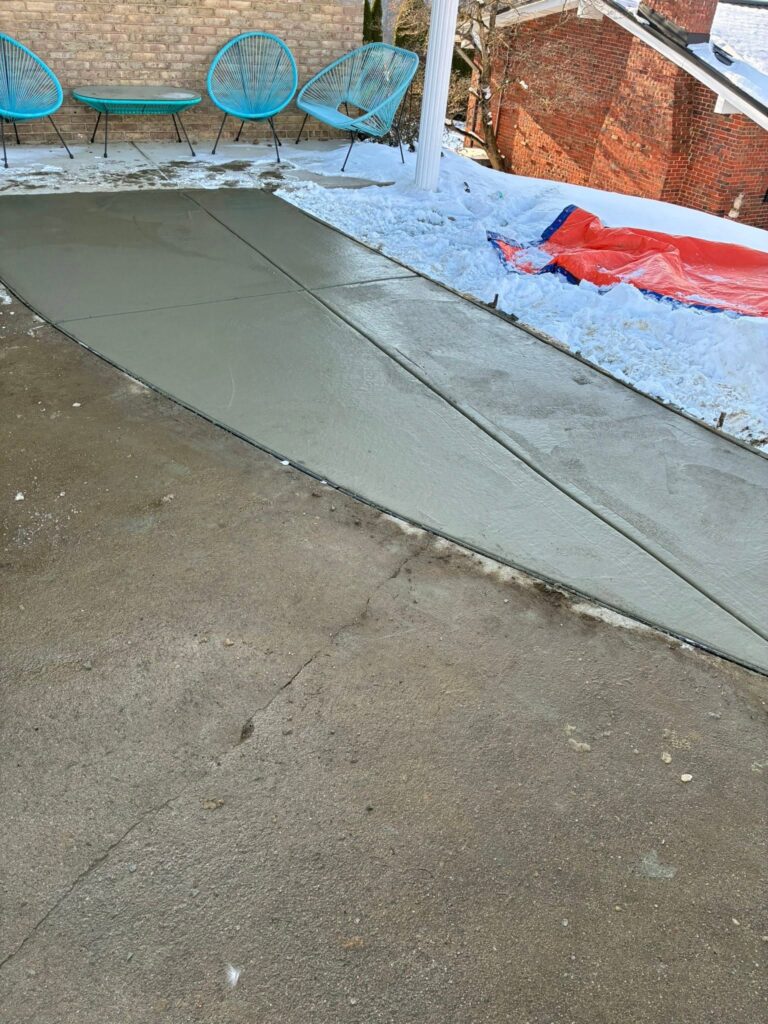
Drying time is the part people rush, and it is the part that determines whether the sealer bonds. Concrete that looks dry on the surface can still be holding significant moisture an eighth of an inch down, especially after pressure washing forced water into the pores. Plan on a minimum of twenty four hours of dry weather after washing, and give it forty eight or seventy two hours if temperatures are cool or the slab sits in shade for most of the day. A simple field test involves taping a square of clear plastic sheeting tightly to the surface and leaving it for a few hours; condensation under the plastic means the slab is still releasing moisture and is not ready. Applying sealer to damp concrete traps that moisture underneath, which causes cloudiness, poor adhesion, and premature peeling. Patience at this stage saves the entire job. Need your concrete cleaned, sealed, and ready before the temperature drops? Click here for our concrete sealing service.
Sealing Concrete Ahead of the First Hard Freeze
Sealing is the highest value item on this list because it addresses the root cause rather than the symptoms. A quality penetrating sealer soaks into the capillary pores and lines them with a hydrophobic barrier, which means water beads on the surface and runs off instead of soaking in. Less water inside the slab means less ice, less internal pressure, and dramatically less scaling and spalling over the course of a winter. Penetrating sealers built on silane and siloxane chemistry are the right choice for exterior flatwork in our climate because they do not change the appearance or the traction of the surface. They also allow the slab to breathe, meaning vapor can still escape from below, which matters on slabs sitting on damp ground. Film forming acrylic sealers produce a wet look finish that many homeowners like on stamped and decorative surfaces, but they can trap moisture and become slippery when wet, so they need to be matched to the right application.
Application is not complicated but it does reward doing it correctly. Read the coverage rate on the product label and measure your square footage, since applying too much sealer is as much of a problem as applying too little; excess product pools on the surface and dries into a hazy film rather than penetrating. A pump sprayer with a chemical resistant seal works well for most penetrating sealers, and a roller with a low nap cover works for film forming products. Apply in thin, even passes and work in one direction, then keep foot and vehicle traffic off the surface for the full cure time listed by the manufacturer, which typically runs four to twenty four hours for foot traffic and up to seventy two hours for vehicles. Watch the forecast closely and do not apply sealer if rain is expected within the drying window.
New concrete has its own rules that are easy to get wrong. A fresh pour needs to cure for a full twenty eight days before any sealer goes down, because the concrete is still gaining strength and releasing moisture during that period. Sealing too early traps that moisture and interferes with the hydration process that gives the slab its final strength. If a new slab is going to face its first winter before that twenty eight day window closes, the right move is to keep it clean, keep it drained, use only sand for traction, and seal it the following spring. Existing concrete generally benefits from resealing every two to three years in our climate, though heavily trafficked driveways and any surface that gets direct sun all day may need it more often. The water bead test tells you when it is time; if water soaks in rather than beading up, the sealer has worn through.
Repairing Cracks and Joints Before the First Hard Freeze
Every open crack and every empty control joint is a funnel delivering water directly into the base material under your slab. Sealing those openings before the freeze is one of the cheapest and most effective things you can do, and it takes an afternoon on most residential properties. Narrow cracks under a quarter inch wide can be handled with a self leveling polyurethane crack sealant applied with a caulk gun, which stays flexible through temperature swings and moves with the slab rather than cracking loose. Clean the crack thoroughly first with a wire brush and a shop vacuum, since sealant will not bond to dust or loose material. For wider cracks, install a foam backer rod to the correct depth before applying sealant, which controls how much product you use and lets the sealant flex properly.
Control joints need the same treatment and are often in worse shape than the cracks. Those joints were cut into the slab on purpose to give shrinkage a place to happen in a straight line rather than randomly across the surface, and they are supposed to be filled with a flexible sealant. On a slab that has gone ten or fifteen years without maintenance, that original sealant has usually hardened, shrunk, and fallen out. Clear the joints completely, vacuum them out, and refill them with a self leveling polyurethane joint sealant rated for exterior use. This single task keeps a substantial volume of water out of the subgrade over the course of a winter and helps prevent the heaving that lifts and breaks slabs from below.
Some damage is past the point where a caulk gun helps, and knowing the difference protects your money. Spalled areas larger than a few square feet, sections where the slab has settled or lifted at a joint, cracks wider than half an inch, and any crack showing vertical displacement between the two sides all point to problems in the base material rather than the surface. Filling those is cosmetic at best and can make diagnosis harder later. Concrete steps that feel loose, retaining walls leaning out of plumb, and garage aprons that have separated from the foundation are all conditions that get significantly worse over a Pittsburgh winter and should be evaluated before the freeze rather than after. Professional repair methods including slab jacking, partial replacement, and joint reconstruction address the cause instead of hiding it. Have cracks or spalling that go beyond a caulk gun? Click here for our concrete repair service.
Why You Need a Professional Concrete Freeze Prep Before Winter
Some of the prep work described above is well within reach for a homeowner with a free weekend and a pressure washer. The parts that are not are the parts where a wrong call costs real money, and those tend to be the diagnostic decisions rather than the labor. Knowing which cracks are cosmetic and which ones signal base failure, knowing which sealer chemistry suits your specific slab and exposure, and knowing when a driveway has reached the end of its service life all take experience with this material in this climate. A professional evaluation before the first freeze gives you a clear picture of what needs to happen now and what can wait until spring. It also gives you a realistic budget instead of a guess.
What a Professional Inspection Before the First Hard Freeze Includes
A proper inspection starts with a walk of every concrete surface on the property, including the areas homeowners rarely look at closely. That means the driveway and apron, front and side walkways, the patio, exterior steps and landings, garage floor, retaining walls, and the exposed portion of the foundation. Each surface gets checked for surface condition, crack pattern and width, joint condition, and any displacement between adjacent sections. Drainage gets assessed at the same time, since where water goes explains most of what the concrete is doing. The result is a map of the property rather than a look at one problem area.
From there the evaluation moves to what the conditions actually mean and what they will do over the coming months. A crack that has been stable for five years is a different situation from one that opened last spring, and a spalled patch on a shaded north facing walkway will progress faster than the same patch in full sun. Sealer condition gets tested directly, and the age and history of each pour factor into the recommendation. Anything that will meaningfully worsen over a Pittsburgh winter gets flagged as priority work. Everything else gets noted for spring, which keeps the immediate cost focused on what genuinely cannot wait.
You should come out of that visit with a written scope and a real number, not a vague estimate and a sales pitch. RMK Concrete Services provides free in person estimates on all projects, which means someone stands on your concrete and looks at it rather than quoting from a photo. That estimate lays out the recommended work, the materials involved, and the timeline. It also tells you plainly when the honest answer is that nothing urgent needs doing this fall. Trust in this trade is built by telling homeowners when they do not need to spend money.
Timing Your Concrete Freeze Prep With Pittsburgh Weather
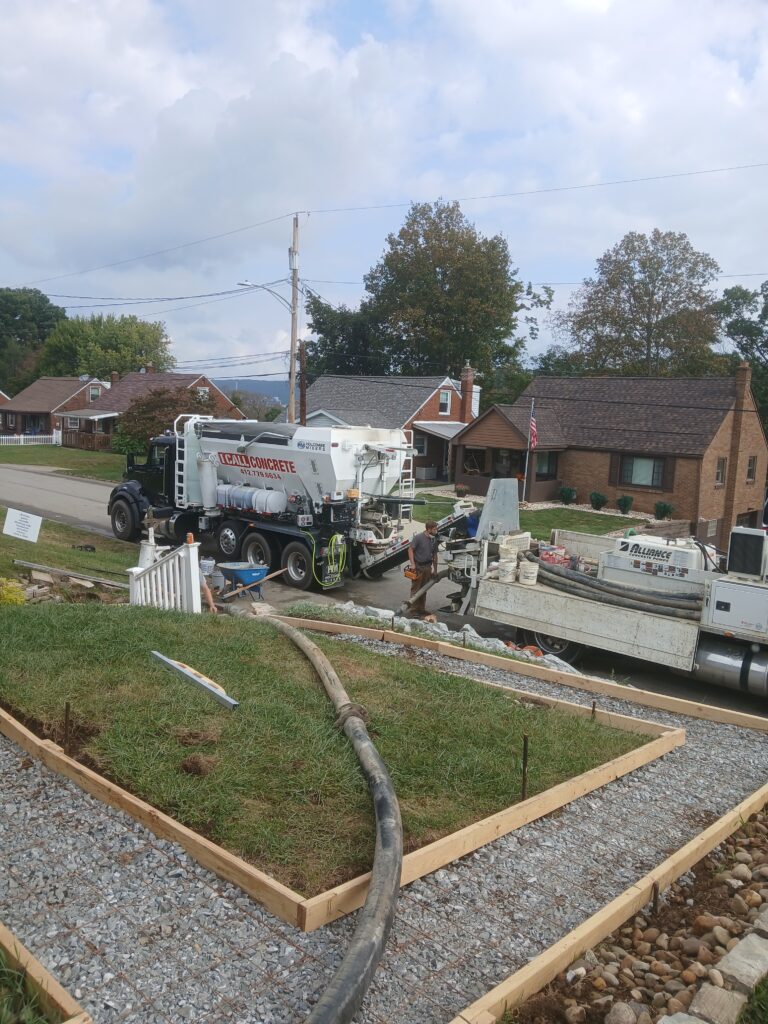
The calendar is not on your side if you wait, because the window for this work closes faster than most people expect. Sealers and joint sealants have minimum application temperatures, and once daytime highs stop reliably reaching the mid fifties, those products cannot cure properly. Late September through the middle of October is the reliable window in Allegheny County and the surrounding counties. By the first week of November you are gambling on the forecast, and by Thanksgiving the opportunity has usually passed for the year. Scheduling early also means you are not competing for a slot with every other homeowner who noticed the forecast at the same time.
Planning ahead also lets the work happen in the right sequence with proper drying time between steps. A rushed job that seals a damp slab or caulks a dirty crack performs worse than doing nothing, since it creates the appearance of protection without the function. Building in a two or three week buffer means a rainy stretch does not derail the whole plan. It also leaves room to address a surprise, like a settled section or a drainage problem that turns up during the walkthrough. Concrete work rewards patience and punishes shortcuts.
Winter planning should extend past the concrete itself to how the property gets maintained once the snow arrives. Plow blades that scrape directly on concrete, metal shovels used aggressively on a scaled surface, and heavy deicing chemical use all undo the prep work you just paid for. Setting up snow removal with a crew that understands concrete surfaces protects the investment through the season. Plastic shovels, plow shoes set to the correct height, and sand for traction on new or vulnerable slabs are the basics. Getting that arranged in October beats scrambling during the first storm. Want reliable snow removal that protects your concrete all winter? Click here for our snowplowing service.
Why Choose RMK Concrete Services for Your First Hard Freeze Prep
RMK Concrete Services is a family owned and operated concrete contractor working out of 512 Carolyn Ave in Pittsburgh, and we serve the city along with a sixty mile radius surrounding it. We are licensed and insured, and we handle everything from sealing and repair through full replacement of driveways, patios, sidewalks, steps, foundations, and retaining walls. Working in this region year after year means we know how local soil, local weather, and local salt practices affect concrete over time. That experience shapes every recommendation we make. We would rather tell you a slab has five good years left than sell you a pour you do not need.
Integrity is the core of how this company operates, and it shows up in the small things. We offer free in person estimates on all projects, we explain what we find in language that makes sense, and we give you the reasoning behind every recommendation so you can make your own decision. Veterans and seniors discounts are available on our work. Our crews show up when we say we will and clean up the site before they leave. A five star service standard is what we hold ourselves to on every job, regardless of its size.
If your driveway is shedding grit, if your patio has cracks that opened up over the summer, or if you simply want to know where you stand before the temperature drops, now is the right time to find out. The first hard freeze is coming, and the concrete that makes it through in good shape is the concrete that got attention in the fall. Call RMK Concrete Services at (412) 902-5114 or email info@rmkconcrete.com to schedule your free in person estimate. We will walk your property, tell you plainly what we see, and give you a clear plan for the winter ahead. Getting ahead of the freeze is far easier than repairing what it leaves behind.