
Your basement communicates with you all the time, and most homeowners never learn the language. A musty smell, a white powdery stain, a hairline crack in the wall; these are not small quirks of an old house. They are warning signs that water is finding a path into your home. Pittsburgh summers bring heavy thunderstorms, and July downpours push huge amounts of water against your foundation walls in a matter of hours. When that water has nowhere to go, it goes into your basement. Catching the early signs of a water problem can save you thousands of dollars in structural repairs down the road. This guide breaks down the most common signs your basement needs waterproofing and explains what each one means for your home. If you spot any of these symptoms, do not wait for a flooded floor to take action.
Visible Signs Your Basement Needs Waterproofing
Some basement waterproofing warning signs are easy to see once you know what to look for. Water leaves evidence behind, even when the basement looks dry on the day you check it. Stains, cracks, and mineral deposits all tell the story of moisture moving through concrete. Summer storm season in Pittsburgh is the perfect time to walk your basement with a flashlight and inspect every wall and corner. The signs below are the most common visual indicators that water is getting through your foundation. Each one points to a specific type of moisture problem. Take note of what you find, because that information helps a waterproofing contractor diagnose the issue faster and quote the right fix.
Wall Cracks Are a Top Sign Your Basement Needs Waterproofing
Cracks in basement walls are the most direct sign that your basement needs waterproofing attention. Concrete and block foundations crack for several reasons, including normal curing, soil settlement, and hydrostatic pressure from saturated ground. Hairline cracks under an eighth of an inch are common and often cosmetic, but they still give water an entry point. Wider cracks, especially horizontal ones, signal that soil pressure is actively pushing against the wall. Stair-step cracks in block foundations follow the mortar joints and often indicate uneven settling beneath the footing. Any crack that shows dampness, staining, or white residue around its edges is already letting moisture through. Pittsburgh’s clay-heavy soil expands when it absorbs summer rain, and that expansion drives pressure directly into foundation walls. A crack that stays the same size for years is less concerning than one that grows, so mark the ends with a pencil and date them.
Monitoring cracks is smart, but sealing them properly requires more than a tube of caulk from the hardware store. Surface patches fail because water pressure behind the wall pushes the patch loose within a season or two. Professional crack injection fills the entire depth of the crack with epoxy or polyurethane, creating a permanent barrier that flexes with the wall. Exterior waterproofing goes further by addressing the source of the water instead of just the symptom. A contractor will evaluate what caused the crack in the first place, because sealing a crack without fixing drainage means new cracks will appear nearby. Structural cracks may need carbon fiber straps or wall anchors before any waterproofing work begins. This is why a free in-person estimate matters; photos alone cannot capture crack depth, wall bowing, or moisture readings.
Ignoring cracks is the most expensive mistake a homeowner can make with a foundation. A crack that costs a few hundred dollars to inject today can become a bowing wall that costs tens of thousands to stabilize later. Water that enters through cracks also feeds mold, rusts steel supports, and rots wood framing that sits on the foundation. Insurance rarely covers gradual water damage, which means the repair bill lands entirely on you. Summer is the ideal season to address cracks because the ground is workable and contractors can excavate exterior walls without frost delays. Fixing cracks before fall rains and winter freeze-thaw cycles arrive protects the repair and the wall. Seeing cracks in your basement walls? Click here for our basement waterproofing service and schedule a free in-person estimate.
Water Stains and Efflorescence Show Your Basement Needs Waterproofing
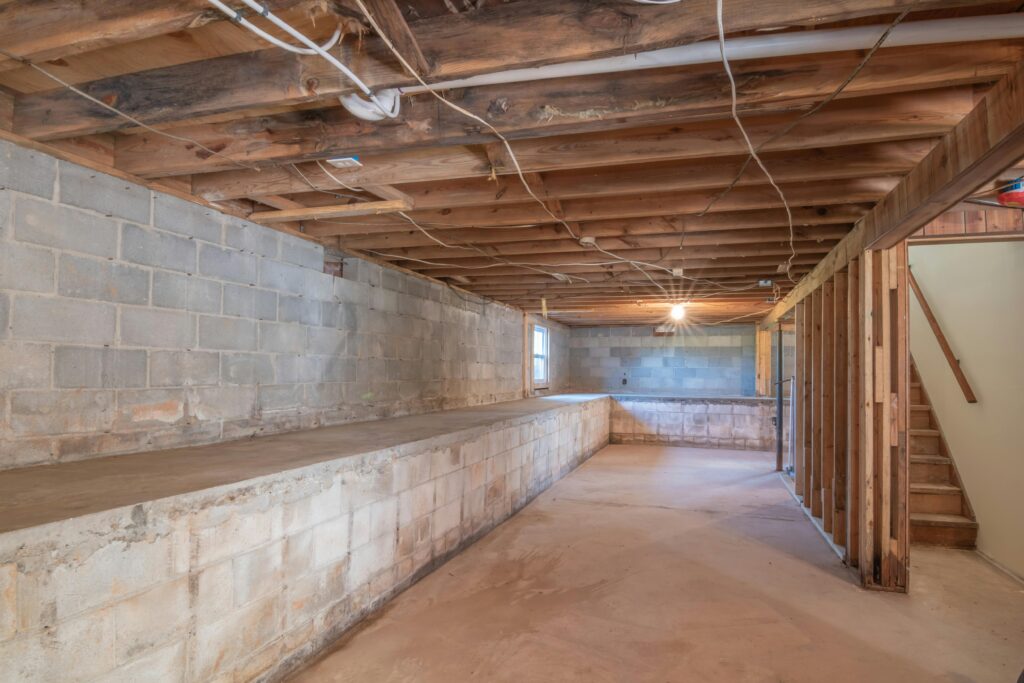
Water stains on basement walls or floors prove that moisture has entered your basement before, even if everything feels dry today. Stains typically appear as brown, yellow, or gray discoloration in rings or streaks. A ring on the floor around the perimeter suggests water seeped in at the joint where the wall meets the slab, which is called the cove joint. Streaks running down a wall point to water entering higher up, often through a crack, a tie rod hole, or a poorly sealed window well. Stains near the ceiling of the basement may actually trace back to grading problems outside, where rainwater pools against the house and soaks downward. The pattern of staining is a map that shows exactly where your waterproofing system is failing. Take photos of every stain you find, because they may fade between rain events. A contractor uses those patterns to determine the source without guesswork.
Efflorescence is the white, chalky, powdery deposit you see on concrete and block walls, and it is one of the clearest signs your basement needs waterproofing. It forms when water moves through the concrete, dissolves mineral salts inside it, and then evaporates on the interior surface, leaving the salts behind. Efflorescence itself is not harmful and brushes off easily, but its presence confirms that water is passing through the wall itself. Many homeowners scrub it away and forget about it, which treats the symptom while the moisture keeps moving. Recurring efflorescence means the wall is regularly wet inside, and a chronically wet wall deteriorates faster than a dry one. Over time, that same moisture migration spalls the concrete surface, weakens mortar joints, and corrodes any embedded steel. In Pittsburgh homes with older block foundations, heavy efflorescence often precedes visible leaking by a year or two.
The fix for stains and efflorescence depends on how the water is traveling. Exterior waterproofing membranes stop water before it ever touches the wall, which is the most complete solution for walls with widespread moisture migration. Interior drainage systems capture water at the cove joint and route it to a sump pump, which works well when exterior excavation is impractical. Vapor barriers and masonry sealers help with minor dampness but cannot stop water under pressure. A professional assessment identifies which approach fits your foundation type, soil conditions, and budget. Guessing wrong wastes money and leaves the real problem in place. Document what you see, then bring in a licensed and insured contractor to interpret it.
Musty Odors and Mold Mean Your Basement Needs Waterproofing Now
A persistent musty smell is often the first sign a basement needs waterproofing, and it usually appears before any visible water does. That odor comes from mold and mildew spores that thrive in damp, dark, poorly ventilated spaces. Concrete is porous, and even without standing water, moisture vapor passing through walls and floors raises the humidity enough for mold to grow. Basements that smell fine in winter and turn musty in July are reacting to summer humidity combining with foundation moisture. You may notice the smell strongest near stored cardboard boxes, carpet, or wood furniture, because those materials absorb moisture and feed mold growth. Do not mask the smell with air fresheners or dehumidifier alone; the odor is a diagnostic tool telling you moisture is present. Track when the smell gets stronger, especially after rainstorms, because timing helps pinpoint the water source. A basement should smell neutral, and anything else deserves investigation.
Visible mold takes the warning a step further and turns a moisture problem into a health concern. Mold appears as black, green, or white fuzzy patches on walls, floor edges, stored items, and exposed framing. Family members with allergies or asthma often react to basement mold before anyone sees it, experiencing congestion, coughing, or irritated eyes that improve when they leave the house. Mold spores travel through your HVAC system, which means a moldy basement affects air quality on every floor of the home. Cleaning mold off surfaces provides temporary relief, but spores return within weeks if the moisture source remains. The Environmental Protection Agency is clear on this point: controlling moisture is the only way to control mold. That makes waterproofing the true mold remediation, not bleach and elbow grease.
Solving a mold and odor problem starts with drying out the basement permanently. Waterproofing measures like exterior membranes, interior drain tile, sump pumps, and proper grading remove the moisture that mold depends on. Once the basement stays dry, a dehumidifier can maintain healthy humidity levels below fifty percent with far less effort. Sealed walls and floors also protect stored belongings, finished living space, and the resale value of your home. Buyers walk away fast from basements that smell musty, and home inspectors flag moisture issues immediately. Investing in waterproofing now protects both your family’s health and your largest financial asset. Wondering if that smell means a bigger problem? Click here for our basement waterproofing service to get answers from a professional.
Hidden Signs Your Basement Needs Waterproofing
Not every waterproofing warning sign is written on the walls. Some of the most serious moisture problems develop out of sight, behind finished walls, under flooring, or in the soil outside your foundation. These hidden signs often surface as small annoyances that homeowners dismiss for months or years. Peeling paint, sticky doors, high humidity, and rising utility bills all connect back to basement moisture more often than people realize. Summer is when many of these hidden signs become obvious, because Pittsburgh humidity amplifies every moisture issue in the house. The sections below cover the less obvious symptoms that indicate your basement needs waterproofing. Learning to recognize them early gives you the chance to fix a small problem before it becomes a structural one.
Peeling Paint and Damp Floors Are Hidden Signs Your Basement Needs Waterproofing
Paint and wall coverings act like moisture detectors in a basement, and they fail in predictable ways when a basement needs waterproofing. Bubbling, blistering, or peeling paint on foundation walls means water vapor is pushing through the concrete from behind and lifting the coating off the surface. Homeowners often repaint over the damage, and the new coat fails in the same spots within months. Drywall in finished basements shows its own symptoms, including soft spots, brown tide marks near the floor, and popped nail heads along the bottom plate. Baseboards may warp, separate from the wall, or show black mold along their back edges. These failures happen because moisture is trapped between the wall material and the concrete behind it. No paint or finish can survive long term on a wall that stays wet from the outside. The finish is not the problem; the moisture behind it is.
Basement floors give away hidden moisture just as reliably as walls do. A concrete slab that feels cool and slightly damp during summer might be sweating from condensation, or it might be wicking groundwater up from below. There is a simple test: tape a two foot square of plastic sheeting to the slab, seal all four edges, and check it after twenty four hours. Condensation on top of the plastic means humid air is the culprit, while moisture underneath means water is coming up through the slab. Vinyl flooring that bubbles, laminate that swells at the seams, and carpet that smells musty all point to slab moisture. Efflorescence rings on the bare slab confirm that water has moved up through the concrete and evaporated. Slab moisture usually traces back to a missing vapor barrier or high groundwater around the footing.
Fixing these hidden moisture paths requires addressing the water below and beside the foundation. Interior drain tile systems relieve hydrostatic pressure under the slab and channel water to a sump pump before it can rise. Exterior drainage improvements, including downspout extensions and regrading, cut off the surface water feeding the problem. Once the moisture source is controlled, walls can be refinished and floors replaced with confidence that the damage will not return. Skipping the waterproofing step and simply replacing finishes guarantees you will pay for the same materials twice. A proper assessment before any basement remodel protects the entire investment. Every finished basement should start with a dry foundation.

High Humidity and Condensation Signal Your Basement Needs Waterproofing
Humidity is the quietest sign that a basement needs waterproofing, and most homeowners never measure it. A healthy basement stays below fifty percent relative humidity; many Pittsburgh basements run at sixty five percent or higher through the summer. Part of that comes from humid outdoor air, but a significant share often comes from moisture evaporating out of the foundation walls and slab. A porous, unsealed foundation can release gallons of water vapor into the basement every single day without a drop of visible water appearing. That vapor raises humidity throughout the house as air naturally rises from the basement to the upper floors, a process called the stack effect. You can buy an inexpensive hygrometer to measure basement humidity and track it over a week. Readings that spike after rainstorms point directly at foundation moisture rather than weather alone. Numbers do not lie, and they give you objective evidence of a problem.
Condensation is the visible cousin of high humidity, and summer is its peak season. Cold water pipes, ductwork, and basement windows collect droplets when humid air contacts their cool surfaces. Foundation walls below grade stay around fifty five degrees year round, so warm July air condenses on them the same way it fogs a cold glass of iced tea. Persistent condensation drips onto floors, soaks insulation, and keeps wood framing damp enough to rot slowly over years. Many homeowners see wet walls in summer and assume the foundation is leaking, when the moisture is actually condensing from inside air. The distinction matters, because the solutions differ; a professional can tell them apart with moisture meters and that same plastic sheet test. Either way, a basement dripping with condensation is a basement with a moisture management problem.
Chronic humidity does real damage beyond comfort. It corrodes furnace components, water heaters, and electrical panels housed in the basement. It swells wood doors and floor joists, ruins stored photos and documents, and forces your air conditioner to work harder, which raises summer energy bills. Dust mites and mold both flourish above sixty percent humidity, degrading air quality for the whole household. Waterproofing the foundation cuts off the vapor source, and a properly sized dehumidifier then handles the remaining ambient moisture easily. Together they bring the basement into the healthy range and keep it there year round. That is a permanent fix, not a seasonal battle with buckets and fans.
Sump Pump Problems Reveal Your Basement Needs Waterproofing
Your sump pump is the frontline defense in any basement waterproofing system, and its behavior tells you a lot about what is happening underground. A pump that runs constantly during dry weather suggests a high water table, a broken water line nearby, or a drainage system collecting far more water than it should. A pump that never runs at all might be fine, or it might be seized, unplugged, or sitting in a pit that has silted shut. Test yours by pouring a bucket of water into the pit and confirming the float rises, the pump kicks on, and water discharges outside away from the foundation. Short cycling, grinding noises, and rattling all signal a pump nearing the end of its life. Most sump pumps last seven to ten years, and many fail during the exact storm you need them most. Summer thunderstorm season in Pittsburgh is the worst possible time to discover a dead pump. Check it before the next big rain, not after.
A home with no sump pump at all can also be showing signs it needs one. If water ever collects at the base of your basement walls, if the cove joint darkens after storms, or if the floor drain backs up during heavy rain, your basement lacks adequate drainage. Older Pittsburgh homes were often built with no interior drainage whatsoever, relying entirely on clay exterior tiles that clogged or collapsed decades ago. When those original systems fail, water pressure builds under the slab and against the walls with nowhere to go. Adding an interior drain tile system connected to a modern sump pump gives that water a controlled exit path. Battery backup pumps add protection during power outages, which conveniently arrive with the same storms that flood basements. A complete system keeps working even when the grid does not.
Sump pump issues rarely exist in isolation; they usually point to a larger drainage picture that needs professional attention. A contractor will evaluate the pit, the pump, the discharge line, the drain tile feeding the system, and the exterior conditions loading it with water. Discharge lines that dump water right beside the foundation simply recycle the same water back into the pit, making the pump run endlessly. Clogged or missing drain tile leaves entire sections of the basement unprotected no matter how strong the pump is. Getting the whole system inspected costs nothing with a free in-person estimate and can prevent a catastrophic summer flood. Concrete floors already showing water damage may also need repair once the drainage is fixed. Have cracked or damaged concrete from past water issues? Click here for our concrete repair service.
Why You Need Professional Basement Waterproofing Before the Next Pittsburgh Storm
Recognizing the signs is step one; acting on them is what actually protects your home. Basement water problems never improve on their own, and every heavy rain adds pressure, moisture, and damage. Professional waterproofing addresses the source of the water instead of chasing symptoms with paint, patches, and fans. Pittsburgh’s summer storm season delivers some of the heaviest rainfall of the year, and July and August storms routinely drop inches of rain in a single afternoon. A dry basement protects your foundation, your air quality, your belongings, and your home’s resale value all at once. The right contractor makes the process straightforward from inspection to finished system.
Professional Basement Waterproofing Stops Damage Before It Spreads
Water damage is progressive, which means every month of delay makes the eventual repair bigger and more expensive. A seeping crack becomes a leaking crack, a damp wall becomes a moldy wall, and a moldy wall becomes a remediation project with health implications. Foundation walls under constant hydrostatic pressure can begin to bow inward, and bowed walls require structural reinforcement that costs many times more than waterproofing. Wood framing, insulation, and drywall in contact with chronic moisture deteriorate quietly until the damage is extensive. Acting at the first sign keeps the fix simple and the cost manageable. Early intervention is always the cheapest option in foundation work.
Professional waterproofing also protects everything your basement contains and supports. Furnaces, water heaters, electrical panels, and laundry equipment all live in the basement and all suffer in damp conditions. Stored belongings, from holiday decorations to family keepsakes, are one flood away from the dumpster. Finished basement spaces represent tens of thousands of dollars in materials and labor that moisture can destroy in a single storm. A waterproofing system is insurance you install once and benefit from for decades. It guards the investment sitting on top of it, which is the entire house.
Timing matters, and summer is the smart season to schedule waterproofing work in Pittsburgh. The ground is dry enough for exterior excavation, concrete cures properly in warm weather, and crews can complete projects without frost or snow delays. Getting the work done now means your system is tested and proven before fall rains and winter freeze-thaw cycles arrive. Freeze-thaw is brutal on wet foundations, because water trapped in cracks expands as it freezes and widens the damage. A basement waterproofed in July enters winter protected. Waiting until water is on the floor means competing for emergency scheduling with every other flooded homeowner in the region.
A Professional Basement Waterproofing Inspection Finds the Real Problem
Diagnosing basement moisture correctly requires experience, because different symptoms can share causes and similar symptoms can have completely different sources. Condensation mimics seepage, grading problems mimic foundation failures, and plumbing leaks mimic groundwater intrusion. A professional inspection uses moisture readings, visual assessment, and knowledge of local soil and water table conditions to pinpoint the true source. Guessing leads homeowners to buy the wrong solution, like sealer paint for a hydrostatic pressure problem. The right diagnosis leads directly to the right fix. That accuracy saves money on day one.
A thorough inspection covers the full water path, from the roofline to the footing. Gutters, downspouts, grading, window wells, driveway slope, and landscaping all influence how much water reaches your foundation. Inside, the inspector examines walls, floors, joints, existing drainage, and the sump system for capacity and condition. Foundation type matters too, since poured concrete, block, and stone foundations each fail in their own ways and need different waterproofing approaches. Older Pittsburgh homes often combine several issues at once, and a complete inspection catches all of them. Partial fixes fail; complete diagnoses do not.
The estimate that follows should be free, in person, and specific. Beware of contractors who quote over the phone without seeing the basement, because no two foundations present the same conditions. A written scope of work should explain what will be installed, why it solves your specific problem, and what the system will cost with no surprises. Homeowners should feel informed at the end of an estimate, not pressured. Questions about foundation structure deserve honest answers, including referrals for structural work when needed. Concerned your foundation has deeper issues? Click here for our concrete foundations service.
Why Choose RMK Concrete Services for Basement Waterproofing in Pittsburgh
RMK Concrete Services is a family-owned and operated company with integrity at the core of every project. We are licensed and insured, and we serve Pittsburgh and a 60-mile radius, which means we know exactly how this region’s clay soil, steep hillsides, and heavy summer storms punish foundations. Our team has waterproofed basements across Baldwin, Bethel Park, Mount Lebanon, Ross Township, Penn Hills, and dozens of surrounding communities. Local experience matters in this trade, because the solutions that work in Pittsburgh are shaped by Pittsburgh conditions. When we inspect your basement, we bring years of regional knowledge to the diagnosis. That knowledge shows in the results.
We offer free in-person estimates on all projects, so you get an honest assessment of your basement with zero obligation. We never quote blind, and we never recommend work you do not need. Veterans and seniors discounts are available, because we believe in taking care of the people who have taken care of our community. Our pricing is straightforward and our scopes of work are written in plain language. You will know exactly what we are installing, why we chose it, and what it costs. That transparency is how a family business earns trust one basement at a time.
We are dedicated to always providing a 5 star service, from the first phone call to the final walkthrough. Our crews show up on time, protect your property, and leave the site clean when the work is done. We stand behind our waterproofing systems and remain available long after the project wraps up. A dry basement should be permanent, and we build our systems to deliver exactly that. Call RMK Concrete Services at (412) 902-5114 or email info@rmkconcrete.com to schedule your free in-person basement waterproofing estimate today. Your basement is talking; let us help you answer it.