
Winter in Pittsburgh is a formidable season, marked by icy mornings, heavy snowfalls, and the constant battle to keep paved surfaces safe for pedestrians. For homeowners and business owners alike, the instinctive reaction to a forecast of freezing rain or snow is to scatter rock salt liberally across sidewalks and driveways. It is a ritual as old as paved roads, driven by the immediate need to prevent slips and falls. Sodium chloride, or common rock salt, is effective, affordable, and widely available, making it the weapon of choice against the slick dangers of winter. However, while salt solves the immediate problem of traction and ice removal, it initiates a slow, destructive process that compromises the integrity of the concrete beneath it. The damage is rarely instant; instead, it is a cumulative erosion that reveals itself over several seasons, transforming smooth walkways into crumbling, pitted hazards.
Understanding the mechanics of salt damage is crucial for anyone responsible for property maintenance. It is not merely a surface-level cosmetic issue but a deep chemical and physical attack on the structure of the sidewalk. The very properties that make concrete durable—its porosity and rigidity—also make it vulnerable to the specific stresses introduced by deicing chemicals. As the years pass, the reliance on salt to manage winter weather can lead to premature failure of the concrete, necessitating expensive repairs or complete replacement long before the expected lifespan of the slab is reached. Recognizing how this damage occurs and what it looks like is the first step in mitigating its effects and preserving the value and safety of your property.
The Chemistry Behind the Cure and the Curse
To comprehend why salt is so damaging, one must first understand how it works to melt ice. Salt does not actually melt ice by heating it; rather, it lowers the freezing point of water. When salt comes into contact with ice, it dissolves into the thin layer of liquid water that always exists on the surface of ice, creating a saline solution or brine. Pure water freezes at thirty-two degrees Fahrenheit, but this brine can remain liquid at much lower temperatures. This allows the brine to penetrate through the ice and break its bond with the pavement, making it easier to shovel or plow away. While this phase change is beneficial for safety, the resulting brine is a potent chemical agent that is far more harmful to concrete than pure water.
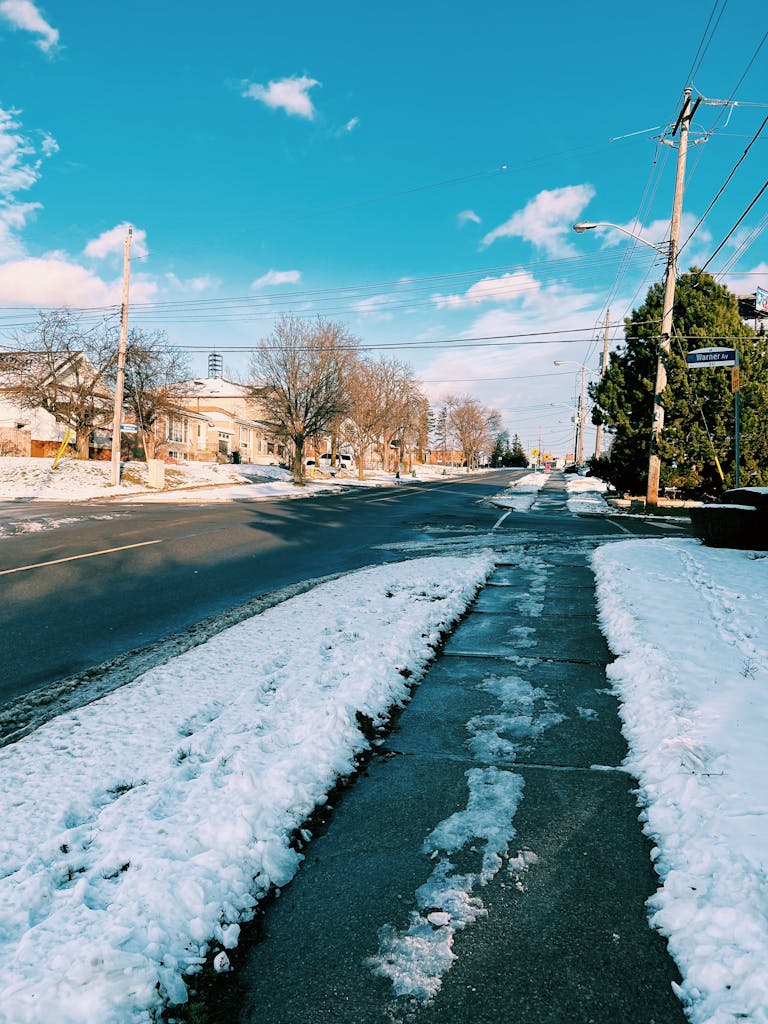
Concrete is composed of cement, water, and aggregates like sand and gravel. As it cures, it forms a rigid, crystalline structure that is riddled with microscopic pores and capillaries. These tiny voids are natural and usually harmless, but they act as sponges for liquids. When the salty brine forms on your sidewalk, it is readily absorbed into these pores. Unlike pure water, which creates a relatively neutral environment within the concrete, the salt solution alters the chemical balance. It increases the saturation level of the concrete, keeping it wetter for longer periods. This prolonged saturation is the precursor to the physical damage that follows, setting the stage for a cycle of destruction that takes place inside the slab itself, invisible to the naked eye until it is often too late.
Amplifying the Freeze-Thaw Cycle
The most significant way salt damages sidewalks in a climate like Pittsburgh’s is by accelerating and intensifying the freeze-thaw cycle. Pennsylvania winters are defined by temperature fluctuations; it is common for the thermometer to dip below freezing at night and rise above it during the day. Concrete can withstand a certain amount of this natural cycling. When water inside the concrete pores freezes, it expands by approximately nine percent. If the pores are not fully saturated, there is usually enough empty space to accommodate this expansion without damaging the solid matrix. However, the presence of salt changes this dynamic drastically. Because salt lowers the freezing point, the water inside the concrete stays liquid at temperatures where it would normally be frozen.
This might sound like a good thing, but it actually allows water to penetrate deeper into the concrete and fill more pores than it otherwise would. When the temperature eventually drops low enough to freeze this brine—a phenomenon known as thermal shock—the resulting ice crystals exert a hydraulic pressure that is significantly higher than that of normal ice. Furthermore, salt is hygroscopic, meaning it attracts and holds water. A salty sidewalk can absorb moisture from the air even when it is not raining or snowing, keeping the concrete in a critically saturated state. As a result, a salted sidewalk may experience dozens more freeze-thaw cycles in a single winter than an unsalted one. Each cycle acts like a miniature explosion inside the concrete, creating micro-cracks that weaken the material from the inside out.
Surface Scaling and Spalling
The most visible symptom of salt damage is a condition known as spalling or scaling. This manifests as the flaking or peeling of the top layer of the concrete. You might notice small, thin patches of the surface coming loose, revealing the rougher aggregate of stones and sand underneath. Initially, this might look like minor wear and tear, perhaps just a few rough spots near the edges of the walkway. However, spalling is a progressive condition. As the top layer—which is often the strongest and most finished part of the slab—crumbles away, it exposes the more porous interior to even more moisture and salt intrusion. The destruction feeds on itself, with each layer that flakes off leaving the next layer vulnerable.
Need your sidewalk repaved? Click here for our sidewalk paving service.
Spalling occurs because the expansive forces of the freezing brine are strongest near the surface, where the temperature changes are most rapid and the concentration of salt is highest. The pressure from the growing ice crystals exceeds the tensile strength of the concrete paste, shearing off the surface. Over time, a sidewalk that was once smooth and level becomes rugged and uneven. This not only destroys the aesthetic appeal of the property but creates a functional hazard. The rough surface traps dirt, makes snow removal more difficult (as shovels catch on the jagged ridges), and can eventually become a tripping hazard for pedestrians. Once spalling has covered a significant portion of the sidewalk, resurfacing becomes difficult, as the compromised substrate may not bond well with repair materials.
Chemical Attack on the Concrete Paste
Beyond the physical stresses of freezing water, salt can also instigate a direct chemical attack on the cement paste itself. The calcium hydroxide in hydrated cement can react with calcium chloride—a common alternative deicer—to form a compound called calcium oxychloride. This chemical reaction causes the formation of crystals that are expansive, much like ice, but they form chemically rather than thermally. These crystals grow within the pores of the concrete, pushing against the walls of the microscopic structure. The pressure generated by crystal growth can be immense, leading to the crumbling and disintegration of the concrete binder.
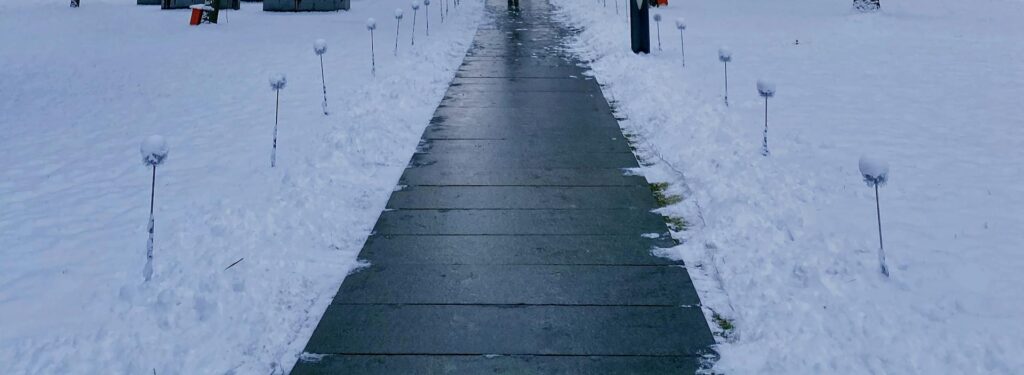
Even standard sodium chloride is not entirely benign chemically. While less reactive than calcium or magnesium chloride, high concentrations can leach calcium hydroxide out of the cement paste over time. This leaching process increases the porosity of the concrete and reduces its pH. As the pH drops, the concrete loses some of its chemical stability and strength. This type of degradation is insidious because it softens the matrix of the sidewalk. You might notice that the concrete feels dusty or that you can scratch the surface easily with a metal tool. This general weakening makes the sidewalk more susceptible to abrasion from foot traffic and erosion from rainwater, accelerating the aging process significantly.
Corrosion of Internal Reinforcement
Many sidewalks, especially those built to support heavier loads or span unstable soil, are reinforced with steel mesh or rebar. Concrete is naturally alkaline, and this high pH creates a protective oxide layer around the steel that prevents it from rusting. However, chloride ions from deicing salts are small enough to migrate through the pores of the concrete and reach the steel reinforcement. Once the concentration of chlorides at the level of the steel reaches a critical threshold, it destroys that passive protective layer. In the presence of oxygen and moisture—both readily available in a porous sidewalk—the steel begins to corrode.
Rust takes up significantly more volume than the original steel—up to four to six times as much. As the steel rusts and expands, it exerts massive internal pressure on the surrounding concrete. Since concrete has low tensile strength, it cannot stretch to accommodate this expansion. The result is delamination, where horizontal cracks form parallel to the surface, or severe vertical cracking directly above the reinforcement bars. Often, you will see rust stains bleeding through to the surface of the sidewalk, a telltale sign that the steel inside is actively corroding. Once the reinforcement is compromised, the structural integrity of the sidewalk is lost, leading to breaking, settling, and the eventual need for complete removal and replacement.
Environmental Consequences and Soil Damage
The damage caused by salt is not limited to the concrete slab itself; it spills over into the surrounding environment, which in turn can affect the sidewalk. When snow melts or when rain washes the salt off the pavement, the runoff flows into the adjacent soil. High concentrations of sodium in the soil are toxic to many plants, including grass, flowers, and the roots of nearby trees. You often see this as the “dead zone” of brown, withered vegetation lining sidewalks in the spring. While this is an landscaping issue, it becomes a structural one when it affects trees. The roots of trees often extend under sidewalks. If the salt damage kills or weakens these roots, the stability of the tree is compromised, but conversely, if the tree struggles to survive, it may send roots aggressively seeking fresh water, leading to root heave that cracks the sidewalk.
Want to know what causes concrete to crack early? Click here for more information.
Furthermore, sodium affects the structure of the soil itself. It can cause clay particles in the soil to disperse, breaking down soil aggregates and reducing permeability. This leads to soil compaction and poor drainage along the edges of the sidewalk. Instead of water draining away into the ground, it pools next to or under the concrete slab. This standing water keeps the sub-base of the sidewalk saturated, increasing the risk of frost heave during the winter and erosion during the spring rains. The stability of any pavement relies on a solid, well-drained base. By degrading the soil quality along the perimeter, salt indirectly undermines the foundation of the sidewalk, leading to tilting slabs and uneven joints.
The Long-Term Financial Impact
It is easy to view a bag of rock salt as a cheap solution to a winter problem. A fifty-pound bag costs only a few dollars, whereas mechanical removal or heated mats are expensive. However, this short-term economy ignores the long-term financial impact on the property. A well-installed concrete sidewalk can last thirty to forty years if properly maintained. Regular application of salt can reduce that lifespan by half or even more. The cost of replacing a sidewalk is substantial, involving demolition, disposal, site preparation, and pouring new concrete. When amortized over the shortened life of the pavement, the “cheap” bag of salt becomes incredibly expensive.
Additionally, the degradation of the sidewalk affects property value and curb appeal. A crumbling, spalled walkway signals neglect to potential buyers or clients. For commercial properties, it poses a liability risk. Uneven surfaces generated by salt damage are prime locations for trip-and-fall accidents. The cost of a single liability claim or increased insurance premium far outweighs the cost of using salt alternatives or investing in professional snow removal services that minimize chemical use. Viewing salt application through the lens of asset management reveals that the true cost is hidden in the slow depreciation of the hardscaping.
Mitigation and Preventive Measures
While the damage salt causes is severe, it is not entirely unavoidable. There are strategies to mitigate the harm while maintaining safety. The most effective approach is to minimize the use of chemicals altogether by prioritizing mechanical removal. Shoveling early and often prevents the snow from becoming compacted into ice, reducing the need for deicers. When deicers are necessary, using them sparingly is key. A little salt goes a long way; you do not need to cover the sidewalk in a layer of white crystals to lower the freezing point effectively. Mixing salt with sand provides traction without increasing the chemical load, although it does require cleanup in the spring.
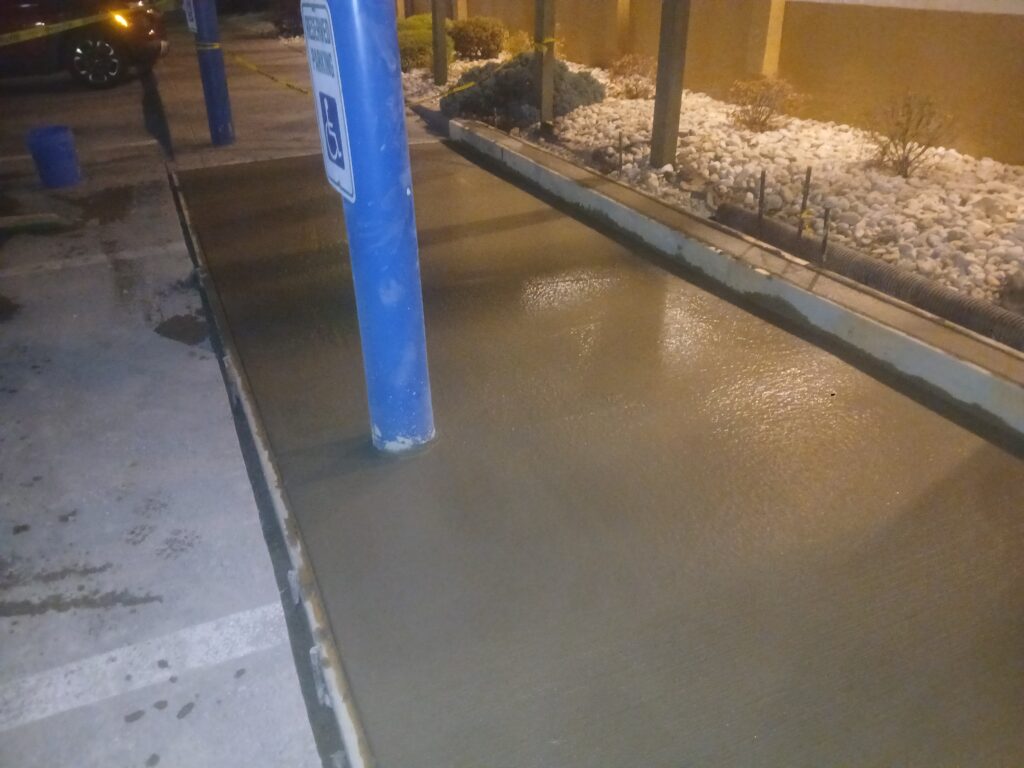
Sealing the concrete is another powerful defensive measure. Penetrating sealers, such as silanes or siloxanes, soak into the pores of the concrete and make them hydrophobic, or water-repellent. This prevents the brine from being absorbed deep into the slab. While it does not stop surface freezing, it significantly reduces the water saturation within the concrete matrix, thereby minimizing freeze-thaw damage and chloride intrusion. For new sidewalks, allowing the concrete to cure fully—typically for at least thirty days but ideally a full year—before applying any salt is critical. Using air-entrained concrete, which has microscopic air bubbles intentionally introduced to provide space for freezing water to expand, is also a standard best practice for durability in cold climates.
The relationship between Pittsburgh winters and concrete sidewalks is inherently adversarial, but the introduction of salt turns a natural struggle into a destructive chemical war. While salt serves an immediate purpose in ensuring pedestrian safety, its long-term effects are corrosive and costly. From the physical shattering of the surface through accelerated freeze-thaw cycles to the chemical decomposition of the cement paste and the rusting of internal steel, the mechanisms of salt damage are thorough and relentless. What begins as a convenient way to clear ice eventually manifests as spalling, cracking, and structural failure that demands attention.
Preserving the longevity of your sidewalks requires a shift in perspective. It means weighing the immediate convenience of salt against the future cost of replacement. By understanding the science of how salt degrades concrete, property owners can make better choices—whether that means using less salt, switching to less harmful alternatives, applying protective sealers, or simply being more diligent with the shovel. A sidewalk is a significant investment in the infrastructure of a home or business. protecting it from the slow, grinding damage of winter chemicals is essential to ensuring it remains safe, functional, and aesthetically pleasing for decades to come.