
Stamped concrete patios have become one of the most popular outdoor upgrades for Pittsburgh homeowners, and for good reason. They deliver the look of natural stone, brick, or slate at a fraction of the cost, and they hold up well against foot traffic, furniture, and seasonal weather shifts. Many homeowners in the Pittsburgh area want to know exactly how many years they can expect from this investment before needing any major work done. The honest answer depends on installation quality, climate exposure, and ongoing care. A properly installed stamped concrete patio can last 25 to 30 years or more with routine maintenance. This post breaks down the real lifespan, what affects it, and how to get the most years out of your patio.
What Determines the Lifespan of a Stamped Concrete Patio
The longevity of a stamped concrete patio comes down to several key factors working together. Installation practices, material quality, soil conditions, and climate all play a major role in how the surface performs over time. In Pittsburgh, freeze-thaw cycles are one of the biggest stressors on any outdoor concrete surface. When water seeps into small cracks and freezes, it expands and can cause progressive damage if the slab is not sealed or reinforced properly. Understanding these variables helps you set realistic expectations for your patio’s future.
The Installation Quality of a Stamped Concrete Patio Matters Most
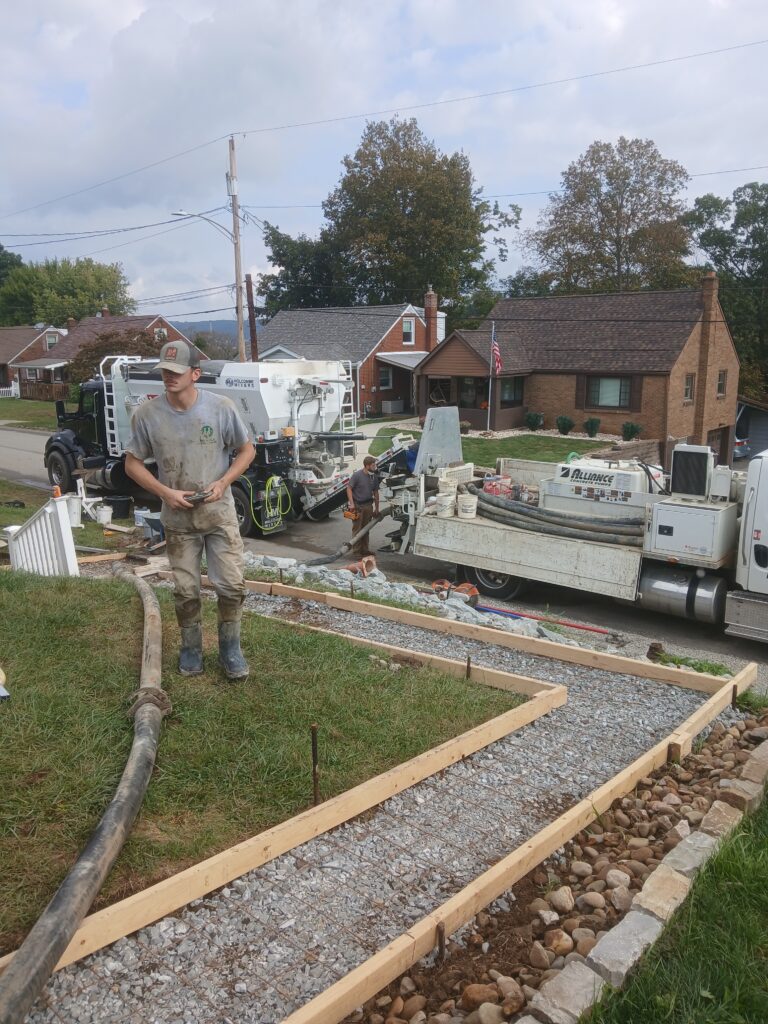
Installation is the single biggest factor in how long a stamped concrete patio will last. A skilled concrete contractor prepares the base with the right depth of compacted gravel, which prevents settling and cracking over time. The concrete mix itself must be formulated for outdoor conditions, with the correct water-to-cement ratio and appropriate air entrainment for freeze-thaw resistance. Reinforcement with rebar or wire mesh adds structural strength that helps the slab resist cracking under heavy loads. Control joints must also be cut at the right depth and spacing so the slab can expand and contract without random cracking.
Stamping technique is another area where experience shows. The concrete must be stamped at the right moment during curing, when it is firm enough to hold detail but soft enough to accept the pattern. If stamping happens too early or too late, the impressions can come out shallow, uneven, or distorted. Release agents also need to be applied correctly to prevent the stamps from sticking and pulling up fresh concrete. These small details separate a patio that looks great for decades from one that starts showing problems within a few years.
A reputable contractor will also account for drainage and slope during installation. Water should move away from your home’s foundation and off the patio surface, not pool in low spots where it can cause damage. Proper curing is just as important; concrete needs time and the right moisture conditions to reach full strength. Rushing the curing process or skipping sealant application at the right time can shorten the patio’s lifespan by years. When all of these elements come together, you get a patio built to last. For expert installation, check out our patio paving service.
The Climate Impact on a Stamped Concrete Patio in Pittsburgh
Pittsburgh’s climate is hard on outdoor concrete. Winters bring freezing temperatures, snow, ice, and deicing salts that all attack the surface in different ways. Summers add heat, humidity, and sudden thunderstorms that saturate the slab. Spring and fall deliver constant temperature swings that cause concrete to expand and contract repeatedly. Over years, these cycles put real stress on any stamped concrete patio.
Freeze-thaw damage is the most common weather-related issue we see on Pittsburgh patios. Water enters tiny pores and hairline cracks, freezes overnight, and expands with enough force to widen the damage. Without a quality sealer, this cycle chips away at the surface layer, which is where the decorative color and pattern live. Once the top layer starts to flake or spall, the patio loses its visual appeal and becomes harder to maintain. Sealing every two to three years keeps water out and preserves the decorative finish.
Ultraviolet rays from the sun also affect stamped concrete over time. Integral colors and surface stains can fade in areas with heavy direct sunlight, especially on south-facing patios. A high-quality sealer with UV protection slows this fading significantly. Tree cover, patio furniture placement, and shade structures can also reduce sun exposure. Pittsburgh homeowners who stay ahead of sealing and seasonal prep consistently get the longest life out of their stamped concrete investment.

The Maintenance Routine for a Stamped Concrete Patio
Routine maintenance is the most affordable way to extend the life of a stamped concrete patio. Regular cleaning removes dirt, leaves, and debris that can stain the surface or trap moisture against the concrete. A simple sweep and occasional rinse with a garden hose handles most day-to-day upkeep. For deeper cleaning, a mild detergent and soft-bristle brush work well without damaging the sealer. Avoid pressure washers on the highest settings, since aggressive water pressure can strip sealer and erode the decorative finish.
Resealing is the most important maintenance task for any stamped concrete patio. Most sealers last two to three years in Pittsburgh’s climate before they need to be reapplied. A fresh coat of sealer restores the rich color, adds slip resistance, and blocks water from penetrating the surface. Skipping this step is the fastest way to shorten a patio’s lifespan. Homeowners who reseal on schedule often get 30 years or more from their patio without major repairs.
Avoiding harsh deicing chemicals during winter is another simple but critical habit. Rock salt, calcium chloride, and similar products can eat into the surface and damage the sealer. Sand offers traction without chemical damage, and a plastic shovel protects the stamped pattern from metal scraping. Furniture should also have protective pads to prevent scratches during moves. Small habits like these add up to years of extra life for your patio. Learn more about protecting your investment with our concrete sealing service.
What Shortens the Life of a Stamped Concrete Patio
Even a well-built stamped concrete patio can fail early if certain issues go unaddressed. Some problems come from poor installation, while others develop from neglect, ground movement, or harsh chemical exposure. Knowing what causes early failure helps you protect your investment and catch problems before they grow. Most issues start small and get worse over time, so early action makes a real difference. Here are the most common culprits behind stamped concrete patios that age prematurely.
The Cracking Problems That Shorten a Stamped Concrete Patio Lifespan
Cracking is one of the most visible signs that a stamped concrete patio is aging faster than it should. Some hairline cracks are normal and happen as concrete cures and settles. Larger structural cracks, however, point to bigger issues with the base, reinforcement, or control joint placement. If water gets into these cracks and freezes, the damage spreads quickly during Pittsburgh winters. Ignoring cracks often leads to full sections lifting, sinking, or breaking apart.
Soil movement under the slab is a frequent cause of serious cracking. If the base was not properly compacted, or if drainage issues cause erosion beneath the patio, the concrete loses its support. Tree roots growing under the slab can also push it upward over time. Heavy loads placed on unsupported areas, like large planters or hot tubs, can create pressure cracks. Proper site preparation during installation prevents most of these issues.
The good news is that many cracks can be repaired before they ruin the patio. A concrete contractor can clean out cracks, fill them with flexible sealant, and blend the repair into the stamped pattern. For larger structural issues, slab lifting or section replacement may be needed. Addressing cracks early keeps repair costs low and extends the patio’s useful life. Our concrete repair service handles everything from minor touch-ups to full restoration work.

The Surface Damage That Reduces a Stamped Concrete Patio Lifespan
Surface damage on a stamped concrete patio often shows up as flaking, pitting, or color loss. This type of damage is called spalling, and it happens when the top layer of concrete breaks away from the base. Spalling is almost always caused by water getting past the sealer, freezing, and pushing the surface apart. Once it starts, spalling spreads quickly across the patio if left untreated. The decorative pattern and color suffer the most since they sit right at the surface level.
Deicing salts are a major cause of surface damage in Pittsburgh. Products containing sodium chloride, calcium chloride, or magnesium chloride all react with concrete in harmful ways. These chemicals pull moisture into the slab and accelerate freeze-thaw damage. Even sealed concrete can be affected if the sealer has worn thin or been applied incorrectly. Using sand instead of salt keeps the surface safe while still providing traction on ice.
Color fading is another surface issue that affects stamped concrete over time. Integral color stays strongest when the sealer remains intact and UV protection is maintained. Surface stains and dyes are more vulnerable to fading, especially in full-sun locations. Periodic color refresh treatments can restore faded areas and bring the patio back to life. A fresh coat of tinted sealer often refreshes the entire look for a fraction of replacement cost.
The Drainage Issues That Harm a Stamped Concrete Patio Over Time
Poor drainage is one of the silent killers of stamped concrete patios. Water that pools on the surface or collects underneath the slab causes slow, steady damage that builds over years. Surface pooling leads to stains, biological growth like moss or mildew, and accelerated sealer wear. Subsurface water softens the base material and creates settling issues that show up as uneven slabs or cracks. Good drainage planning during installation prevents most of these problems.
Downspouts that empty onto or near a stamped concrete patio create concentrated water damage over time. Redirecting downspouts with extensions or underground drainage lines keeps water away from the slab. Gutters should also be cleaned regularly so they do not overflow during heavy storms. Landscaping around the patio should slope away from the edges, not toward them. Small grading adjustments can make a big difference in how water moves across your yard.
French drains, channel drains, and proper surface slope all help manage water on and around a stamped concrete patio. A 1 to 2 percent slope away from the house is standard for patio drainage. If water is already pooling on your patio, a concrete contractor can assess whether the slope needs correction or if additional drainage features would help. Catching drainage problems early saves you from much larger repair bills later. Protecting the slab from constant moisture is one of the best ways to reach that 25 to 30 year lifespan.
Why You Need a Professional for Your Stamped Concrete Patio
Getting a stamped concrete patio that lasts 25 to 30 years starts with hiring the right contractor. Experience, craftsmanship, and attention to detail separate a patio that ages gracefully from one that needs major repairs within a few years. Professional installation covers everything from soil preparation and reinforcement to stamping technique and proper sealing. Ongoing care from a trusted local contractor also keeps your patio in top shape through Pittsburgh’s tough weather cycles. Choosing a professional is the best investment you can make in the long-term value of your outdoor living space.
The Professional Installation of a Stamped Concrete Patio Makes a Difference
A professional contractor brings years of hands-on experience to every stamped concrete project. That experience shows in every step, from evaluating the site and planning drainage to mixing concrete and stamping the pattern. Small details like base depth, rebar placement, and control joint spacing all affect how the patio performs over time. DIY installations and inexperienced crews often skip these fundamentals. The result is a patio that looks fine at first but develops problems within a few years.
Professional crews also have the right equipment for proper installation. Stamping mats, texture rollers, color hardeners, and release agents all need to be used in the right order and at the right moments during curing. Without the right tools and timing, the final product can look flat, uneven, or low quality. A professional team works efficiently to get the stamping done before the concrete sets too firm. This precision is what creates that rich, natural stone appearance homeowners want.
Warranty coverage is another reason to hire a professional for your stamped concrete patio. Reputable contractors stand behind their work and address issues that come up after installation. This protection gives homeowners peace of mind and real recourse if something goes wrong. A handshake job with a low bidder rarely comes with any real guarantee. Professional installation is the foundation of a long-lasting patio.
The Professional Maintenance Services for a Stamped Concrete Patio
Professional maintenance keeps your stamped concrete patio looking fresh and extends its useful life. Contractors offer cleaning, resealing, crack repair, and color refresh services that are hard to match with DIY efforts. Professional-grade sealers last longer and offer better UV and chemical protection than most products available at home improvement stores. Applying sealer correctly also requires the right conditions and techniques to avoid bubbles, streaks, or uneven coverage. A trained crew handles all of this quickly and gets great results.
Seasonal inspections help catch small problems before they become expensive repairs. A contractor can spot early signs of sealer wear, minor cracking, or drainage issues during routine visits. Scheduling maintenance every two to three years keeps the patio in top condition without major interruptions. Most homeowners find that professional upkeep costs a small fraction of replacement or major repair work. Consistent care is the cheapest way to reach that 25 to 30 year lifespan.
Professional contractors also stay current on new products and techniques in the stamped concrete industry. Sealer technology, repair materials, and color restoration products improve every few years. A local contractor knows what works best in Pittsburgh’s specific climate conditions. This expertise is valuable when your patio needs more than basic cleaning. Partnering with a trusted contractor is the smartest way to protect your investment long-term.
Why Choose RMK Concrete Services for Your Stamped Concrete Patio
RMK Concrete Services brings deep experience and true craftsmanship to every stamped concrete patio we install. Our team has built countless patios across Pittsburgh and the surrounding areas, and we know exactly what it takes to handle local soil, weather, and drainage conditions. We are family-owned and operated with integrity at the core, which means we treat every project like it is for our own home. Every patio we install comes with careful site preparation, professional reinforcement, and expert stamping technique. We stand behind our work and make sure every customer is thrilled with the finished result.
We are fully licensed and insured, and we offer discounts for veterans and seniors as a thank-you for their service and support. Free in-person estimates are available on all projects, so you can get an accurate quote with no surprises. Our service area covers Pittsburgh and a 60-mile radius, which includes Baldwin, West Mifflin, Bethel Park, Mount Lebanon, Cranberry Township, and many more communities. We are committed to providing a 5 star service on every project, big or small. Reach out anytime to talk about your stamped concrete patio ideas.
Contact RMK Concrete Services at (412) 902-5114 or email info@rmkconcrete.com to schedule your free estimate. You can also stop by our office at 181 Mary Ave, Pittsburgh, PA 15209 to talk through your project in person. We look forward to helping you design and install a stamped concrete patio that will look great and perform well for decades. Our team is ready to answer your questions and walk you through the process step by step. Let us build you a patio you will enjoy for the next 25 to 30 years and beyond.