
Fall is the most practical season to seal a concrete driveway in Western Pennsylvania, and the reason comes down to temperature, moisture, and timing. Sealers need mild surface temperatures and a dry slab to bond correctly, and the stretch from early September through late October usually delivers both conditions on a regular basis. Summer heat causes many sealers to flash off too quickly, which leaves an uneven film that can bubble, peel, or turn cloudy within a single season. Winter shuts the job down completely, since most products stop curing properly once the surface temperature drops below 50 degrees and stays there. Sealing in fall also puts the protection in place before the first round of road salt, plow blades, and freezing rain reaches the Pittsburgh area. A concrete driveway that heads into December with a fresh, fully cured coat resists water absorption, surface scaling, and salt damage far better than one left bare to soak up everything winter delivers. The work itself takes a day or two of dry weather, and the payoff shows up every winter after that.
Why Fall Weather Is Ideal for Sealing a Concrete Driveway
The performance of a concrete sealer depends almost entirely on the conditions during application and the 24 to 48 hours that follow. Most acrylic and penetrating sealers call for air and surface temperatures between 50 and 90 degrees, with no rain in the forecast and no overnight frost while the product sets. Pittsburgh falls generally hold in that range through October, with warm afternoons, cool evenings, and lower humidity than the middle of summer. Direct sun in July can push a driveway surface past 130 degrees, which causes solvent or water carriers to evaporate before the resin has a chance to level out. The result is a blotchy finish that traps moisture underneath and fails early. Fall gives the slab a moderate surface temperature for most of the working day, which allows the sealer to penetrate, level, and cure at the pace the manufacturer designed it for.
Fall Temperatures Help You Seal Your Driveway Correctly
Surface temperature matters more than air temperature when you seal a driveway, and that distinction gets overlooked constantly. A slab sitting in August sun absorbs and holds heat long after the thermometer reads a comfortable number, so a sealer applied at four in the afternoon can still hit a surface running 20 or 30 degrees hotter than the surrounding air. When that happens with an acrylic product, the water or solvent carrier evaporates almost instantly and the resin cannot flow into the pores of the concrete the way it should. What you get is a thin, streaky film that sits on top rather than a bonded layer that actually protects the slab. Fall afternoons in Allegheny County typically produce surface temperatures in the comfortable range for a much wider portion of the day, which means a crew can work from morning through late afternoon without fighting the clock. That extended window also allows for proper coverage rates, because the applicator is not rushing to beat evaporation. Correct coverage is what separates a sealer that lasts three or four years from one that wears through by the following summer.
Cold creates the opposite problem, and it is the reason sealing gets pushed off the schedule entirely once late November arrives. Water based acrylic sealers form a film through coalescence, a process that requires the temperature to stay above the product’s minimum film formation threshold for the full cure period, which often runs 24 hours or longer. If overnight temperatures drop into the 30s while the sealer is still curing, the film never forms completely and the coating stays soft, powdery, or milky. Penetrating silane and siloxane sealers are a little more forgiving in cool weather, but they still need a dry surface and reasonable temperatures to react with the concrete and form the water repellent barrier inside the pores. Early fall sits comfortably above every one of those thresholds, with enough daylight hours remaining to complete a full cure before the sun goes down. By the time the first hard frost arrives in the region, a driveway sealed in September or early October has been fully cured for weeks.
Humidity plays a quieter role, and fall handles that variable well too. High humidity slows the evaporation of water based products, which stretches cure times and leaves the surface vulnerable to dust, leaves, and foot traffic for longer than planned. The drier air common in September and October speeds that process along without pushing it into the flash off territory that summer heat creates. Morning dew is the one fall condition that requires attention, since a slab that looks dry at eight in the morning can still hold surface moisture in the pores. An experienced crew simply starts later in the morning, checks the slab, and adjusts the schedule around the dew point rather than forcing the application. That kind of flexibility is possible in fall precisely because the weather stays workable for weeks at a time instead of arriving in short unpredictable windows. Ready to protect your slab before the cold sets in? Click here for our concrete sealing service.
Fall Rainfall Patterns Make It Easier to Seal Your Driveway
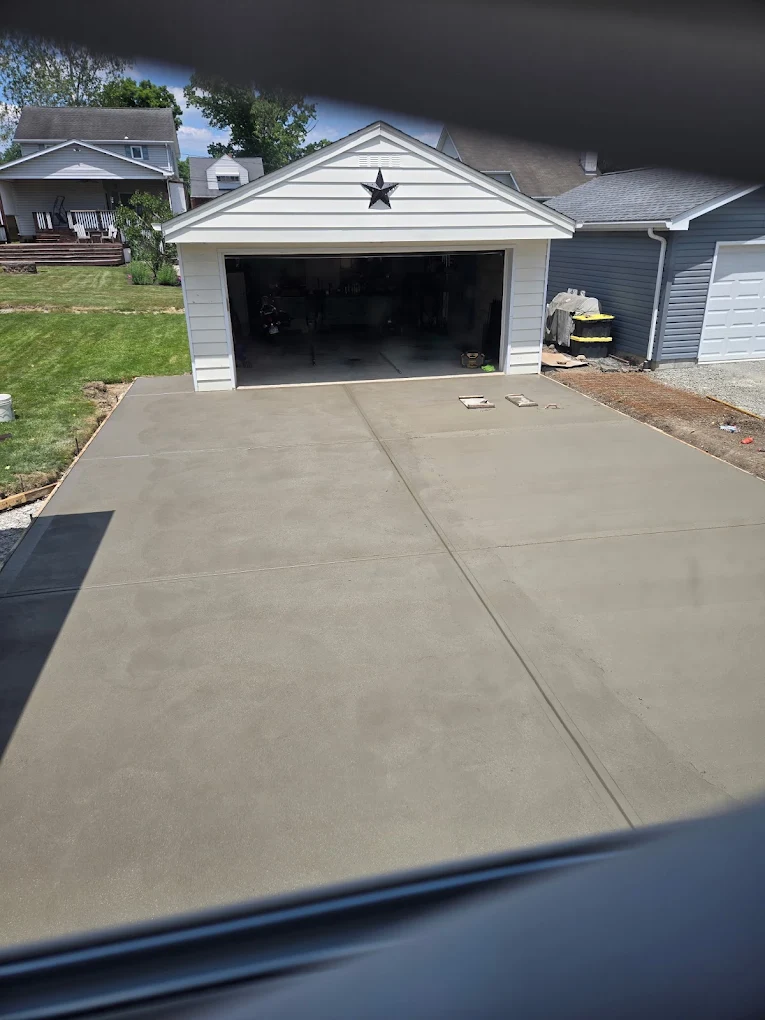
Rain is the single most common reason a sealing job gets ruined, and the difference between summer and fall precipitation in Pittsburgh is meaningful. Summer storms in this region tend to be convective, which means they build fast in the afternoon and dump heavy rain with very little warning. A pop up thunderstorm two hours after application can wash an uncured acrylic sealer right off the slab, leave white streaks across the surface, and force a full strip and reapplication. Fall systems generally move through as broader frontal patterns that show up on a forecast a day or two ahead, which gives a crew the ability to plan around them with real confidence. That predictability is worth a great deal on a job where the product needs an uninterrupted dry window to set. Homeowners often assume summer is the dry season here, but Pittsburgh averages more rainfall in June and July than in October.
The slab also needs to be dry going into the job, not just during it, and fall makes that easier to achieve. Concrete is porous and holds moisture well after the visible surface looks dry, which is why most manufacturers require at least 24 hours of dry weather before application. A driveway that has been rained on two days in a row still carries moisture in the upper layer, and sealing over that trapped moisture leads to a cloudy, milky appearance called blushing. Worse, trapped water beneath a film forming sealer can freeze during the first hard cold snap and push the coating loose from the surface. Fall’s longer dry stretches allow a slab to release that moisture fully before any product touches it. A simple plastic sheet test taped to the surface overnight tells a crew what they need to know, and in fall the answer is usually favorable.
Leaf debris is the trade off that comes with the season, and it is entirely manageable with the right approach. Wet leaves left on fresh sealer can leave tannin stains, and dry leaves blowing across an uncured surface will embed themselves in the film. The solution is a thorough cleaning immediately before application and a barrier or a watchful eye during the cure window. Most crews schedule sealing before the heaviest leaf drop in late October for exactly this reason, which pushes the ideal window toward September and the first half of October. That timing also aligns perfectly with the goal of finishing the work before winter weather arrives. A driveway sealed in that window has ample time to cure, harden, and reach full chemical resistance before the first bag of salt hits the pavement.
Sealing Your Driveway in Fall Beats Waiting Until Spring
Plenty of homeowners plan to seal in spring instead, and that decision costs the driveway an entire winter of protection. Spring in Western Pennsylvania is wet, unpredictable, and full of freeze thaw swings that keep surface temperatures bouncing above and below the minimums a sealer needs. March and April routinely deliver overnight lows in the 30s alongside daytime highs in the 60s, which is exactly the pattern that ruins an acrylic cure. The ground also releases moisture as it thaws, pushing vapor up through the slab and interfering with adhesion in ways that are difficult to predict from the surface. Even when the weather cooperates, the driveway has already absorbed a full season of salt, moisture, and freeze cycles by the time the sealer goes down. Sealing after the damage means locking in whatever deterioration already occurred rather than preventing it.
There is also a repair sequencing argument that favors fall strongly. Cracks, spalled patches, and joint failures should be addressed before any sealer is applied, because sealer will not bridge a crack and will not restore a surface that has already scaled. Fall gives you time to complete those repairs, allow the patching material to cure properly, and then seal the entire slab as a finished unit. Attempting the same sequence in spring compresses everything into a narrow, rain interrupted window and often leaves the repair work exposed through a second winter. Concrete repair mortars and crack fillers also perform better when applied in moderate temperatures with a dry substrate, which is another point in fall’s favor. Handling the repairs and the sealing in one fall visit produces a driveway that enters winter fully protected instead of partially patched.
Scheduling is the last practical advantage, and it is not a small one. Spring is the busiest season for most concrete contractors in the Pittsburgh area, which means longer waits and less flexibility when a rain day pushes the calendar. Fall schedules generally have more room, so a crew can move a job by a day or two to chase a dry window instead of bumping it out by three weeks. That flexibility directly improves the quality of the finished work, because nobody is forced to apply product under conditions that are merely acceptable rather than good. Homeowners who book early in the fall almost always get the better weather window, since availability tightens as October progresses and everyone remembers winter is coming. Booking in September puts you in control of the timing rather than at the mercy of it.
What Winter Does to an Unsealed Concrete Driveway in Pittsburgh
An unsealed concrete driveway absorbs water like a sponge, and that single property drives nearly every form of winter damage this region produces. Pittsburgh averages dozens of freeze thaw cycles between November and March, with temperatures crossing the freezing mark repeatedly in a single week. Every time water inside the concrete freezes, it expands roughly nine percent, and that expansion generates internal pressure the slab has to absorb. Add the chloride salts used on local roads and the chemical attack accelerates the physical damage considerably. The visible results are scaling, spalling, pitting, and popouts, all of which start at the surface and work deeper each season. None of that damage reverses itself, and repairing it costs several times what sealing would have.
Freeze Thaw Damage on an Unsealed Concrete Driveway
The mechanics of freeze thaw damage are straightforward once you picture what happens inside the slab. Concrete contains a network of tiny capillary pores, and an unsealed surface allows rain, snowmelt, and slush to move into those pores freely. When the temperature drops below 32 degrees, that trapped water turns to ice and expands, generating hydraulic pressure against the surrounding cement paste. A single cycle rarely does visible harm, but Pittsburgh delivers this cycle over and over from late November through March. Each repetition creates microfractures that widen slightly, which allows more water in during the next thaw and increases the pressure during the next freeze. The process compounds on itself, and by the third or fourth winter the surface begins flaking away in thin sheets.
Air entrained concrete resists this process far better than concrete without it, and quality driveway placements in this climate should always include an air entraining admixture. Those microscopic air bubbles give expanding ice somewhere to go, which relieves internal pressure before it fractures the paste. That said, air entrainment protects the body of the slab and does very little for the top surface layer that takes the most abuse. A sealer works on the front end of the problem by reducing how much water gets into the concrete in the first place. Penetrating silane and siloxane sealers are particularly effective here, since they line the pores with a water repellent barrier while still allowing vapor to escape from below. Reducing water absorption reduces the amount of ice that can form, which reduces the pressure the slab has to survive every single cycle.
Older driveways benefit from sealing even more than new ones, though the condition has to be honest going in. A slab with existing surface damage will not be restored by sealer, and applying product over a failing surface simply seals in the problem. What sealing does accomplish on a sound older driveway is slow the progression, buying years of additional service life from concrete that is otherwise in decent shape. The right move is an inspection first, targeted repairs where needed, and then a full sealing application once the repairs have cured. Skipping the inspection step is how homeowners end up disappointed with a sealing job that was never going to fix the underlying issue. Seeing cracks or flaking already? Click here for our concrete repair service.
Road Salt Damage on an Unsealed Concrete Driveway
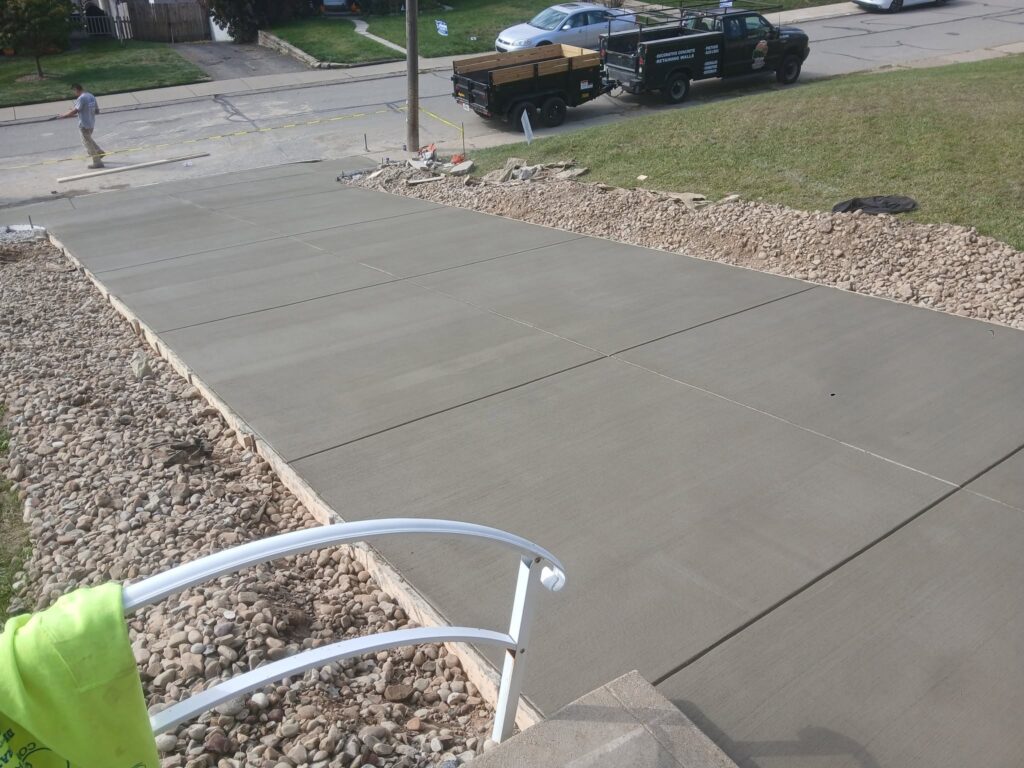
Road salt is the second major threat, and it damages concrete through more than one mechanism. The most immediate effect is that chloride salts lower the freezing point of water, which dramatically increases the number of freeze thaw cycles a driveway experiences in a given winter. A surface that might have frozen and thawed six times in a cold week can cycle twelve or more times when salt is present, and every additional cycle adds internal stress. Salt also creates osmotic pressure inside the slab, drawing additional moisture into the concrete and concentrating it in the upper layer where damage is most visible. Calcium chloride and magnesium chloride, both common in commercial deicers, react chemically with the cement paste and can form expansive compounds that break the surface apart from within. That combination of physical and chemical attack is why salt damaged concrete often looks pitted and eaten away rather than simply cracked.
Most of the salt that reaches a residential driveway is not applied by the homeowner at all. It arrives on tires, in wheel wells, and in the slush that drops off a vehicle after a drive down a treated road. That means avoiding deicers on your own property helps, but it does not eliminate the exposure. A quality sealer creates a barrier that prevents chloride laden water from soaking into the pores where it does its worst work. The salt sits on the surface instead, where a rinse or the next rainfall carries much of it away. This is the practical reason sealing matters even for homeowners who use nothing but sand on their own concrete.
New concrete deserves special attention on this point, because the first winter is the most vulnerable one. Fresh concrete needs a full 28 days to reach design strength, and manufacturers of most sealers require that same 28 day window before application. A driveway poured in September can be sealed in October and enter winter protected, which is the ideal sequence. A driveway poured in late November has no realistic path to sealing before spring, and deicing salts should be kept off it entirely during that first season. Sand provides traction without chemical attack and is the correct choice for any concrete in its first winter. Planning a new pour with the sealing schedule in mind is one of the simplest ways to protect the investment from day one.
Stains and Surface Wear on an Unsealed Concrete Driveway
Winter damage gets the attention, but an unsealed driveway also collects stains year round that become permanent surprisingly fast. Motor oil, transmission fluid, brake dust, and antifreeze all soak directly into open concrete pores, and once they migrate below the surface no amount of scrubbing removes them. Leaf tannins from fall debris leave brown outlines that follow the exact shape of the leaves that sat there. Rust from a trailer jack, a grill, or a snow shovel left in one spot creates orange stains that penetrate deeply. Fertilizer and iron rich runoff produce similar discoloration along driveway edges. A sealed surface holds those contaminants on top long enough for a wash to lift them away cleanly.
Snow removal equipment adds mechanical wear that sealing helps mitigate as well. Metal shovel blades and plow edges scrape directly across the surface, and on an unsealed slab with any degree of surface weakness they accelerate the loss of the top layer. A cured sealer adds a measure of surface hardness and abrasion resistance, particularly with products that include a hardening component. It will not make the driveway immune to a plow blade dropped too low, but it does reduce the everyday abrasion that dulls and roughens an exposed surface over several seasons. Homeowners who use a service for snow removal should confirm that plow shoes are set correctly for concrete rather than asphalt. Small equipment adjustments prevent a great deal of avoidable gouging. Need reliable winter service? Click here for our snowplowing service.
Appearance matters more than people admit, and a sealed driveway simply looks better for longer. Sealers deepen the tone of the concrete slightly and produce a uniform finish that resists the chalky, faded look bare concrete develops after a few years of sun and weather. For decorative work, stamped surfaces, and colored concrete, sealing is not optional at all, since the color and the pattern definition depend on the coating for protection against ultraviolet fading. A driveway is the largest visible hardscape element on most Pittsburgh properties, so its condition carries real weight in how the whole house presents. Keeping it sealed on a regular cycle protects both the structure and the appearance at the same time. Most driveways in this climate need resealing every two to four years, with the exact interval depending on traffic, sun exposure, and the product used.
Why You Need Professional Driveway Sealing Before Winter
Sealing looks simple from the outside, and that appearance is exactly what leads to disappointing results. The product has to match the concrete, the surface has to be prepared correctly, the coverage rate has to be right, and the weather window has to hold through the full cure. Getting any one of those wrong produces a finish that peels, blushes, or wears through within a season, and stripping a failed sealer is a considerably harder job than applying a good one. A professional crew brings the right product for the slab, the equipment to apply it evenly, and the experience to read conditions before starting. They also catch the repair issues that need attention before any sealer goes down. Fall is the window, and it closes faster than most homeowners expect.
What Professional Driveway Sealing Includes
A proper sealing job starts with a full inspection of the slab rather than a bucket and a sprayer. The crew checks for active cracking, joint condition, spalled areas, and any existing coating that may need to be removed or tested for compatibility. Surface preparation follows, which usually means a pressure wash, a degreaser on oil stained areas, and sometimes an etch on very smooth or previously sealed concrete. The slab then has to dry completely, which is why sealing is rarely a single afternoon job done start to finish.
Product selection comes next and depends entirely on the driveway itself. Penetrating silane and siloxane sealers are the common recommendation for exposed driveways in freeze thaw climates because they protect from within and do not create a slick film. Acrylic sealers are the choice for decorative, stamped, or colored concrete where appearance and ultraviolet protection matter as much as water resistance. Application follows the manufacturer’s coverage rate exactly, since over application causes just as many failures as under application.
The cure period is the part homeowners underestimate most often. Foot traffic typically needs to stay off for 24 hours and vehicle traffic for 48 to 72 hours, and those numbers stretch in cooler or damper conditions. A crew that gives you a real timeline and blocks the driveway appropriately is protecting the work you paid for. Rushing a car back onto a soft sealer leaves tire marks that never fully disappear. Good communication about that window is part of the service.
The Cost of Skipping Professional Driveway Sealing
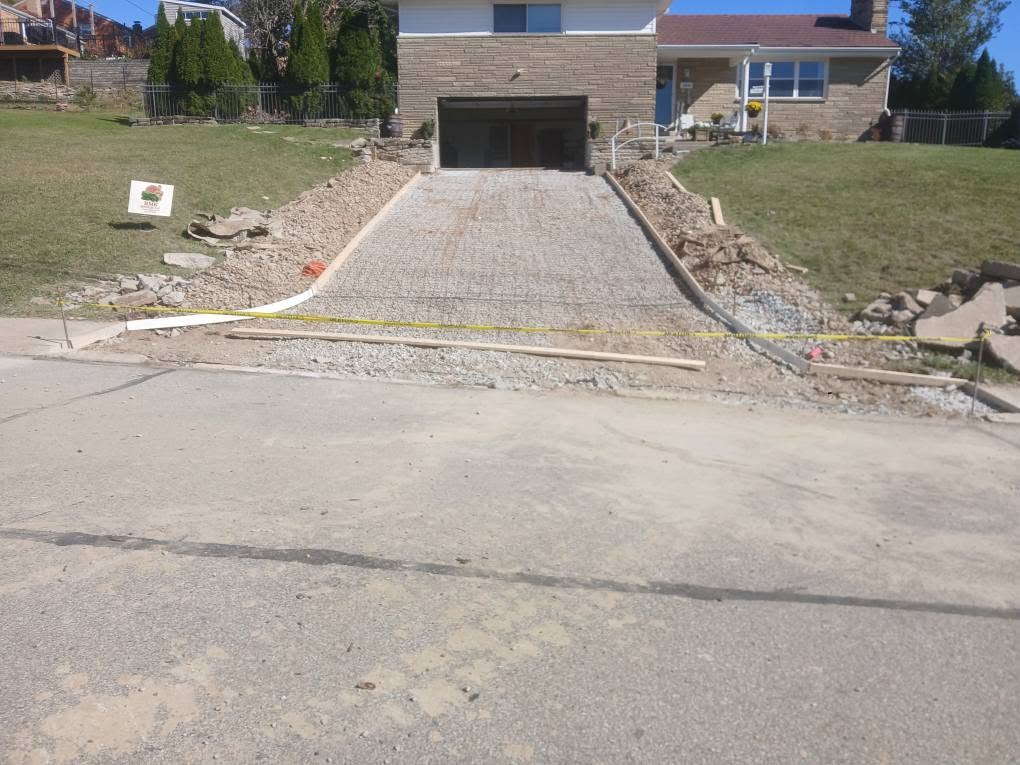
The financial comparison is not close once you look at the actual numbers. Sealing a residential driveway is a modest expense repeated every few years, while replacing a spalled and failing concrete driveway is a significant project involving demolition, disposal, base preparation, and a new pour. Resurfacing sits somewhere in between and only works when the underlying slab is still structurally sound. Damage that starts as light surface scaling in year two becomes deep pitting and exposed aggregate by year five if nothing changes.
There is also a timing cost that compounds quietly. A driveway that goes unsealed through several winters develops enough surface deterioration that sealing alone stops being a viable option. At that point the choices narrow to resurfacing or replacement, both of which cost far more than the maintenance that would have prevented the problem. Homeowners who stay on a regular sealing cycle simply never reach that decision point.
Property value factors in as well, particularly for anyone considering a sale in the next few years. A cracked, pitted, stained driveway reads as deferred maintenance to a buyer and invites questions about what else was neglected. A clean, sealed, well maintained driveway does the opposite. The cost of keeping it that way is small relative to the impression it creates.
Why Choose RMK Concrete Services for Driveway Sealing
RMK Concrete Services is a family owned and operated company based at 512 Carolyn Ave in Pittsburgh, serving the city and a 60 mile radius around it. We are licensed and insured, and we bring the same standard to a sealing job that we bring to a full driveway installation. Our crews know Western Pennsylvania winters because we work through them every year, and that experience shapes how we time and specify every application. Integrity sits at the core of how we operate, which means we tell you honestly when a driveway needs repair before sealing rather than selling you a coating that will not solve the problem.
Every project starts with a free in person estimate, because a driveway cannot be evaluated properly over the phone. We look at the slab, discuss what you want from it, and give you a straight recommendation on product and timing. We offer discounts for veterans and seniors, and we are committed to delivering five star service on every job we take. That commitment is why so much of our work comes from referrals across Pittsburgh and the surrounding communities.
Fall availability fills quickly, and the sealing window in this region closes when overnight temperatures stop cooperating. Call us at (412) 902-5114 or email info@rmkconcrete.com to get on the schedule while conditions are still right. We handle sealing, repair, resurfacing, and new driveway installation, so one call covers whatever your concrete actually needs. Planning a new driveway instead? Click here for our driveway paving service.