
Sloped yards and hillside properties present real challenges for Pittsburgh homeowners, from soil erosion to limited usable outdoor space. A concrete retaining wall solves these issues by holding back earth, creating level terraces, and adding lasting structural support to your landscape. Spring is the ideal season to plan and build retaining walls, since the ground has thawed and weather conditions allow concrete to cure properly. RMK Concrete Services has helped countless local homeowners turn unusable slopes into functional, beautiful spaces. This guide explains how concrete retaining walls work, why they are the best option for hilly terrain, and what you should know before starting your project. If you own property in the rolling hills of Western Pennsylvania, this information will help you make a smart investment in your land.
Why Concrete Retaining Walls Work Best for Sloped Yards and Hillsides
Concrete is the strongest, longest-lasting material available for retaining wall construction on sloped properties. Unlike timber or loose stone, poured concrete creates a single monolithic structure that resists soil pressure, water infiltration, and freeze-thaw damage common in the Pittsburgh region. Hillside lots often carry thousands of pounds of lateral earth pressure, and only engineered concrete can safely hold that load over decades. Concrete retaining walls also allow for custom heights, curves, and finishes that match your home’s style. When built correctly, these walls prevent erosion, protect foundations, and create flat areas for patios, gardens, or play spaces. Homeowners across Allegheny County rely on concrete retaining walls because they deliver decades of service with minimal upkeep.
How Concrete Retaining Walls Handle Sloped Yards and Hillsides
Sloped yards put constant pressure on whatever material holds back the soil, and that pressure increases with height and water saturation. Concrete retaining walls use mass, reinforcement, and proper footings to counter this force safely. A typical hillside wall includes a deep concrete footer below the frost line, steel rebar running through the wall body, and a carefully engineered thickness based on wall height. Drainage systems behind the wall remove groundwater before it builds up and pushes against the structure. Weep holes and gravel backfill allow water to escape rather than freeze and crack the wall. This combination of features gives concrete walls the strength to handle steep hillside conditions year after year.
Pittsburgh terrain is especially demanding because many neighborhoods sit on clay-heavy soil that expands when wet and contracts when dry. This constant movement destroys weaker retaining wall materials within a few years. Concrete walls, anchored with proper footings and reinforced internally, move with the earth without cracking or tipping. The wall’s weight alone resists overturning, while the footing spreads load across a wide base. For taller walls above four feet, engineers often add tiebacks or deadmen anchors that extend into the hillside for extra stability. These techniques are standard practice for RMK Concrete Services on any significant slope project.
Proper drainage remains the single most important factor in retaining wall longevity on hillsides. Water trapped behind a wall creates hydrostatic pressure that can exceed the wall’s design limits, leading to bulging, cracking, or complete failure. A well-built concrete retaining wall includes a perforated drain pipe at the base, clean gravel backfill, and a filter fabric that keeps soil from clogging the drainage system. Surface water is directed away from the wall top using grading or capstones with slight slope. These drainage details are invisible once the project is finished, but they determine whether the wall lasts twenty years or eighty. Need help with a hillside property? Click here for our concrete retaining walls service.

Common Uses of Concrete Retaining Walls on Sloped Yards and Hillsides
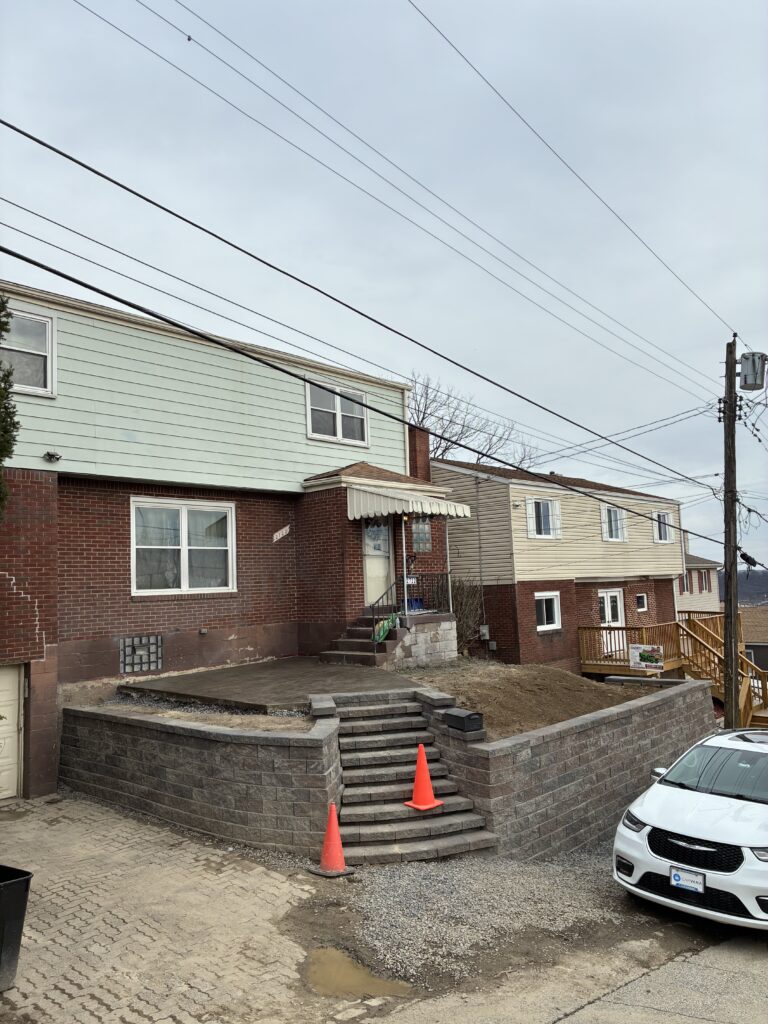
Concrete retaining walls open up possibilities that sloped yards simply cannot offer without intervention. Homeowners use them to create flat lawn areas where children can play, level patios for outdoor dining, and terraced gardens that transform a hillside into productive space. A single tall wall can reclaim hundreds of square feet of usable yard from an otherwise steep grade. Multiple tiered walls break up a long slope into manageable levels that are easier to maintain and enjoy. Many Pittsburgh homes with walkout basements use retaining walls to separate the lower yard from the upper grade, improving both function and safety. These walls also serve as attractive borders for driveways, walkways, and parking pads carved into hillside lots.
Driveways on sloped properties often require retaining walls to hold back cut earth on one side and support fill on the other. Without these walls, the driveway would erode, sink, or collapse during heavy Pittsburgh rains. Concrete retaining walls alongside driveways also provide a clean, finished look that increases curb appeal and property value. Homeowners frequently pair driveway retaining walls with matching sidewalks, steps, or decorative finishes to create a unified design. RMK Concrete Services regularly combines these projects to save clients time and money on a single coordinated build. Planning a driveway upgrade alongside your wall? Click here for our driveway paving service.
Foundation protection is another critical use for concrete retaining walls on hillside properties. Homes built into slopes often have basements or crawlspaces exposed to constant soil pressure and water infiltration. A properly placed retaining wall diverts that pressure away from the foundation, reducing the risk of cracking, leaking, and structural damage. This is especially important in Pittsburgh, where older homes on hillsides were sometimes built before modern drainage standards existed. Combining a retaining wall with foundation waterproofing provides comprehensive protection against moisture and ground movement. The result is a drier basement, a more stable home, and significantly lower long-term repair costs.
Design Options for Concrete Retaining Walls on Sloped Yards and Hillsides
Modern concrete retaining walls are not limited to plain gray surfaces; they can be finished to match any home style. Stamped concrete techniques create the look of natural stone, brick, or wood at a fraction of the cost of those materials. Integral color mixed into the concrete provides lasting tones that never peel or flake like paint. Exposed aggregate finishes reveal decorative stones within the concrete for a textured, high-end appearance. Board-formed concrete leaves a woodgrain impression that suits modern and rustic homes alike. These finish options let homeowners match retaining walls to patios, walkways, and home exteriors for a cohesive landscape design.
Curved walls are a popular design choice that softens the hard lines of a hillside project. Unlike segmental block walls, poured concrete bends easily into flowing shapes that follow the natural contours of the yard. This flexibility allows designers to create rounded planter beds, sweeping terraces, and gentle transitions between different yard levels. Curved retaining walls tend to look more organic and intentional than straight runs, especially on larger properties. They also distribute soil pressure slightly differently, which can be advantageous on irregular slopes. RMK Concrete Services designs curved walls based on both the engineering needs and the aesthetic goals of each client.
Capstones, lighting, and integrated seating transform a retaining wall from pure utility into a true landscape feature. A wide capstone along the top provides a clean finish and creates a ledge for flowers, decor, or casual seating. Low-voltage lighting built into the wall face adds safety along steps and beauty during evening hours. Taller walls can include built-in benches or planter pockets that bring color and comfort to the outdoor space. These additions cost relatively little when planned from the start but add substantial value and enjoyment. Pairing a retaining wall with a new patio creates an outdoor living area you will use for decades. Click here for our patio paving service if you want to combine projects.

Planning a Concrete Retaining Wall Project for Your Sloped Yard or Hillside
Successful retaining wall projects start with careful planning long before any concrete is poured. Pittsburgh’s varied topography, freeze-thaw climate, and clay soils all affect how a wall should be designed and built. Homeowners should understand permit requirements, property line considerations, and drainage patterns on their lot. A free in-person estimate from RMK Concrete Services gives you specific answers about your property rather than general advice. Our team evaluates slope, soil, water flow, and access before recommending wall height, length, and construction method. Good planning prevents costly mistakes and ensures the finished wall meets your goals within your budget.
Site Assessment for Concrete Retaining Walls on Sloped Yards and Hillsides
Every hillside is different, and a thorough site assessment is the foundation of a successful retaining wall project. Our estimators measure slope angle, calculate soil loads, and identify drainage patterns during a free on-site visit. We look for signs of existing erosion, previous wall failures, or underground utilities that could affect construction. Soil type matters a great deal, since clay, rock, and sandy soils each behave differently under load. We also check property lines and setbacks to ensure the wall complies with local zoning rules. This information shapes every recommendation we make about wall design and placement.
Access to the work site is another major factor in project planning for hillside walls. Steep yards often limit how close trucks and equipment can get to the pour location. Concrete may need to be pumped, conveyed, or wheeled in by hand, which affects cost and scheduling. Some properties require temporary paths or protection for existing landscaping during construction. Our team figures out the most efficient approach during the initial assessment and builds those realities into the estimate. Homeowners who understand these logistics up front are happier with both the process and the final cost.
Permits and regulations vary across Pittsburgh boroughs and surrounding townships, and most municipalities require permits for walls over a certain height. Walls four feet or taller almost always need engineered drawings and building department approval. RMK Concrete Services handles permit research and application as part of our full-service approach, so you do not have to navigate local codes alone. We also know which inspectors cover which areas and what specific details they look for during inspections. This local knowledge saves time and prevents delays that can stretch projects across weeks. Starting with the right paperwork keeps the whole project on track from day one.
Cost Factors for Concrete Retaining Walls on Sloped Yards and Hillsides
Retaining wall costs depend on several variables that homeowners should understand before requesting estimates. Wall height is the biggest driver, since taller walls need thicker concrete, more rebar, deeper footings, and often engineering reports. Wall length affects total concrete volume and labor hours, though longer walls sometimes get slight per-foot discounts due to efficiency. Site conditions like steep access, rocky soil, or underground utilities can add meaningful cost to any project. Finish choices such as stamping, coloring, or exposed aggregate raise the price compared to plain gray concrete. Drainage systems, backfill materials, and excavation depth also factor into the final number.
Getting accurate cost estimates requires honest conversation about both needs and budget from the start. Some homeowners want the absolute minimum wall that solves their erosion problem, while others want a feature wall that becomes the centerpiece of the yard. RMK Concrete Services provides free in-person estimates that lay out every cost component clearly, so you can make informed decisions. We also offer veterans and seniors discounts that reduce the total project cost for qualifying clients. Financing options through local partners can spread payments across manageable monthly amounts. Transparent pricing is part of our commitment to ethical service in every job we take.
Comparing quotes from multiple contractors is smart, but homeowners should compare details rather than just bottom-line numbers. A lower quote might skip essential drainage components, use thinner concrete, or omit proper reinforcement that guarantees wall life. Ask each contractor what footer depth, rebar size, and drainage plan they include in their price. Reputable concrete companies will gladly explain their specifications and why they matter for your specific site. Cutting corners on a retaining wall leads to failures that cost far more to fix than the original savings. Quality construction is always the cheaper option across the full life of the wall.
Timing Your Concrete Retaining Wall on Sloped Yards and Hillsides
Spring and early summer are the best times to build concrete retaining walls in the Pittsburgh area. Ground conditions allow efficient excavation, and moderate temperatures help concrete cure to full strength. Scheduling early in the season also means your wall is finished before heavy summer rains test its drainage system. Fall projects can work well in dry years, but late-season cold snaps sometimes delay final pours. Winter construction is generally not recommended for retaining walls due to frozen ground and curing challenges. Planning your project in April, May, or June usually delivers the best results and scheduling flexibility.
Lead time for retaining wall projects varies based on complexity, permits, and our current schedule. Simple residential walls might start within two to three weeks of signing a contract, while larger engineered walls can take six to eight weeks to prepare. Permit approval timelines add to this window, especially in busier municipalities. Booking early in the year, even before ground thaws completely, locks in your spot on our calendar. Homeowners who wait until peak season often face longer waits and less flexibility on start dates. Calling RMK Concrete Services in late winter or early spring is the smart move for summer completion.
Project duration itself depends on wall size, site access, and weather during construction. A straightforward residential retaining wall might take one to two weeks from excavation to backfill. Larger multi-tier projects or walls with decorative finishes can run three to four weeks or longer. Rain delays are normal and factored into realistic schedules, since wet conditions affect both excavation and concrete placement. We communicate weekly with every client about progress and any schedule adjustments needed. Knowing the timeline up front helps you plan landscaping, parties, or other outdoor projects around the wall completion.
Why You Need Professional Concrete Retaining Walls for Your Sloped Yard or Hillside
Retaining walls are not a do-it-yourself project when real slope, height, or water pressure is involved. Professional installation protects your property, your neighbors, and your investment over decades of use. RMK Concrete Services brings the equipment, experience, and engineering support needed for safe hillside construction. Family-owned and operated with integrity at the core, we treat every project as if it were our own home. Licensed, insured, and deeply rooted in Pittsburgh, we have built retaining walls across the region for years.
Safety Matters for Concrete Retaining Walls on Sloped Yards and Hillsides
A failed retaining wall is a serious safety hazard that can damage homes, injure people, and cost tens of thousands in emergency repairs. Walls that lean, crack, or collapse send soil and debris onto driveways, sidewalks, and neighboring properties. Professional builders follow engineering standards that prevent these failures through proper reinforcement, drainage, and footing design. Our crews understand load calculations, soil behavior, and Pittsburgh-specific conditions that determine safe wall construction. Skipping these standards to save money almost always backfires within a few seasons.
Liability is another safety concern that homeowners rarely think about until something goes wrong. An improperly built wall that damages a neighbor’s property or injures someone can create significant legal exposure. Permits, inspections, and licensed contractors provide a paper trail that protects you from liability claims. RMK Concrete Services carries full insurance and handles all required permits, giving you peace of mind throughout the project. This protection is part of what separates professional contractors from unlicensed operators working out of pickup trucks.
Construction safety on sloped sites requires trained crews using the right equipment for hillside work. Excavation on steep grades, shoring of soil during construction, and safe concrete placement all demand specific skills. Our team uses proper fall protection, soil stabilization, and traffic control on every job site. We also protect your existing landscaping, utilities, and hardscapes throughout the build. Hiring professionals means the work gets done safely for everyone involved, including your family and pets.
Long-Term Value of Concrete Retaining Walls on Sloped Yards and Hillsides
A professionally built concrete retaining wall adds measurable value to your property through improved function and curb appeal. Real estate buyers consistently favor homes with usable outdoor space, and walls that create flat areas where slopes existed before deliver exactly that. Appraisers recognize quality hardscaping as a durable improvement that supports higher home values. Well-designed walls also protect your largest investment, your home, from erosion and water damage over time. This combination of added value and damage prevention makes retaining walls one of the smartest landscape investments available.
Maintenance costs for professional concrete walls are minimal compared to alternatives like timber or segmental block. A properly built concrete wall needs only occasional sealing and basic cleaning to look new for decades. Wood walls rot within fifteen years, and stacked block walls often shift and need re-leveling after heavy winters. Our concrete walls come with workmanship warranties and a track record of holding up in harsh Pittsburgh conditions. Lower lifetime maintenance cost is a major part of the value proposition for poured concrete construction.
Energy efficiency is a less-discussed benefit of retaining walls that protect home foundations. By keeping soil and water away from basement walls, retaining walls help maintain drier indoor conditions and reduce HVAC strain. Consistent indoor humidity means lower utility bills and less wear on heating and cooling equipment. Sloped yards without proper walls often contribute to damp basements that waste energy and damage stored belongings. A good retaining wall quietly supports the overall health of your home year after year.
Why Choose RMK Concrete Services for Concrete Retaining Walls on Sloped Yards and Hillsides
RMK Concrete Services has served Pittsburgh and the surrounding sixty-mile radius as a family-owned and operated company built on integrity. We are licensed, insured, and dedicated to delivering five-star service on every project we take. Our free in-person estimates give homeowners a real assessment of their property, not a generic quote from a call center. Veterans and seniors discounts reflect our commitment to giving back to the community that supports our business. These values are not marketing slogans; they guide every decision we make on every job site.
Local experience matters enormously when building retaining walls in Western Pennsylvania’s specific climate and soil conditions. We know which neighborhoods have rocky ground, which have expansive clay, and how each affects wall design and cost. Our crews have built walls in Baldwin, Mount Lebanon, Monroeville, and dozens of other communities across Allegheny and Westmoreland counties. This regional knowledge helps us anticipate challenges and deliver better results than contractors new to the area. Choosing a local company also means quicker response times for questions, warranty service, or future projects.
Ready to transform your sloped yard into a functional, beautiful space? Call RMK Concrete Services today at (412) 902-5114 or email info@rmkconcrete.com for your free in-person estimate. Click here for our concrete retaining walls service to learn more about our process and finishes. We work with homeowners throughout Pittsburgh and the surrounding sixty-mile radius, including Baldwin, West Mifflin, Upper St. Clair, and beyond. Let our family help your family turn a challenging hillside into the yard you have always wanted. Quality concrete retaining walls are a generational investment, and we build them to last.