
Summer in Pittsburgh brings warm temperatures, long daylight hours, and high humidity that can complicate fresh concrete pours. Humidity plays a major role in how concrete cures, hardens, and ultimately performs over time. Many homeowners assume that hot weather is the main concern during summer concrete projects, but moisture in the air carries equal weight. When humidity levels climb, the curing process shifts in ways that affect strength, appearance, and durability. Understanding how summer humidity affects freshly poured concrete helps homeowners plan smarter projects and avoid costly surprises. RMK Concrete Services has worked through countless humid Pittsburgh summers, and we know exactly what it takes to deliver lasting results. This guide breaks down the science, the risks, and the steps that protect your investment from start to finish.
How Summer Humidity Impacts the Concrete Curing Process
Concrete curing depends on a careful balance of moisture, temperature, and time. When humidity levels rise during summer, that balance shifts in noticeable ways. High humidity slows surface evaporation, which can sound beneficial but actually creates its own set of challenges. On the flip side, sudden drops in humidity during a hot summer afternoon can pull moisture from the slab too quickly. Both extremes affect strength development, surface finish, and long-term durability. Knowing how humidity interacts with each stage of curing gives homeowners a clearer picture of what to expect.
The Role of Humidity in the Concrete Curing Process
Concrete cures through a chemical reaction called hydration, where water bonds with cement particles to form strong crystalline structures. Humidity directly influences how much moisture stays in the slab during this reaction. When the surrounding air holds plenty of moisture, less water evaporates from the surface, which gives the slab more time to develop strength. Low humidity, on the other hand, accelerates evaporation and can leave the surface dry before hydration completes. This imbalance often leads to weak spots, surface cracks, and uneven hardness. Pittsburgh summers tend to swing between humid mornings and dry afternoons, which makes timing critical. Our team monitors these shifts closely on every job.
The curing process typically takes 28 days to reach full design strength, though the first 48 hours set the foundation for everything that follows. During this early window, humidity has the biggest influence on how the slab behaves. A properly cured slab in balanced humidity develops a dense, uniform structure that resists cracking and scaling. When humidity is too low, the surface may cure faster than the interior, creating internal stress. When humidity is too high, excess moisture can disrupt the finishing process and trap water near the surface. Both scenarios call for adjustments in technique and timing.
Experienced concrete contractors use humidity readings to guide every step of the pour. We adjust water-to-cement ratios, finishing schedules, and curing methods based on the daily forecast. On especially humid days, we may delay troweling to allow excess surface moisture to dissipate. On dry days, we apply curing compounds or wet burlap to slow evaporation. These small adjustments make a large difference in the final result. Without them, even a perfectly mixed batch of concrete can fail to reach its potential.

How Summer Humidity Causes Surface Defects in Freshly Poured Concrete
High humidity often creates surface defects that show up days or weeks after the pour. One of the most common issues is blistering, where small bubbles form just beneath the finished surface. This happens when trapped moisture or air cannot escape during the finishing process. Another frequent problem is delamination, where the top layer separates from the slab below. Both defects weaken the surface and create entry points for water, salt, and freeze-thaw damage. Pittsburgh winters punish any weak surface, so summer humidity issues tend to compound over time.
Crusting is another defect tied directly to humidity swings. When the surface dries faster than the interior, a thin crust forms on top while the slab below remains soft. Finishers may then trap moisture beneath the crust, leading to scaling and flaking later on. This issue often appears on driveways, patios, and sidewalks poured during humid afternoons. Homeowners may notice the surface looking smooth at first, only to see chips and pits develop within a year. Proper timing and technique prevent crusting from taking hold in the first place.
Efflorescence, the white powdery residue that sometimes appears on cured concrete, can also stem from humidity issues during the pour. Excess moisture pulls dissolved salts to the surface as it evaporates, leaving behind unsightly deposits. While efflorescence is mostly cosmetic, it signals that moisture management was less than ideal during curing. Sealing the slab after cure helps prevent further deposits, but the best defense is controlling moisture from day one. Need a professional pour that handles Pittsburgh humidity correctly? Click here for our concrete flooring service.
Strength Development During Summer Humidity and Curing
Concrete strength develops gradually as hydration progresses, and humidity plays a quiet but powerful role in that timeline. Slabs cured in moderate humidity tend to reach higher long-term strength than those cured in extreme conditions. When humidity is consistent, the cement paste forms a dense matrix that locks aggregates firmly in place. This dense structure resists compression, abrasion, and impact for decades. Pittsburgh driveways, foundations, and patios all rely on this internal strength to handle daily use.
Low humidity during summer can rob the slab of the moisture it needs for full hydration. When water evaporates too quickly, the cement particles never fully react, leaving the slab weaker than designed. This weakness may not show immediately, but it surfaces later as cracks, spalling, or premature wear. Foundations are especially vulnerable, since any loss of strength affects the entire structure above. Curing compounds, plastic sheeting, and water misting all help retain moisture during dry summer stretches.
High humidity creates a different strength concern by extending the time concrete stays workable. While this sounds helpful, it can delay the schedule and push finishing into less ideal conditions. Slabs that sit too long before troweling may develop surface irregularities that weaken the wear layer. Our crew plans every summer pour around the forecast, adjusting start times and finishing windows to match the conditions. This planning protects strength development from the first bag of cement to the final cure.
Best Practices for Pouring Concrete in Summer Humidity
Pouring concrete during humid summer weather requires preparation, timing, and the right materials. Pittsburgh’s climate brings frequent humidity spikes, surprise thunderstorms, and temperature swings that all affect fresh concrete. Skilled contractors know how to adapt each step of the process to these conditions. Homeowners benefit from understanding these practices so they can spot quality work and ask the right questions. The following sections cover scheduling, mix design, and curing techniques that protect concrete from humidity-related issues.
Scheduling Concrete Pours Around Summer Humidity Conditions
Timing is one of the most powerful tools for managing summer humidity during a concrete pour. Early morning pours often work best because temperatures are cooler and humidity is more stable. Crews can complete the bulk of the pour and initial finishing before the afternoon heat arrives. This window gives the slab time to set under favorable conditions before evaporation rates spike. Pittsburgh summers often deliver afternoon thunderstorms, so finishing early also reduces the risk of rain damage on fresh concrete.
Weather forecasts guide every scheduling decision our team makes. We watch humidity readings, dew points, and rainfall predictions for several days before any pour. If a stretch of extreme humidity or storms is on the horizon, we may reschedule to protect the project. This flexibility frustrates some homeowners who want immediate work, but the results speak for themselves. A slab poured in the right conditions lasts decades longer than one rushed through a bad weather window.
Time of day also affects how the surface finishes during humid conditions. Late afternoon pours often face dropping temperatures and rising humidity overnight, which can trap moisture in the slab. Midday pours during peak heat may dry the surface too fast, leading to cracks. Morning pours strike the right balance for most summer projects in Pittsburgh. Our scheduling team coordinates with the weather, the crew, and the homeowner to lock in the best possible window. Want to schedule a summer concrete project the right way? Click here for our patio paving service.
Concrete Mix Design Adjustments for Summer Humidity
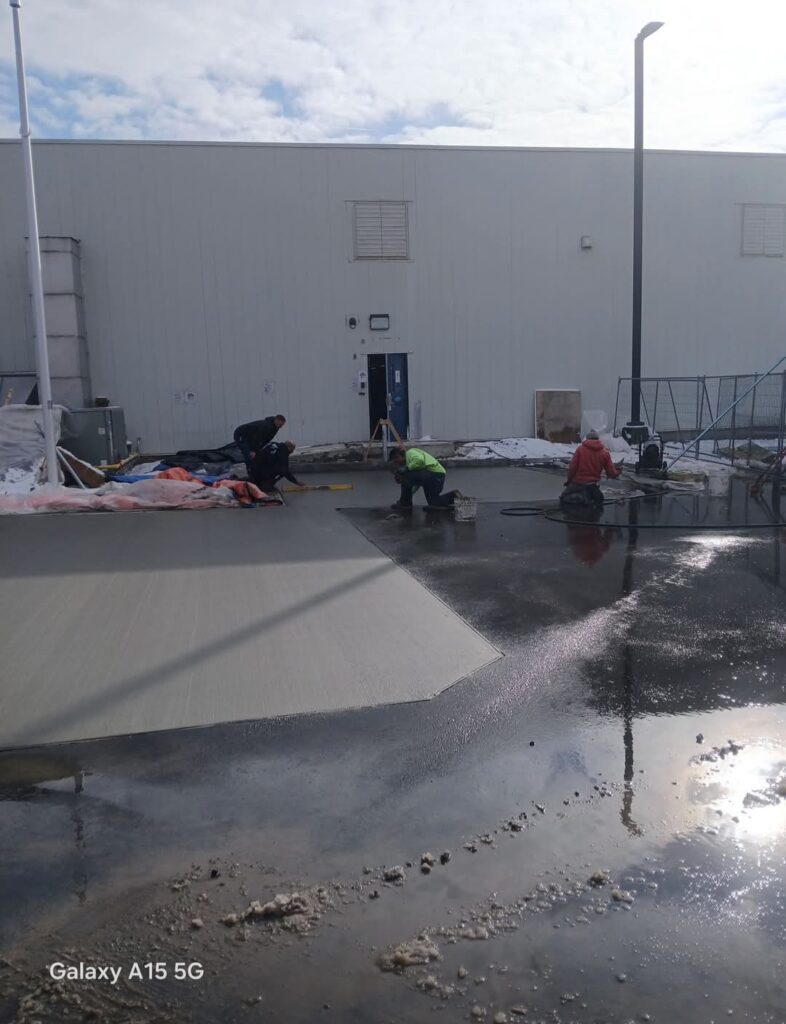
Concrete mix design shifts during humid summer months to account for the unique demands of the season. Water-to-cement ratios receive careful attention, since adding too much water weakens the final product while adding too little risks rapid drying. Admixtures called retarders slow the setting process, giving crews more time to place and finish the slab in hot, humid weather. These additives buy valuable minutes during long pours or large jobs. Without them, the concrete may stiffen before finishing is complete.
Aggregate selection also plays a role in summer mix design. Cooler aggregates, sometimes stored in shaded areas or sprayed with water, help lower the overall temperature of the mix. This cooling effect slows the initial reaction and reduces the risk of thermal cracking. In humid conditions, aggregate moisture content must be measured carefully so it does not throw off the water balance. Small adjustments to the mix can make a big difference in how the slab performs through its first 48 hours.
Supplementary cementitious materials, such as fly ash or slag cement, are common additions during summer pours. These materials reduce the heat of hydration and slow the reaction, which gives the slab more time to develop strength evenly. They also improve long-term durability by creating a denser internal structure. Our team selects mix designs based on the specific project, the daily forecast, and the slab’s intended use. A driveway in Baldwin needs a different mix than a foundation in Cranberry Township, especially during humid summer months.
Curing Techniques That Protect Concrete From Summer Humidity Damage
Curing is the most important phase of any summer concrete project, and humidity makes proper curing techniques essential. Wet curing involves keeping the slab moist for several days after the pour, typically with wet burlap, plastic sheeting, or continuous misting. This method retains the moisture concrete needs for full hydration, regardless of what the air does. Wet curing works especially well during dry summer stretches when humidity drops unexpectedly. The result is a stronger, more durable slab that resists cracking and scaling.
Curing compounds offer another effective option for humid summer pours. These liquid coatings seal the surface and slow evaporation without the need for constant attention. Applied shortly after finishing, the compound forms a thin film that locks moisture inside the slab. This approach works well on large pours like driveways and parking pads where wet curing would be impractical. The compound eventually wears away or can be removed before sealing, leaving a clean surface ready for use.
Plastic sheeting provides a simple but effective curing method during humid weather. The sheeting traps moisture against the slab while protecting it from sudden rain or temperature drops. Crews secure the edges with sand or weights to prevent wind from disturbing the cover. This method shines during Pittsburgh’s unpredictable summer weather, when a clear morning can turn into a thunderstorm by afternoon. Combined with proper mix design and scheduling, sheeting helps deliver concrete that holds up for decades.
Why You Need Professional Concrete Services During Summer Humidity
Summer concrete projects demand more than just a strong back and a bag of mix. The combination of heat, humidity, and unpredictable weather creates conditions that punish inexperience. Professional concrete contractors bring the knowledge, equipment, and crew size needed to handle these challenges. Hiring the right team protects your investment and delivers results that last for decades. RMK Concrete Services has spent years mastering Pittsburgh’s summer conditions, and we bring that experience to every project.
The Risks of DIY Concrete Pours During Summer Humidity
Do-it-yourself concrete projects often run into trouble during humid summer weather. Homeowners may underestimate how quickly conditions change throughout the day, leaving fresh concrete exposed to damaging moisture swings. Mixing concrete by hand or with a small mixer rarely produces the consistent quality needed for a strong slab. Small errors in water content or finishing timing can ruin an entire pour. By the time the issues show up, the only fix is removal and replacement.
Equipment limitations also work against DIY pours during summer. Professional crews use vibrators, screeds, power trowels, and curing tools that homeowners typically lack. Without these tools, air pockets, uneven surfaces, and weak spots are nearly guaranteed. Humid weather amplifies every mistake, since the slab has less margin for error. A professional team handles the work efficiently and applies the right techniques at the right time.
Safety is another concern with DIY concrete work in summer heat and humidity. Heat exhaustion sets in quickly when working outdoors with heavy materials, and rushed work leads to mistakes. Professional crews train for these conditions, rotate workers, and follow safety protocols that protect everyone on site. Homeowners often end up with both a poor result and a serious health risk. Hiring a professional removes both concerns from the equation.
How Professional Concrete Contractors Handle Summer Humidity
Professional concrete contractors bring decades of combined experience to every summer pour. They read the forecast, adjust the mix, schedule the crew, and prepare the site with humidity in mind. This level of planning is impossible to replicate without years of hands-on work. Every step builds on the last, creating a slab that performs as designed for years to come. The difference between professional and amateur work shows clearly within the first year.
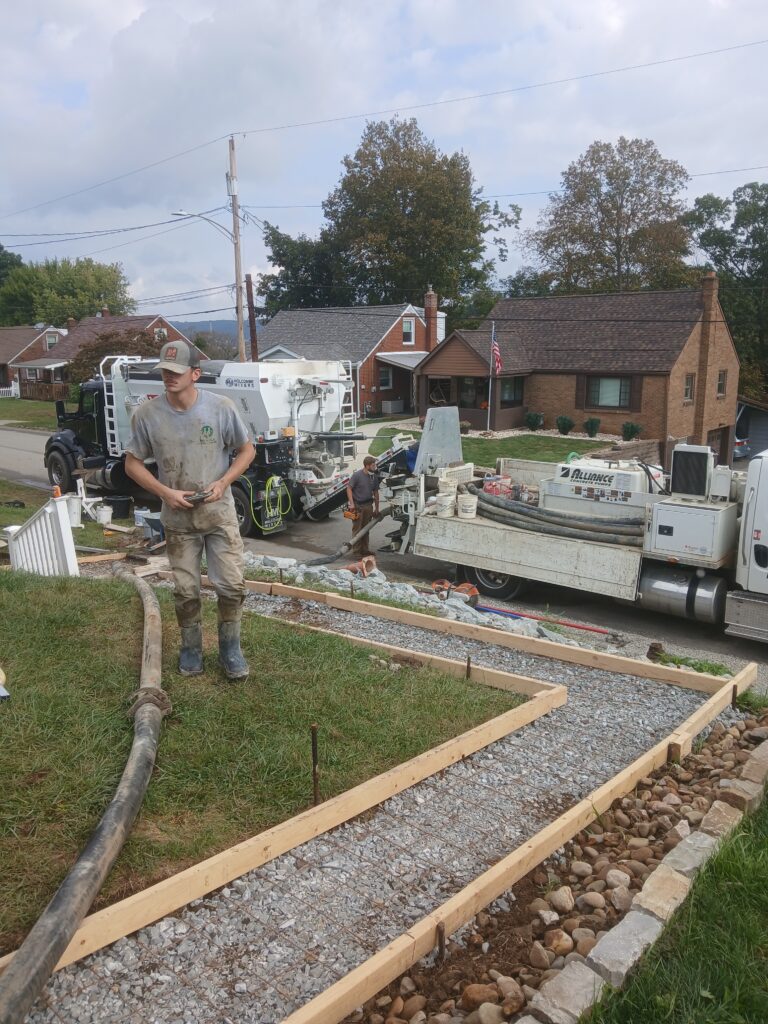
Our crew arrives with the right tools, materials, and manpower for the job. Vibrators consolidate the concrete and remove air pockets that weaken the slab. Power trowels deliver smooth, durable finishes that hand tools cannot match. Curing supplies, from plastic sheeting to liquid compounds, stay stocked on every truck. This preparation means we adapt to conditions on the fly, even when the weather changes mid-pour.
Communication separates great contractors from average ones. We keep homeowners informed about scheduling, weather concerns, and any adjustments to the plan. If humidity or rain forces a delay, we explain why and reschedule promptly. This transparency builds trust and ensures every project finishes on time and on budget. Need help with summer driveway work? Click here for our driveway paving service.
Why Choose RMK Concrete Services for Summer Humidity Concrete Projects
RMK Concrete Services brings deep experience with Pittsburgh’s summer humidity to every project we take on. Our crew has poured concrete through every type of weather the region serves up, from muggy August afternoons to surprise July thunderstorms. We adjust mix designs, scheduling, and curing methods to match each day’s conditions. This attention to detail produces results that hold up through harsh winters and humid summers alike. Homeowners across Baldwin, Cranberry Township, Mount Lebanon, and beyond trust us with their most important concrete work.
Our family-owned business operates with integrity at the core of every decision. We provide free in-person estimates, clear communication, and honest pricing on every project. Veterans and seniors receive special discounts as our way of saying thank you for their contributions. Licensed and insured for your protection, we stand behind every pour with a commitment to quality. These values guide our work from the first phone call to the final walkthrough.
Five-star service is the standard we deliver on every job, large or small. Our team treats your property with respect, cleans up thoroughly, and follows up after the project to ensure satisfaction. We serve Pittsburgh and a 60-mile radius, bringing professional concrete services to homeowners throughout the region. Call (412) 902-5114 or email info@rmkconcrete.com to schedule your free estimate today. Summer humidity does not have to threaten your concrete project when you partner with the right team.