
The arrival of winter in Pittsburgh brings with it a familiar shift in the daily rhythm of the city. As the temperatures drop and the skies turn a consistent shade of steel gray, many homeowners assume that all outdoor improvement projects must grind to a complete halt until the tulips bloom in spring. There is a prevailing myth that concrete work, in particular, is impossible to perform during the colder months. This belief is understandable, given that concrete is a material that relies on chemical reactions and curing processes that are sensitive to temperature. However, the construction industry does not simply shut down for four months out of the year. With advancements in technology, chemical additives, and strict adherence to thermal protection protocols, pouring concrete in winter is not only possible but can result in a product just as durable as one poured in the height of summer, provided the contractor knows exactly what they are doing.
For homeowners looking to get a jump start on their renovations or those facing emergency repairs that cannot wait for warmer weather, understanding the realities of winter concrete work is essential. It is not a standard operation; it requires a specialized approach that differs significantly from fair-weather pouring. Booking concrete work in January or February involves a different set of conversations regarding costs, scheduling, and site preparation. It demands a contractor who respects the physics of the material and refuses to cut corners when the mercury falls. While the risks are higher, they are manageable with expertise. By educating yourself on the process, you can distinguish between a contractor who is taking a dangerous gamble with your driveway and one who is executing a calculated, scientifically sound winter installation.
The Science of Curing in Cold Weather
To understand why winter concrete work requires such specific care, one must first understand the chemistry of how concrete hardens. Concrete does not dry in the way that paint dries; it cures through a chemical reaction called hydration. When water mixes with cement, it triggers a reaction that binds the aggregates together to form a solid mass. This reaction is exothermic, meaning it generates its own heat. In ideal conditions, this internal heat helps the process along. However, cold temperatures slow this reaction down significantly. If the concrete temperature drops below a certain point, the hydration process effectively stops, meaning the concrete stops gaining strength. If the water inside the mix freezes before the concrete has achieved a minimum structural strength—typically around 500 pounds per square inch—the expanding ice crystals will shatter the internal matrix of the cement paste. This leads to immediate structural failure and a surface that will crumble and flake as soon as it thaws.
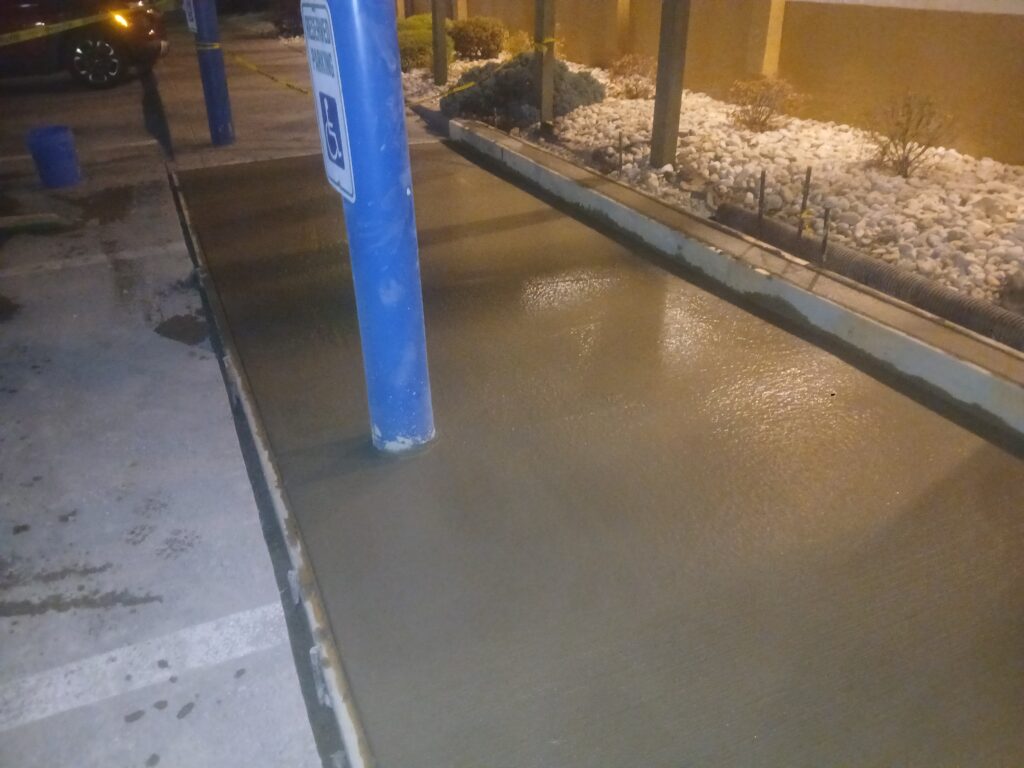
The goal of cold weather concreting is to maintain the internal temperature of the slab above fifty degrees Fahrenheit for long enough to allow the hydration process to reach that critical strength threshold. In Pittsburgh, where ambient air temperatures can hover in the twenties or teens, the environment is actively trying to steal that heat away from the slab. This battle against thermal loss dictates every decision made on the job site. It is not enough to simply pour the concrete and walk away. The contractor must view the slab as a living entity that needs to be kept warm. The colder the air, the more aggressive the protection measures must be. This scientific reality is why winter work is more labor-intensive; it involves constant monitoring of the concrete’s temperature relative to the air temperature to ensure the chemical reaction continues uninterrupted.
Adjusting the Mix Design for Low Temperatures
Standard concrete mixes used in June or July are ill-suited for a Pennsylvania January. To combat the cold, professional contractors utilize specialized mix designs tailored to the specific weather conditions of the pour day. One of the most common adjustments is the use of chemical accelerators. These are additives introduced at the batch plant that speed up the hydration rate. By making the concrete set faster, the window of vulnerability—the time during which the concrete is susceptible to freezing—is reduced. Calcium chloride is a traditional accelerator, but it can be corrosive to steel reinforcement, so for reinforced driveways or structural slabs, non-chloride accelerators are often preferred. These chemicals act as a catalyst, kickstarting the heat generation within the mix so it can defend itself against the cold air.
Need your sidewalk paved? Click here for our sidewalk paving service.
In addition to chemical additives, the physical components of the mix are often heated before they even leave the plant. Concrete suppliers will use hot water and, in extreme cases, heated aggregates to produce what is known as a hot load. When the truck arrives at your home, the concrete pouring out of the chute might be sixty or seventy degrees, providing a massive thermal head start. Another critical component of winter mixes is air entrainment. This involves introducing billions of microscopic air bubbles into the concrete. While this is important year-round in freeze-thaw climates, it is non-negotiable in winter. These tiny bubbles act as pressure relief valves. If any moisture within the hardened concrete does freeze, the ice has room to expand into these bubbles without cracking the concrete. A proper winter mix is a carefully balanced recipe designed to gain strength rapidly and resist the expansive forces of frost.
The Critical Rule of Ground Preparation
Perhaps the most important rule of winter concrete work is one that can never be broken: never pour concrete on frozen ground. The ground acts as a massive heat sink. If you place wet concrete on top of frozen soil, the ground will instantly suck the heat out of the mix, likely causing the bottom of the slab to freeze and fail to bond. Furthermore, soil expands when it freezes. If concrete is poured over heaved, frozen earth, the slab will settle unevenly once the ground thaws in the spring. This settlement will almost certainly cause the new concrete to crack, rendering the entire project a waste of money. Verifying the condition of the subgrade is a mandatory step before the concrete truck is even dispatched.
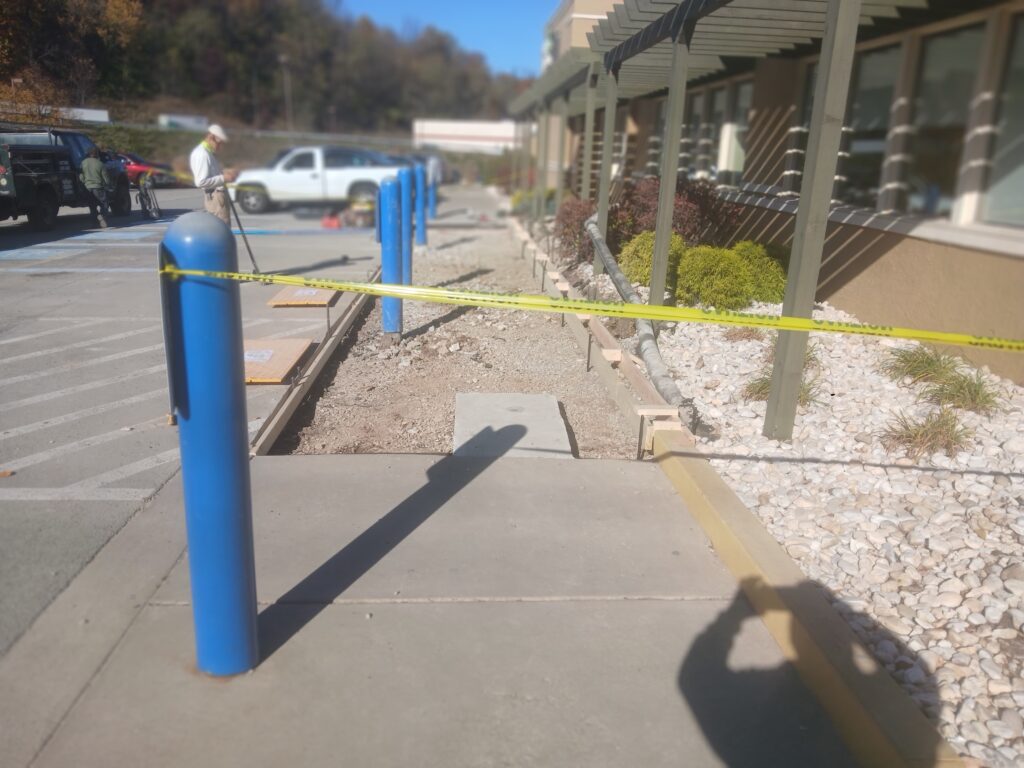
Thawing the ground is a process that takes time and equipment. If the site has frost, RMK Concrete Services must prepare the subgrade well in advance of the pour. This is typically done using ground heaters—coils of hose that circulate hot glycol fluid—covered by insulating blankets. These heaters run for a day or two prior to the installation to drive the frost out of the soil and ensure a stable, unfrozen base. Alternatively, if the frost is shallow, the frozen layer may be excavated and replaced with compactable stone that is free of ice. This attention to what lies beneath the slab is what separates a professional job from a failure. A contractor who pulls up and pours directly onto hard, frosty dirt is guaranteeing that you will be calling them back for repairs within a few months.
Thermal Protection and Curing Blankets
Once the concrete is placed and finished, the real work of winter protection begins. In the summer, the concern is keeping moisture in; in the winter, the concern is keeping heat in. Leaving fresh concrete exposed to the winter air in Pittsburgh is a recipe for surface scaling and weakness. To trap the heat generated by the hydration process and the heat provided by the hot mix, contractors use insulated curing blankets. These are heavy-duty, multi-layered tarps with a foam or bubble core that provide a high R-value. They are carefully laid over the entire surface of the fresh concrete as soon as it is hard enough to support them without marring the finish.
These blankets serve a dual purpose. First, they retain the heat, creating a warm microclimate directly on the surface of the slab that allows the cure to proceed. Second, they prevent the rapid evaporation of moisture. While it is cold, the air in winter is often very dry. If the surface dries out before the concrete has gained strength, plastic shrinkage cracks will form. The blankets are typically kept in place for several days, depending on the temperature and the mix design. In extremely cold conditions, active heating sources like hydronic heaters may be placed on top of the concrete and under the blankets to provide additional warmth. The removal of the blankets must also be timed carefully. Removing them suddenly when it is exceedingly cold can shock the concrete, causing thermal cracking. The goal is to bring the concrete temperature down gradually to meet the ambient temperature.
Understanding the Cost Implications
It is important for homeowners to have realistic expectations regarding the cost of winter concrete work. Generally speaking, pouring concrete in the winter is more expensive than pouring it in the spring or summer. This price difference is not arbitrary; it reflects the additional materials, equipment, and labor required to ensure a safe and durable installation. The concrete plants charge extra for hot water and winter service fees to keep their own facilities running in the cold. Chemical accelerators and special additives increase the cost per yard of the material itself.
Want to know what causes concrete to crack earlier than usual? Click here for more information.
Beyond the material costs, there are the logistical costs of the job site. Ground heaters consume fuel, and the labor involved in setting up and removing curing blankets adds hours to the project. Snow removal may be required before work can even begin, and the shorter daylight hours of winter mean that crews have a tighter window to complete the work, sometimes necessitating additional manpower to get the job done before dark. When you receive a quote for winter work, these line items are investments in the security of the project. Paying for winter protection is cheaper than replacing a failed driveway. A significantly lower bid that does not account for these winter-specific measures should be viewed with skepticism, as it likely means the necessary protections are being skipped.
Scheduling Flexibility and Weather Windows
Patience is a virtue when it comes to booking winter concrete work. Unlike summer scheduling, which is mostly dictated by crew availability, winter scheduling is dictated almost entirely by the forecast. Professional contractors monitor the weather patterns obsessively, looking for favorable windows where the temperatures will be moderate—relatively speaking—for the days following the pour. There are absolute lower limits to when work can proceed. If the forecast calls for a polar vortex with temperatures dipping below zero, reputable companies will postpone the pour. It is simply too risky to attempt outdoor concrete work in such extreme conditions, regardless of the protective measures available.

This means that a booked date in January is always tentative. Homeowners need to be prepared for rescheduling on short notice. A project might be pushed back a week to wait for a warmer front, or it might be moved up a day to beat an incoming snowstorm. This flexibility is a safety mechanism for your investment. A contractor who insists on sticking to a schedule despite a forecast of sub-zero temperatures or heavy blizzard conditions is prioritizing their cash flow over the quality of your project. At RMK Concrete Services, the decision to pour is made day-by-day based on real-time data, ensuring that the concrete is only placed when the odds of a successful cure are high.
The Advantages of Winter Construction
Despite the challenges and costs, there are valid reasons to proceed with concrete work in the winter. For one, availability is often better. The spring and summer months are the peak season for hardscaping, and contractor schedules can be booked out for months in advance. By choosing to do the work in winter, you may be able to secure a spot on the calendar much sooner. This is particularly beneficial if you are preparing a house for sale in the spring and want the curb appeal ready to go as soon as the market heats up.
Additionally, completing the hardscaping in the winter means that your yard and driveway will be ready for use as soon as the nice weather arrives. You avoid the disruption of construction during the months when you actually want to be outside enjoying your property. Winter work also prevents further damage to existing issues. If you have a cracked walkway that is heaving and creating a trip hazard, leaving it through another freeze-thaw cycle could make the demolition more difficult or cause damage to adjacent structures. Addressing the problem now prevents the issue from compounding. Furthermore, for commercial properties, ensuring safe, intact sidewalks is a liability concern that cannot always wait for April.
Booking concrete work during a Pittsburgh winter is a decision that involves balancing necessity, budget, and risk. It is far from the impossible task that common lore suggests, but it is certainly a more complex operation than a standard summer pour. The key lies in the details—the temperature of the mix, the preparation of the subgrade, the type of additives used, and the rigor of the thermal protection. These are not areas where a homeowner should compromise. The margin for error is slimmer in the cold, and the consequences of hiring an inexperienced crew are immediate and visible.
When you choose to move forward with a winter project, you are relying heavily on the expertise and integrity of your contractor. You need a partner who understands the science of hydration and is willing to tell you “no” when the weather makes the risk too high. At RMK Concrete Services, we approach winter work with a meticulous focus on quality control. We utilize the proper blankets, heaters, and mix designs to ensure that the cold remains outside while your new concrete cures safely and strongly beneath its protective layers. With the right preparation and the right team, your winter concrete project can result in a durable, lasting improvement that is ready to greet the spring thaw in perfect condition.