
Pittsburgh winters arrive quickly, and the first plowable snowfall usually lands before most homeowners have any plan in place. Choosing a snowplowing service in early fall gives you time to compare pricing, read the contract language closely, and confirm insurance coverage before local crews fill their routes for the season. A good company does far more than push snow toward the end of your driveway; it protects the concrete underneath, keeps your walkways and stairs passable, and arrives on a schedule you can actually count on. A careless company leaves gouged slabs, surface scaling along the edges, and a phone that goes straight to voicemail at five in the morning during a heavy storm. This guide walks through what separates a professional winter operation from a pickup truck with a used blade bolted to the front. You will learn which questions to ask, which contract structures make sense for a residential driveway, and which practices keep your concrete intact through a full Pittsburgh freeze thaw season. Everything covered here applies to homeowners across Allegheny County and the surrounding communities that RMK Concrete Services covers within a 60 mile radius of the city.
What to Look for When You Choose a Snowplowing Service
A snowplowing service is a winter safety agreement as much as it is a convenience purchase. You are handing a company access to your property at odd hours, in poor visibility, with a heavy truck and a steel blade riding inches above concrete you paid good money for. That is why the vetting process should begin with paperwork and end with a detailed conversation about how the crew treats hard surfaces. Price obviously matters to every household budget, though the cheapest quote in your inbox often comes from an operator carrying no commercial insurance and no backup plan for a snapped hydraulic line at two in the morning. Look for a company that answers direct questions clearly, puts every term in writing, and can explain exactly what happens during a storm that drops fourteen inches across two days. The three areas below cover most of what you need to confirm before you sign anything or hand over a deposit.
Licensing and Insurance for a Home Snowplowing Service
Pennsylvania does not issue a specific trade license for snow removal work, so the burden of verification falls squarely on the homeowner. What the state does require is registration under the Home Improvement Consumer Protection Act for contractors performing residential work, and any reputable company will hand you that registration number without hesitation when you ask for it. Beyond registration, the three coverages that matter most are commercial general liability, commercial auto, and workers compensation for every person who sets foot on your property. General liability responds when a blade catches your garage door or a crew member cracks the corner of a retaining wall while backing out. Commercial auto matters because personal auto policies routinely exclude vehicles used for commercial plowing, which leaves you exposed if a truck slides into your parked car on an icy incline. Workers compensation matters just as much, since an injured operator without coverage may look to your homeowner policy for medical bills. Ask for a certificate of insurance sent directly from the insurance agency rather than a photocopy handed over from a glove box.
Homeowners often assume their own policy will quietly absorb any winter mishap, and that assumption turns expensive in a hurry. Slip and fall claims are the most common source of litigation tied to snow and ice management in residential settings, and the way your driveway and walkways get cleared has a direct bearing on that risk. A contractor who keeps service logs, timestamps each visit, and records what product was applied gives you documentation that protects both parties later. That paper trail also settles honest disputes about missed visits, since memory gets unreliable after the fourth storm in ten days. Companies that treat documentation as routine tend to run every other part of the operation with the same care. When a contractor cannot produce a simple record of last week’s service, take that as a signal about how the rest of the winter is going to go.
Read the certificate of insurance rather than simply filing it away in a drawer. Confirm the policy dates cover the entire term of your agreement, since a policy expiring in January leaves you unprotected through the coldest weeks of the year. Check the coverage limits as well, because a policy written for a small landscaping operation may carry limits far below the value of the vehicles parked in your driveway. Some general liability policies specifically exclude snow and ice operations, which is a detail that surprises plenty of homeowners after a claim gets denied. Asking to be listed as an additional insured on the policy is a reasonable request that a professional contractor will handle without pushback. Need reliable winter service this year? Click here for our snowplowing service and get your property on the route before the first storm hits.
Equipment and Crew Size at a Reliable Snowplowing Service
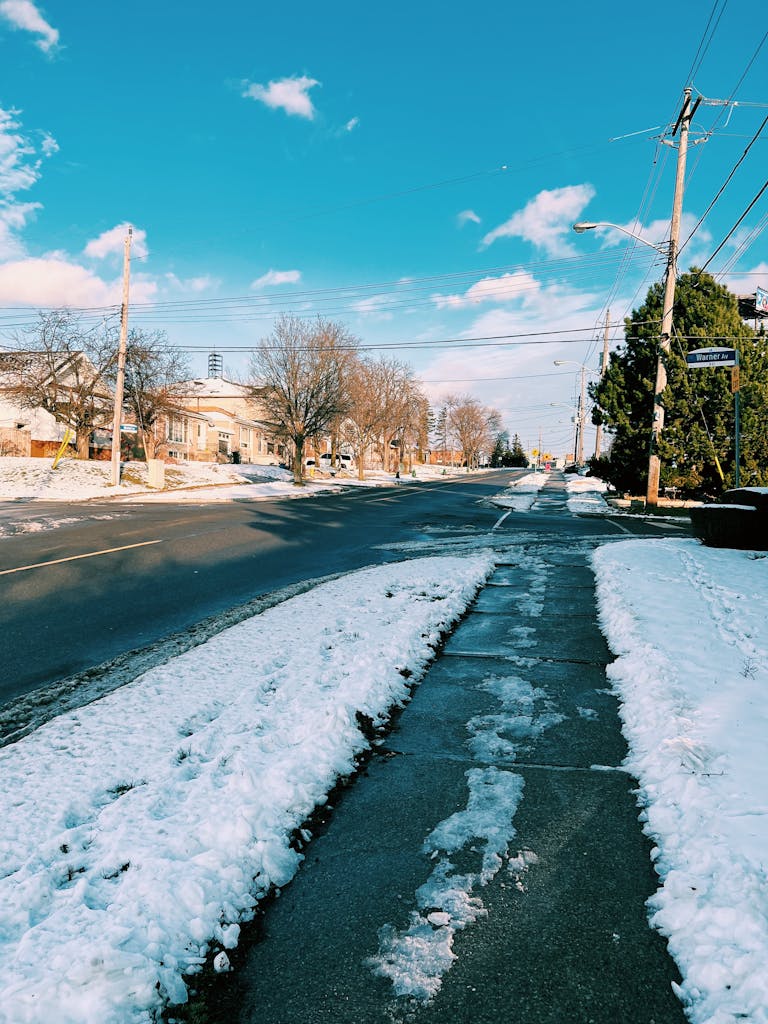
Equipment tells you a great deal about what a snowplowing service can realistically handle when conditions turn bad. A single truck mounted straight blade works fine on a wide flat driveway with plenty of open space at the edges, but many Pittsburgh properties sit on slopes with tight turnarounds and narrow approaches that a full size truck simply cannot navigate safely. Skid steers with pushers, compact tractors, and smaller utility vehicles all have a place in residential work, and a company running a mixed fleet can match the machine to the property instead of forcing one solution onto every job. Walkways, front stairs, and landings require snow blowers, shovels, and hand work that no truck can perform. Ask directly which pieces of equipment will show up at your address and who is responsible for clearing the areas a blade cannot reach. Companies that gloss over this question tend to leave stairs and walkways untouched, which is exactly where most winter injuries happen.
Backup equipment separates a serious operation from a seasonal side business. Plows break down constantly under real winter conditions, since hydraulic cylinders leak, cutting edges wear down to the mounting bolts, and transmissions take a beating from repeated hard pushing in low gear. A company that services its fleet in the fall, keeps spare cutting edges on the shelf, and has a second machine available will still reach your driveway when something fails mid route. An operator with one truck and no fallback has no way to serve customers once that truck goes down. Ask what the plan looks like when equipment breaks during a storm, and listen for a specific answer rather than reassurance. The response you get in September predicts the response you will get in January.
Crew size and route density determine how long you wait after the snow stops falling. A company that has taken on more properties than it can physically service will stretch response times into the next afternoon, which does not help anyone trying to leave for work at six in the morning. Ask how many properties sit on the route that includes your address and roughly where in that sequence your driveway falls. Ask about the service window in the contract, since a guaranteed clearing within a set number of hours after snowfall ends gives you something concrete to hold the contractor to. Communication practices matter here as well, since a text message confirming that a crew is two stops away removes most of the anxiety of a storm morning. Contractors serving established communities like Ross Township and Mount Lebanon generally build tight geographic routes, and that efficiency works in your favor.
Contract Terms and Trigger Depths From a Snowplowing Service
The trigger depth is the single most important number in any snowplowing service agreement, and it deserves a careful conversation before you sign. Trigger depth simply means the accumulation that must fall before a crew automatically dispatches to your property, and two inches is the common standard for residential driveways across western Pennsylvania. A higher trigger of three or four inches reduces your seasonal cost while leaving you to handle the smaller storms yourself. A lower trigger means more visits and a higher bill, though it also means you rarely deal with packed snow on a sloped driveway. Discuss what happens during an ice event that produces no measurable accumulation at all, since freezing rain creates the most dangerous surface conditions of the entire winter. Clarify how the contractor measures accumulation, because a reading taken at the airport can differ substantially from what lands on a hillside in the North Hills.
Pricing structures fall into a few recognizable categories, and each one shifts risk between you and the contractor in a different way. Per push billing charges a flat rate for each visit, which keeps costs low in a mild winter and climbs steeply during a heavy one. Per inch tiered pricing adjusts the rate based on accumulation bands, so a two inch storm costs less than a ten inch storm. Seasonal flat rate contracts charge one price for the entire winter regardless of snowfall totals, which makes budgeting simple and shifts the weather risk onto the contractor. Hourly billing appears occasionally on large or complicated properties, though it gives the homeowner the least predictability. Pittsburgh averages roughly forty inches of snow in a typical season, and a seasonal contract tends to make the most sense for people who value a predictable number on the calendar.
Read the scope of services line by line and confirm what falls outside the base price. Many agreements cover the driveway only, leaving walkways, front stairs, and the area around the mailbox as separate line items. Salting and deicing frequently carry their own charge, applied per application or per bag used. Ask specifically about return visits after a municipal plow truck deposits a heavy berm at the foot of your driveway, since that berm arrives hours after your service was completed and blocks the driveway completely. Confirm the cancellation terms, the payment schedule, and the renewal process for next season while you have the contractor’s attention. A clear agreement prevents nearly every argument that surfaces between a homeowner and a plow company in February.
How a Snowplowing Service Protects Your Concrete Driveway
Snow removal and concrete care are far more connected than most homeowners realize until damage appears in spring. A steel blade dragged across a residential slab, combined with aggressive deicing chemicals and repeated freeze thaw cycling, can age a driveway years in a single winter. Concrete in the Pittsburgh region already faces roughly fifty to seventy freeze thaw cycles annually depending on elevation and exposure, and every one of those cycles puts stress on the surface. Water works its way into the pores of the slab, expands as it freezes, and pushes tiny flakes of cement paste loose from the surface in a process contractors call scaling. Deicing chemicals accelerate that entire process by driving more melt water into the concrete and then refreezing it. A snowplowing service that understands concrete construction protects your investment; one that does not will quietly shorten the life of your driveway by a decade. The practices below are what a concrete contractor watches for during the winter months.
Plow Blade Damage and How a Snowplowing Service Prevents It
Physical blade damage is the most visible harm a snowplowing service can inflict on a residential driveway. Steel cutting edges gouge control joints, catch raised slab edges where minor settling has occurred, and chip away at corners near the apron and the garage entry. The simple fix is equipment setup, and any experienced operator already knows it. Plow shoes bolted to the moldboard hold the blade a controlled distance above the surface so the steel never makes direct contact with concrete. Polyurethane or rubber cutting edges accomplish the same protection and work particularly well on stamped surfaces, exposed aggregate, and paver installations. Ask which edge the crew runs on residential concrete and confirm the shoes are installed before the season starts. A contractor who understands why the question matters is a contractor worth hiring.
Decorative and specialty surfaces demand even more caution during snow removal. Stamped concrete carries a textured profile with raised patterns that a steel edge will shave down over repeated passes, permanently flattening the detail you paid extra for. Exposed aggregate presents a similar risk, since aggressive scraping can dislodge stones from the surface matrix and leave pockmarks across the finish. Broom finished slabs handle plowing better than most decorative surfaces, though the texture still wears with heavy blade contact. Let your contractor know before the season begins if any portion of your driveway, patio, or walkway carries a decorative finish. If you are considering an upgrade before winter arrives, click here to learn about our decorative concrete options and how they perform in a Pittsburgh climate.
Newly placed concrete deserves special handling during its first winter on the ground. Concrete continues gaining strength for weeks after placement, and while it reaches most of its design strength within twenty eight days, the surface remains more vulnerable than a slab that has been curing for several seasons. Plowing a fresh driveway is entirely acceptable with proper shoes and a soft edge, though the surface should be treated gently until it has fully hardened and been sealed. Sealing a new slab is usually recommended after the first summer, giving the concrete time to release excess moisture. If your driveway went in this year, tell the snowplowing crew and ask for extra care during the first few visits. A contractor who also pours concrete understands these timelines instinctively, which is one advantage of hiring a company that does both kinds of work. Planning a new surface before the ground freezes? Click here for our driveway paving service and get on the schedule.
Salt, Deicers, and the Snowplowing Service Approach That Saves Concrete
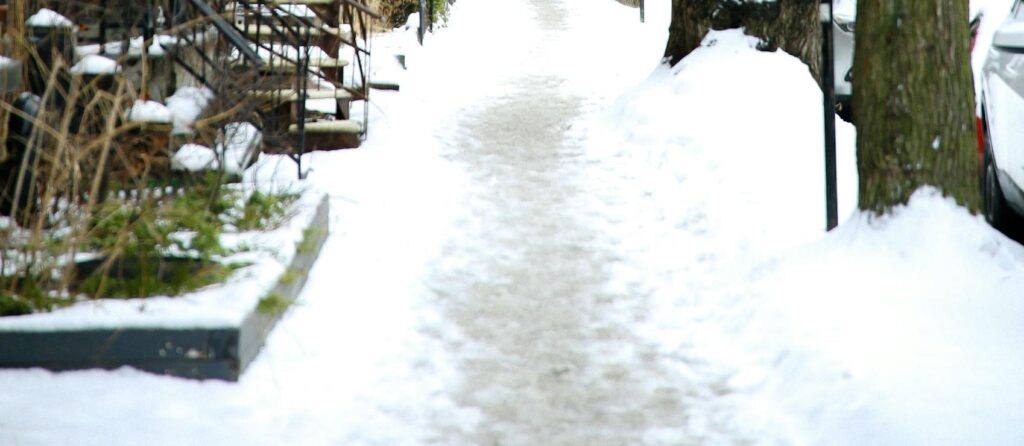
Rock salt is the default deicing product across the region, and its effect on concrete gets misunderstood constantly. Sodium chloride does not chemically attack hardened cement paste in the way many homeowners believe. The real damage comes from what salt does to water behavior on the slab, since it lowers the freezing point and dramatically increases the number of freeze thaw cycles the concrete experiences in a single week. More cycles mean more expansion pressure inside the pore structure, and that pressure lifts flakes from the surface until scaling becomes visible. Chloride ions also migrate through the slab toward embedded steel reinforcement, where they promote corrosion that expands and cracks the concrete from within. Restraint with product application does more to protect a driveway than almost anything else a crew can do.
Certain deicing products cause genuine chemical harm and belong nowhere near residential concrete. Magnesium chloride reacts with calcium hydroxide in the cement paste and forms magnesium silicate hydrate, a compound with no binding strength, which weakens the surface directly. Ammonium sulfate and ammonium nitrate, both common in fertilizer products that some people scatter on ice, attack cement paste aggressively and should never be used as a deicer. Calcium chloride works effectively at very low temperatures and is generally considered less harmful than magnesium chloride, though it still increases freeze thaw activity. Calcium magnesium acetate is the gentlest option available for concrete, and plain sand provides traction with no chemical effect whatsoever. Ask your snowplowing service what products it stocks and request the concrete safe option for driveways and walkways.
Sealing is the most effective defense a homeowner has against winter surface damage. A quality penetrating sealer built on silane or siloxane chemistry soaks into the pore structure and creates a water repellent barrier below the surface, which reduces the amount of moisture available to freeze inside the slab. Penetrating sealers hold up better than surface film products under plow blades, since a film sitting on top of the concrete will scratch and peel with blade contact. Most residential driveways benefit from resealing every three to five years depending on exposure, traffic, and drainage conditions. Fall is the ideal window for this work, since the sealer needs dry conditions and moderate temperatures to cure properly. Want to protect your driveway before winter sets in? Click here for our concrete sealing service and schedule an application while the weather still allows it.
Marking, Mapping, and Snow Stacking From a Careful Snowplowing Service
A professional snowplowing service walks your property before the first snowfall rather than discovering its features in the dark during a storm. That fall site visit is when the crew notes the driveway boundaries, the location of the apron, and any change in elevation that a blade might catch. Reflective stakes get driven along the edges so operators can see exactly where concrete ends and lawn begins once everything turns white. Anything low and breakable needs marking too, including landscape lighting, irrigation heads, low garden walls, downspout extensions, and septic lids. Yard drains and catch basins deserve particular attention, since covering them with a snow pile guarantees standing water when the thaw arrives. This walkthrough takes twenty minutes and prevents most of the property damage that occurs during a typical winter.
Where the snow goes matters just as much as how it gets moved. Snow stacked on the uphill side of a sloped driveway will melt during a sunny afternoon, run across the concrete, and refreeze into a sheet of ice overnight, creating conditions far more dangerous than the original snowfall. Experienced operators push piles downhill or toward areas where meltwater drains away from paved surfaces entirely. Piles should stay clear of sightlines at the end of the driveway, away from fire hydrants, and off the garage door apron where repeated melt refreeze cycles concentrate damage. Stacking against a retaining wall adds significant lateral load that the wall was never designed to carry. Every one of these decisions comes from experience rather than a manual, which is why crew tenure is worth asking about.
The weight of accumulated snow piles creates stress that homeowners rarely consider. A large pile sitting on the edge of a driveway for weeks concentrates load on the outer portion of the slab, where support from the subbase is often weakest, and repeated seasons of that loading can contribute to edge cracking and settlement. Piles stacked over the lawn adjacent to a slab also saturate the soil underneath during melting, which softens the subgrade and encourages movement. Spreading piles across a wider area reduces both problems considerably. Watch your driveway edges each spring for new cracks, spalling, or sections that have dropped relative to the rest of the slab. Small repairs completed early cost a fraction of a full replacement later, and click here for our concrete repair service to have any winter damage evaluated before it spreads.
Why You Need a Snowplowing Service Booked Before the First Storm
The window for hiring a snowplowing service on reasonable terms closes faster than most homeowners expect. Established companies build their winter routes through late summer and early fall, and geographic efficiency means they stop accepting new addresses once a route reaches capacity. Calling after the first significant snowfall puts you at the back of a long line, usually at premium pricing, with the least experienced available crew. Booking early also gives you time for a proper site walk, a seasonal contract at a fair rate, and any concrete work that should be finished before the ground freezes. RMK Concrete Services provides free in person estimates on all projects, which means a real person visits your property, measures the space, and gives you an honest number.
Booking Your Snowplowing Service Early in Pittsburgh
Pittsburgh weather does not offer much warning before the first plowable event. Measurable snow can fall in November, and lake effect moisture moving in from the northwest occasionally produces accumulation totals well above what the regional forecast called for. Homeowners on the hills in the North Hills and South Hills feel this most acutely, since elevation differences of a few hundred feet meaningfully change what lands on a driveway. Securing a contract in September or October removes the scramble entirely. You get the route position you want and a rate locked in before demand spikes.
Early booking also creates room for preparation work that has to happen before the ground freezes. Sealing, crack filling, joint repair, and drainage corrections all require dry conditions and temperatures above roughly fifty degrees to cure properly. Once those windows close, the work waits until spring while the damage compounds through every freeze thaw cycle of the winter. Combining a fall concrete assessment with your snowplowing agreement handles both needs in a single visit. That coordination is exactly what a company doing concrete and snow removal together can offer.
Local knowledge carries real weight in this trade. A crew that has plowed the same streets for years knows which driveways ice over first, where municipal trucks deposit berms, and which approaches require a smaller machine. RMK Concrete Services works across Pittsburgh and a 60 mile radius, covering communities from Cranberry Township to Monroeville and Bethel Park. That familiarity translates into faster service and fewer surprises on a storm morning. Reach out at (412) 902-5114 to check availability in your neighborhood.

What a Free Estimate From Your Snowplowing Service Covers
A free in person estimate should produce a written proposal with no ambiguity in it. The visit starts with measurements of the driveway, walkways, stairs, and any additional surfaces you want cleared through the season. The estimator notes slope, turnaround space, edge conditions, drainage patterns, and available areas for snow stacking. Existing concrete condition gets documented as well, including cracks, spalling, and settled sections that a blade could catch. That record protects you from disputes about damage that predates the contract.
The written proposal that follows should list trigger depth, pricing structure, service window, included surfaces, and deicing terms in plain language. Anything treated as an optional add on gets its own line with its own price so nothing surprises you later. You should also receive proof of insurance and the contractor registration number as part of the package. Questions are welcome at this stage, and a good contractor would rather answer ten of them now than argue about one in January.
Estimates cost you nothing beyond a short appointment, so gathering two or three of them is simply smart practice. Compare the details rather than only the bottom line, since a low number often reflects a narrower scope. Look at trigger depth, service window, and which surfaces are actually included before drawing any conclusion about value. The proposal that explains the most is usually the one written by the contractor who has done this longest. Click here for our snowplowing service to request your free estimate today.
Why Choose RMK Concrete Services for Your Snowplowing Service
RMK Concrete Services is a family owned and operated company built on integrity, and that principle shows up in how we handle winter work. We are licensed and insured, and we provide documentation without being asked twice. Our crews understand concrete because we pour it, repair it, and seal it throughout the rest of the year, which means we know exactly what a blade can do to a slab. That perspective changes how we set up equipment and how we handle every driveway on the route. Your surfaces get treated the way we would treat our own.
We offer discounts for veterans and seniors, and we provide free in person estimates on all projects with no obligation attached. Our service area covers Pittsburgh and a 60 mile radius, reaching homeowners throughout Allegheny, Westmoreland, Butler, and Washington counties. We are dedicated to always providing five star service, and we hold that standard on a quiet fall afternoon and at four in the morning during a storm. Communication stays open throughout the season so you always know when to expect us. Consistency is what homeowners remember after a long winter.
Getting started takes one phone call. Reach us at (412) 902-5114 or send a message to info@rmkconcrete.com, and we will schedule your estimate at a time that works for your household. Our office sits at 512 Carolyn Ave, Pittsburgh, PA 15202, and we serve neighbors across the region every winter. Ask us about combining snow removal with sealing or repair work while the weather still allows it. Book now and head into the season knowing your driveway is covered.