
Pittsburgh winters tend to arrive before most homeowners have given any real thought to how they plan on clearing the driveway, and the first heavy snowfall is a poor time to start figuring it out. Plowing and shoveling both move snow off the slab, yet they treat the concrete underneath in very different ways, and one of them carries far more risk to the surface than the other. A steel blade dragged across a driveway can catch a raised control joint or a curled slab edge and take a chunk of concrete with it, while a plastic shovel is gentle on the surface but asks a great deal more of your time and your back. The right answer depends on how large the driveway is, how steep the grade runs, how old the concrete is, and how much snow the season decides to drop on your neighborhood. Concrete is enormously strong in compression but comparatively weak at the wearing surface, which means the method you choose to clear snow has a direct effect on how the slab looks five and ten years from now. Fall is the right time to settle the question, because sealing, repairs, and equipment decisions all go smoother before the ground freezes solid and the salt trucks start running.
Should You Plow or Shovel Your Concrete Driveway This Winter?
The honest answer for most Pittsburgh homeowners is that both methods have a place, and the deciding factors are square footage, slope, and the condition of the slab itself. A short flat driveway serving a single car is almost always better off shoveled, because the labor is manageable and a plastic blade cannot really hurt sound concrete. A long driveway on a hillside, with two hundred feet of run and a turnaround at the top, is a different situation entirely, and shoveling it by hand after a ten inch storm is neither practical nor safe. What matters more than the tool is the operator and the setup, since a properly adjusted plow with a rubber cutting edge does less damage than a careless homeowner chopping at packed ice with a steel spade. Age of the concrete matters too, and a driveway poured within the last twelve months deserves a much lighter touch than one that has already survived a decade of Western Pennsylvania weather. Think of the decision as a plan rather than a single choice, since most properties end up using a plow for the bulk removal and a shovel for the steps, the walk, and the tight areas near the garage door.
When Plowing a Concrete Driveway Makes Sense
Plowing earns its keep on large driveways, on properties with steep approaches, and anywhere the volume of snow makes hand clearing genuinely unrealistic. Once a driveway passes roughly six hundred square feet, the math on shoveling starts to look grim, especially during a winter that delivers storm after storm without a thaw in between. Steep driveways create a second problem, because snow left in place gets compacted by tires and then refreezes into a sheet of ice that no shovel will lift. A plow clears the full width in a few passes and gets the surface exposed to sunlight and salt trucks sooner, which reduces the number of freeze cycles the slab has to endure while wet. Commercial properties, multi family buildings, and homes with detached garages set back from the street all fall firmly in the plowing category. Older homeowners and anyone with a heart condition or a back injury should also lean toward plowing regardless of driveway size, because snow shoveling sends a substantial number of people to the emergency room every single winter.
The equipment setup determines how kind that plow is to your concrete, and this is where most driveway damage actually originates. A steel cutting edge riding directly on the slab will find every high spot, every lipped joint, and every place where a panel has heaved, and it will chip all of them. Rubber and polyurethane cutting edges cost more up front and wear faster, but they flex over irregularities instead of gouging them, and they are the standard choice for finished concrete surfaces. Skid shoes should be adjusted so the blade floats a small fraction of an inch above the surface rather than scraping it, which leaves a thin film of snow that salt or sun handles easily. Angle the blade so snow rolls off to the side rather than being pushed straight ahead in an ever growing pile that eventually forces the operator to ram the blade harder. A driver who knows the property, knows where the joints run, and knows where the slab has lifted will do far less harm than someone clearing it for the first time in the dark.
Marking the driveway before the first snowfall is a step almost everyone skips and almost everyone regrets. Fiberglass or wooden stakes set along both edges in late fall tell the operator exactly where the concrete ends and the lawn begins, which prevents the blade from riding up onto turf and then dropping back onto the slab edge. Edges are the most vulnerable part of any concrete driveway, since they lack the confinement the interior of the slab enjoys and they are the first place spalling shows up. Stakes also protect landscaping, irrigation heads, and low garden walls that disappear entirely under a foot of snow. Take a walk down the driveway in October and note anything that sits within two feet of the edge, then mark it clearly. If you plan to hire out the work, that same walk gives you a chance to point out problem areas to your contractor before the snow flies. Need reliable snow removal this winter? Click here for our snowplowing service.
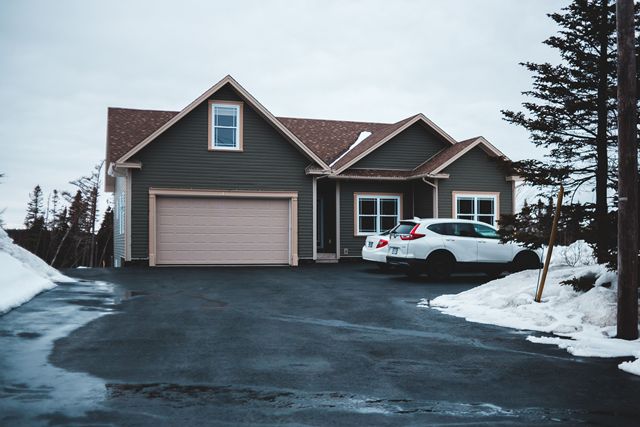
When Shoveling a Concrete Driveway Is the Better Choice
Shoveling is the safest option for the concrete itself, and on the right property it remains completely practical. Standard two car driveways in Bellevue, Ross Township, Mount Lebanon, and similar neighborhoods often run four hundred to six hundred square feet, which one motivated person can clear in half an hour after a typical storm. A poly or plastic blade will not scratch cured concrete, will not chip a control joint, and will not catch a slightly raised panel the way a steel edge does. Shoveling also gives you a close look at the slab several times each winter, which means small cracks and early scaling get noticed while they are still cheap to address. Decorative and stamped surfaces belong in this category almost without exception, since the raised texture that makes stamped concrete attractive is exactly what a plow blade catches first. Broom finished surfaces tolerate more abuse, though even they benefit from a season or two of hand clearing while the concrete finishes hardening.
New concrete is the strongest argument for shoveling rather than plowing. A driveway poured in spring or summer reaches its design strength within about twenty eight days, but the surface paste continues gaining durability well beyond that point, and its resistance to freeze damage is at its lowest during the first winter. Industry guidance from the American Concrete Institute has long recommended keeping deicing chemicals off new concrete through that first full winter season, and the same conservative approach applies to mechanical clearing. Shovel it, use sand for traction, and let the slab get through one cold season without chemical or mechanical stress. The payoff is a surface that resists scaling for decades rather than one that starts flaking in year three. Homeowners who spent real money on a new driveway should treat that first winter as part of the investment. One season of extra effort buys a great deal of surface life.
Technique matters more with a shovel than most people assume. Clearing early and clearing often beats waiting for the storm to end, because six inches of fresh snow pushes easily while twelve inches of settled snow has to be lifted. Push the snow rather than lift it wherever the grade allows, and work in strips down the length of the driveway instead of attacking the middle first. Never chop at bonded ice with the corner of a metal shovel, since that is the single fastest way to break a divot out of an otherwise healthy slab. Apply a light traction material and give it time to work instead, then remove the loosened material with the shovel once it has released. Keep the driveway clear before vehicles compact the snow into ice, because tire pressure turns loose snow into a bonded layer that is dramatically harder to remove. A little discipline in the first hours of a storm saves hours of struggle afterward.
How Driveway Size and Slope Decide Plowing or Shoveling
Slope changes the entire calculation, and Pittsburgh has no shortage of driveways that climb at grades most of the country never sees. A driveway rising at ten or twelve percent becomes genuinely dangerous once a layer of ice forms, and the risk applies to people walking on it as much as to vehicles using it. On those properties, waiting to shovel is not a neutral decision, since every hour of packed snow increases the chance of a sheet of ice that lasts until the next thaw. Plowing gets the bulk of the snow off quickly so that traction material can reach the actual surface and do its job. Steep driveways also tend to be longer than average, which compounds the labor problem for anyone attempting to clear by hand. Vehicles spinning tires on a snow covered incline polish the surface into something close to glass, and that is a hazard worth spending money to avoid.
Drainage and layout deserve equal attention, because where the snow ends up determines where the meltwater goes. Snow piled at the top of a sloping driveway will melt during a sunny afternoon, run down the full length of the slab, and refreeze overnight in a place that never sees direct sun. That cycle drives water repeatedly into the concrete surface and into any hairline crack it can find, and repeated freezing of trapped water is the primary mechanism behind surface scaling and joint deterioration. Push snow to the low side or to areas that drain toward the lawn rather than back across the driveway. Avoid piling snow directly against the garage apron, the front steps, or a retaining wall, since the meltwater from those piles has nowhere useful to go. Pay attention to where snow ends up relative to your foundation as well, because saturated soil against a basement wall creates its own set of problems.
Age and condition of the slab should be the last item on the checklist, and it is often the most decisive one. A driveway with wide open joints, curled panel edges, or sections that have heaved from frost movement is a poor candidate for plowing under any circumstances, since the blade will find every one of those defects. Concrete with existing surface scaling has already lost its dense outer layer, and mechanical scraping accelerates the loss considerably. Slabs showing corner breaks or spalled edges will lose more material each time a blade catches them, and the damage compounds year over year. In those situations the honest conversation is about repair rather than snow strategy, because clearing a failing driveway carefully only delays the inevitable. A contractor walking the property in the fall can tell you quickly which category your driveway falls into. Noticing cracks, chips, or flaking on your slab? Click here for our concrete repair service.
How Plowing and Shoveling Damage a Concrete Driveway
Most winter damage to residential concrete is not caused by cold weather alone, but by the combination of moisture, repeated freezing, deicing chemicals, and mechanical contact from snow removal equipment. Concrete is porous, and a slab that has absorbed water expands slightly when that water freezes inside the pore structure. Air entrained concrete, which contains a deliberate network of microscopic air bubbles at roughly five to seven percent of the mix volume, gives that expanding water somewhere to go and is the standard specification for exterior flatwork in freeze climates. Even good concrete has limits, though, and saturating the surface repeatedly while scraping away its dense outer layer will eventually produce visible deterioration. The damage almost never appears all at once, which is exactly why homeowners miss it until a large area is already flaking. Understanding the mechanisms makes it much easier to avoid them.
Plow Blade Damage on a Concrete Driveway
Blade contact damage takes several recognizable forms, and each one traces back to a specific setup mistake. Gouges and scrape marks in a straight line down the driveway usually mean the skid shoes were set too low or worn out entirely, allowing the cutting edge to ride on the surface. Chipped or broken concrete at a control joint indicates the blade caught a lip where two panels sit at slightly different heights, which happens naturally as slabs settle and curl over time. Missing corners and broken edges along the perimeter point to a blade that wandered off the concrete and came back onto it, and those edges rarely repair themselves. Damage concentrated near the garage apron often means the operator was pushing snow straight ahead into a growing pile and forcing the blade harder with each pass. Every one of those failures is preventable with correct adjustment and an operator who knows the property.
Cutting edge material is the single most important equipment decision for concrete. Steel edges are standard on commercial plows because they scrape asphalt and gravel effectively, and they are simply the wrong tool for a finished residential slab. Rubber edges conform to surface irregularities and slide over raised joints instead of catching them, which is why they dominate on properties where surface appearance matters. Polyurethane edges split the difference, offering better wear life than rubber with much of the same forgiveness. Snow blowers introduce a similar consideration, since single stage machines run the rubber auger directly against the pavement and will chip a raised joint or an already scaling surface. Two stage blowers keep the auger elevated on skid shoes and are considerably safer for concrete, though they leave a thin layer behind that needs traction material.
Frost heave adds an element that catches even experienced operators off guard. Pittsburgh soil contains a substantial amount of clay, and clay holds water and moves when that water freezes, lifting slab sections by a quarter inch or more during a deep cold snap. A driveway that was perfectly flush in November can have a raised panel in January, and the operator who cleared it three times without incident will hit that lip on the fourth pass. This is one more reason to keep the blade slightly elevated rather than trusting a surface to stay exactly where it was. Joints that were sealed properly resist water infiltration and move less, which is why joint maintenance is part of winter preparation rather than a separate concern. Homeowners who notice a new lip between panels should mention it to whoever clears the property. Small observations like that prevent expensive repairs.
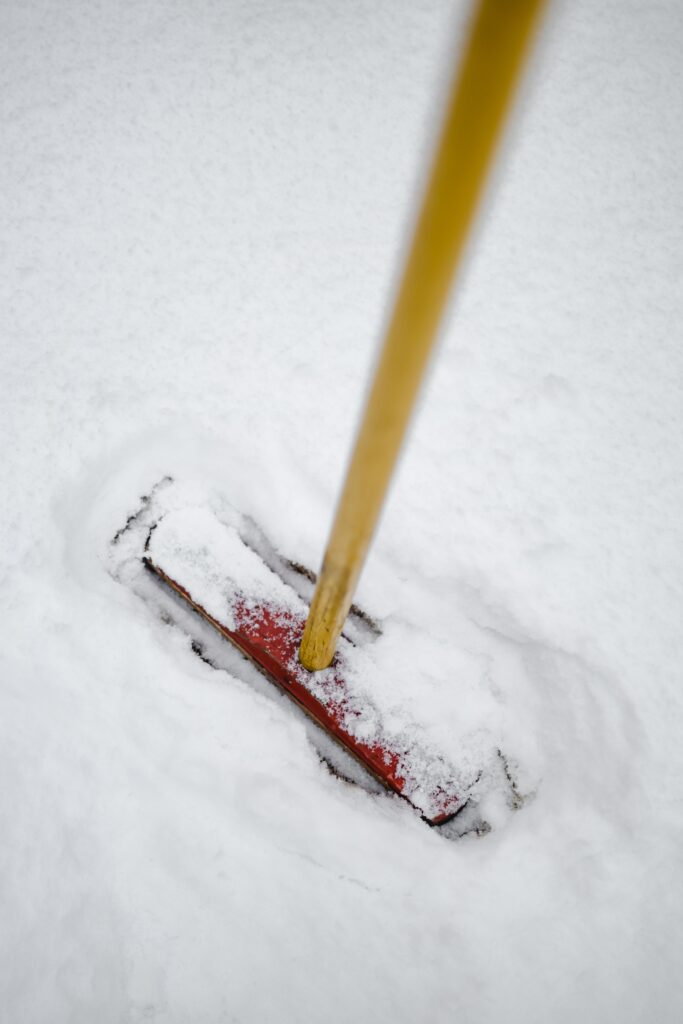
Shovel Damage and Chipping on a Concrete Driveway
Shovels do less harm than plows overall, though they are not entirely innocent, and the damage they cause is usually the result of impatience. Metal edged shovels and ice scrapers used to chop bonded ice will pop small pieces off the surface, particularly at joints and edges where the concrete is least supported. Those small divots collect water, and water sitting in a divot through a freeze cycle enlarges it, which is how a minor chip becomes a noticeable pit within a season or two. Steel spades work well for dirt and gravel and have no business on a driveway you care about. Poly and plastic blades cost less than the repair they prevent, and most of them include a thin metal wear strip that stays clear of the surface during normal pushing.
Ice chipping deserves its own warning because it is where the real damage happens. When snow melts during the day and refreezes overnight, it bonds to the concrete surface in a way that resists shoveling entirely, and the natural response is to attack it with something sharp. That impact energy has to go somewhere, and it goes into the surface paste, breaking the bond between the cement matrix and the aggregate just below. The result frequently does not show up until spring, when a thaw reveals a patch of rough exposed aggregate where a smooth finish used to be. Traction material and patience accomplish the same goal without the cost, and a modest amount of deicer applied at the correct temperature will release the bond in under an hour. Timing beats force in almost every winter maintenance situation.
Prevention comes down to a routine rather than a heroic effort after each storm. Clear early, before vehicles compact the snow, and clear again if the storm continues rather than waiting for it to finish. Keep the driveway free of standing water going into a cold night, since a wet surface that freezes solid is far harder to manage than a damp one. Store a bag of traction sand and a bag of an appropriate deicer where you can reach them without a trip to the store during a storm. Replace worn shovels rather than fighting with a cracked blade that no longer slides cleanly. A small equipment investment in October prevents most of the frustration that leads to surface damage in January.
Deicing Salt Damage That Follows Plowing and Shoveling
Deicing chemicals cause more concrete damage in Pittsburgh than plow blades ever will, and the mechanism is largely physical rather than chemical. Rock salt, which is sodium chloride, lowers the freezing point of water and stops working effectively somewhere around fifteen degrees Fahrenheit. Below that temperature it simply sits on the surface, absorbing moisture and keeping the concrete saturated while the temperature swings back and forth across the freezing point. Each of those cycles drives expansion and contraction inside the pore structure, and the cumulative result is scaling, which shows up as flaking and loss of the smooth top layer. Salt also draws moisture into the slab through osmotic action, meaning a salted driveway holds more water than an unsalted one under identical conditions. Reinforcing steel corrodes faster in the presence of chlorides as well, which is a concern for slabs with embedded reinforcement.
Product selection makes a meaningful difference for anyone unwilling to give up deicers entirely. Calcium chloride remains effective down to roughly twenty five degrees below zero and works considerably faster than rock salt, meaning less product accomplishes more. Magnesium chloride performs well to around ten below and is generally considered gentler on vegetation and pet paws. Both cost more per bag than rock salt and both should still be used sparingly, since no chloride based product is genuinely harmless to concrete. Ammonium sulfate and ammonium nitrate must never be used on concrete under any circumstances, because those compounds attack the cement paste directly and destroy the surface. Fertilizer marketed as an ice melter falls into that dangerous category, and homeowners should read labels rather than trusting the front of the bag.
Sand is the option almost everyone overlooks, and it deserves more use than it gets. Sand does not melt anything, but it provides immediate traction on ice and carries essentially zero risk to the concrete surface. On a new driveway, on decorative concrete, or on any slab already showing surface distress, sand is the correct choice for the entire season. Sweeping up the residue in spring is a minor chore compared with resurfacing a scaled driveway. Homeowners who prefer a chemical product should apply it before the storm rather than after, since preventing the bond is far easier than breaking it. Using less product more strategically protects the slab and costs less over the course of a winter.
Why You Need a Winter Plan for Your Concrete Driveway
A winter plan is nothing complicated, and it comes down to three decisions made before the first snowfall rather than during it. Decide how the driveway gets cleared and by whom, address any repairs while the weather still allows proper curing, and make sure the surface is protected against water absorption. Homeowners who handle those three items in the fall spend the rest of the season simply executing rather than reacting. Those who wait find themselves calling for service during the first storm, when everyone else is calling too. Concrete driveways in this climate can easily last thirty years or more with reasonable care, and the difference between a driveway that ages well and one that fails early is usually maintenance rather than the original pour.
Why a Concrete Driveway Needs Sealing Before Snow Season
Sealing is the most cost effective protection available for exterior concrete, and its value comes from keeping water out of the slab. Penetrating sealers based on silane or siloxane chemistry soak into the surface and line the pore structure with a water repellent layer, which reduces absorption without changing the appearance or the slip resistance of the finish. Film forming acrylic sealers sit on top instead, adding sheen and color depth that suits decorative and stamped work, though they require reapplication more often. A driveway that absorbs less water freezes with less internal pressure, and less internal pressure means dramatically less scaling over the years. Sealing also slows chloride penetration from deicing products, which protects both the surface and any reinforcement below it.
Timing matters because sealers need dry concrete and reasonable temperatures to cure correctly. Early fall is close to ideal in Pittsburgh, with mild days, low humidity, and enough runway before the first hard freeze. Applying sealer to damp concrete or in temperatures below the manufacturer minimum produces a poor bond and wasted product. Most penetrating sealers hold up for several years on residential driveways, while acrylics typically want attention every year or two depending on traffic and sun exposure. A simple water test tells you where you stand, since droplets that bead up indicate active sealer and droplets that soak in mean it is time. Getting this done before winter is the difference between protection and a good intention.
Sealing a new driveway follows slightly different rules, and skipping this step wastes money on a fresh slab. Fresh concrete needs time to cure and release moisture before a sealer traps anything inside, and most manufacturers specify a waiting period of about twenty eight days. Applying a penetrating sealer at that point is a strong move going into a first winter, especially when combined with sand instead of deicers. Homeowners with decorative or stamped surfaces should confirm the product is compatible with the finish and any integral color. A contractor who poured the driveway is the right person to ask, since they know the mix and the finish that went down. Want to protect your driveway before winter? Click here for our concrete sealing service.
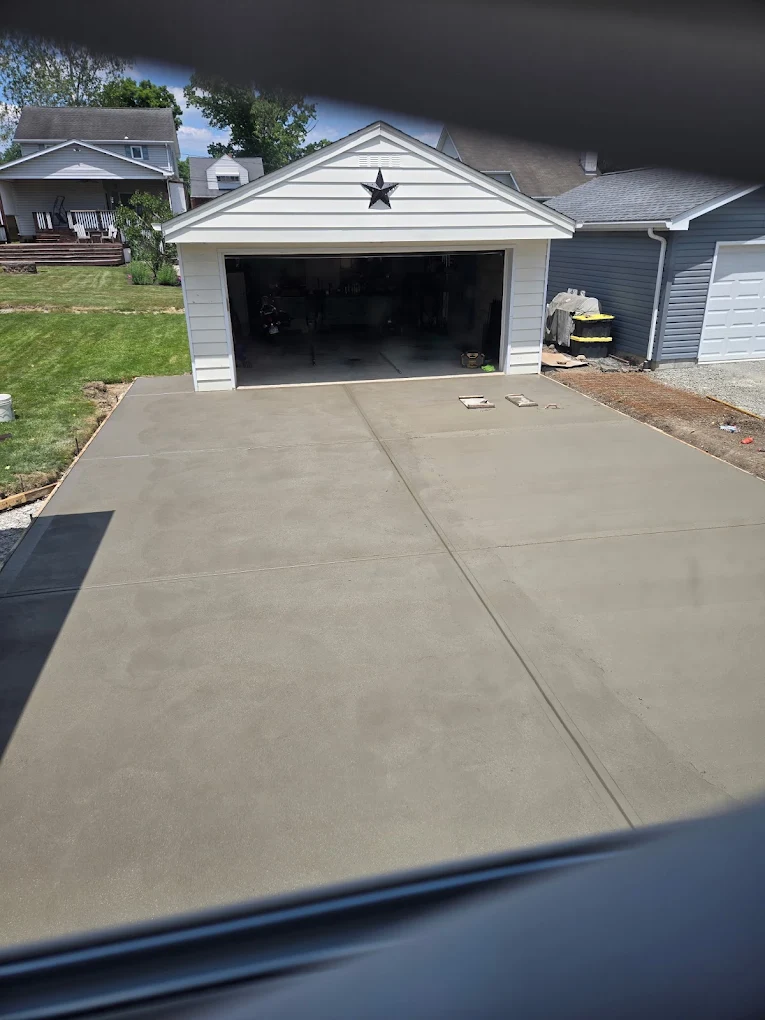
Why Concrete Driveway Repairs Should Happen Before Winter
Small defects become large ones over a Pittsburgh winter, and the reason is simple physics. Any crack, open joint, or spalled edge collects water, and water that freezes inside a crack expands and widens it every single time the temperature drops. A hairline crack in October can be a quarter inch crack by March, and a quarter inch crack lets enough water reach the subbase to start causing settlement. Repairing while the weather is still mild allows materials to cure properly, which is not possible once daytime temperatures stay below the minimums on the product label. Fall repair is preventive rather than reactive, and it costs a fraction of what a spring replacement runs.
Joint maintenance belongs at the top of the fall list because joints are the designed weak points in any slab. Control joints exist to give concrete a place to crack in a straight line as it shrinks, and expansion joints separate the driveway from the garage, the sidewalk, and other fixed elements. Both need flexible sealant that keeps water and debris out while allowing the panels to move with temperature. Sealant that has cracked, shrunk, or pulled away from one side no longer does its job. Clearing debris from the joint and installing fresh sealant is a modest expense that pays for itself many times over. Well sealed joints also sit flush, which matters a great deal if a plow will be running down the driveway.
Settlement and heaved panels need evaluation rather than patching, since a slab that has moved once will move again. Concrete leveling can raise a settled panel back into position when the underlying issue is a void or compacted subbase. Sections that have cracked into multiple pieces, lost significant thickness, or lifted from frost movement usually call for replacement of that panel rather than repair. Getting an honest assessment in the fall gives you time to schedule the work rather than living with a hazard all winter. A contractor who walks the driveway can tell you which sections have life left and which do not. Planning a new driveway or a full replacement? Click here for our driveway paving service.
Why Choose RMK Concrete Services for Your Concrete Driveway
RMK Concrete Services is a family owned and operated company working out of 512 Carolyn Ave in Pittsburgh, and we serve homeowners and businesses throughout the city and a sixty mile radius around it. We are licensed and insured, and we run every job with integrity at the core, which means honest assessments even when the honest answer is that your driveway does not need the work you called about. Free in person estimates are standard on all projects, because looking at a slab in person is the only way to tell a surface issue from a subbase problem. Discounts are available for veterans and seniors on every service we offer. Our goal on each project is a five star result, and our reputation across Pittsburgh reflects that commitment.
Winter work is a core part of what we do rather than a side offering. Our snowplowing service covers residential and commercial properties, and we approach concrete surfaces with the care they require rather than treating every driveway like a parking lot. We handle sealing, repair, joint maintenance, and full replacement as well, which means the same company that clears your driveway understands how it was built and what it can tolerate. That continuity matters, since a contractor familiar with your property in November is a contractor who already knows where the joints run and where the edges sit. We stake driveways, adjust equipment for concrete, and communicate about problem areas before they become damage.
Getting on the schedule early is the practical advice for anyone reading this in the fall. Sealing and repair work fills up quickly once the weather turns, and snow removal contracts are typically set before the first storm rather than during it. Call us at (412) 902-5114 or send a message to info@rmkconcrete.com and we will come out, walk the property, and give you a straight answer about what the driveway needs. There is no obligation attached to an estimate and no pressure to buy services you do not need. A short conversation now saves a great deal of trouble in February.