
Worn concrete does not always mean it is time for a full tear out. Many surfaces that look tired or stained still have a solid structure underneath, which makes them strong candidates for resurfacing rather than replacement. Resurfacing applies a thin overlay of new concrete material over your existing slab, restoring the look and feel of the surface at a fraction of the cost of pouring a brand new one. The key is knowing the difference between damage that sits on the surface and damage that runs deep into the slab and its base. Pittsburgh weather makes this decision especially important, since our freeze and thaw cycles stress concrete year after year. A surface that is cracking lightly and fading can often be saved with the right overlay system. A slab that is sinking, heaving, or crumbling all the way through usually needs to come out. This guide walks through the signs that point toward resurfacing, the situations that call for replacement, and how to make the right call for your property. By the end, you will have a clear sense of which path protects your investment and your budget.
Signs You Should Resurface Concrete Instead of Replacing It
Reading the condition of your concrete correctly saves you both money and frustration. Surface problems like discoloration, light scaling, shallow cracks, and a worn finish are exactly what resurfacing is built to fix. These issues affect the top layer of the slab without compromising the load bearing structure beneath it. When the base is still level and supportive, an overlay bonds tightly and gives you years of fresh, durable service. Spotting these signs early matters, because small surface problems grow into bigger structural ones when water gets in and freezes. The faster you act, the more likely resurfacing remains an option. Below are the most common indicators that your slab is a strong fit for resurfacing instead of a complete replacement.
Surface Damage That Makes Resurfacing the Smarter Choice Over Replacing It
Spalling and scaling are two of the most common reasons homeowners think their concrete is finished, when in reality the slab is often perfectly sound underneath. Spalling shows up as flaking, pitting, or chips across the top surface, usually caused by water absorption, deicing salts, or a poor original finish. Scaling looks similar and tends to peel the top layer away in thin sheets. Neither of these problems means the slab has lost its strength; they are cosmetic and surface deep in most cases. A quality overlay covers these defects completely and gives you a smooth, uniform surface again. The repair also seals out the moisture that caused the damage in the first place. When the issue lives in the top quarter inch of concrete, resurfacing is almost always the better economic decision.
Discoloration, stubborn stains, and a dull, weathered finish are another set of signs that point straight toward resurfacing. Years of sun, oil drips, rust, and foot traffic leave concrete looking patchy and lifeless, even when the slab itself is in great shape. Pressure washing and sealing help to a point, but deeply set stains often refuse to lift. Resurfacing solves this by laying a fresh layer over the old one, giving you a clean slate to work with. You can keep a simple gray finish or upgrade to a decorative look that adds real value to the property. The structure stays exactly where it is, so you avoid the cost and mess of demolition. For aesthetics alone, an overlay delivers a dramatic improvement at a reasonable price. Need to refresh the look of a stained slab? Click here for our decorative concrete services.
Hairline cracks and other shallow surface cracking also fall squarely into resurfacing territory. These thin cracks form from normal shrinkage as concrete cures and from the constant expansion and contraction of seasonal temperature swings. As long as the cracks are narrow and the slab on each side sits at the same level, they are surface problems rather than structural failures. A contractor cleans and fills these cracks first, then applies the overlay to lock everything in place. The finished surface hides the old cracking and resists new cracks better than the worn original. This approach works beautifully on driveways, patios, walkways, and garage floors that have aged but never settled. Catching cracks at this stage keeps water out and stops the freeze and thaw damage that would otherwise force a full replacement later.

How Pittsburgh Weather Points Toward Resurfacing Concrete Instead of Replacing It
The freeze and thaw cycle is the single biggest threat to concrete in the Pittsburgh region. Water seeps into the tiny pores and cracks on a concrete surface, then expands as it freezes, prying the material apart from the inside. Over many winters this process chips away at the top layer and creates the spalling and scaling so common on local driveways and steps. The encouraging news is that this kind of weather damage usually stays near the surface. The slab underneath, protected by the layer above it, often remains strong and intact. That is precisely the situation where resurfacing shines, since the overlay restores the protective top layer and seals out future moisture. Acting before the damage reaches the base is the whole game in our climate.
Deicing salts make the freeze and thaw problem worse, and they are a fact of life on Pittsburgh walkways and driveways every winter. Salt lowers the freezing point of water and pushes more moisture into the concrete, accelerating surface deterioration season after season. Many homeowners see the resulting flaking and assume the concrete has failed completely. In most cases, the salt has only attacked the top surface while leaving the structural slab in good condition. A new overlay paired with a quality sealer creates a far more salt resistant surface than the original pour. This combination buys you many more winters of reliable performance. Want long term protection from winter salt damage? Click here for our concrete sealing services.
Timing your resurfacing project around the Pittsburgh seasons gives you the best possible result. Overlays bond and cure most reliably in warm, dry conditions, which makes late spring through early fall the prime window for the work. Summer is an excellent time to resurface, since stable temperatures and low moisture let the new material set up strong and even. Scheduling the project now means your refreshed surface has months to fully cure and harden before the next freeze arrives. A properly cured overlay heading into winter resists the salt and ice far better than damaged original concrete would. Waiting until problems spread deeper only narrows your options and raises your costs. Getting ahead of the cold season is one of the smartest moves a Pittsburgh homeowner can make.
Cost and Time Reasons to Resurface Concrete Instead of Replacing It
Resurfacing typically costs a fraction of what full replacement runs, and that difference is the main reason it appeals to so many homeowners. Replacement requires demolition, hauling away the old concrete, preparing the base again, and pouring an entirely new slab with all the labor and materials that involves. Resurfacing skips most of that work by building on the foundation you already have. You pay for surface preparation and the overlay system rather than a complete rebuild from the ground up. For surfaces that are structurally sound, this is a major saving with very little compromise in the final look. The math strongly favors resurfacing any time the base is still solid. That cost advantage is why so many driveways, patios, and floors get a second life instead of a dumpster.
The time savings are just as significant as the money you keep in your pocket. A full replacement can tie up your driveway or patio for many days, between demolition, curing time, and the wait before you can use the surface again. Resurfacing moves much faster, since the existing slab stays in place and only the overlay needs to set. Many projects finish in a day or two of active work, with a shorter cure window before normal use. That means less disruption to your daily routine and quicker access to the space you rely on. For busy households, the reduced downtime is a real and practical benefit. A fast project that delivers a like new surface is hard to beat.
Resurfacing also creates far less waste and mess than tearing out a slab. Demolition generates heavy debris, dust, and noise, along with the trucks and equipment needed to remove it all. Overlays avoid most of that by working with what is already there, which keeps the job site cleaner and calmer. This lighter footprint is easier on your landscaping, your neighbors, and your nerves. The reduced labor also means fewer crew hours, which feeds back into the lower price. When you add up the savings in money, time, and hassle, resurfacing is the clear winner for any surface that qualifies. The trick is confirming the slab is a good candidate before you commit, which is where a professional inspection earns its value.
How Concrete Resurfacing Compares to Full Concrete Replacement
Resurfacing is not the right answer for every worn slab, and an honest contractor will tell you when replacement is the better path. The deciding factor is whether the damage is cosmetic or structural. Overlays need a stable, solid base to bond to, so any problem that compromises the slab itself or the ground beneath it rules out resurfacing. Deep cracks, settling, heaving, and a failing subgrade all signal that the structure has lost its integrity. Putting a new surface over a failing slab only hides the problem temporarily before it returns worse than before. Understanding where resurfacing ends and replacement begins protects you from paying twice. The sections below break down the situations that call for a full rebuild rather than an overlay.
Structural Problems That Call for Replacement Instead of Resurfacing Concrete
Deep, wide, and active cracks are the clearest sign that a slab needs replacement rather than resurfacing. When cracks run through the full thickness of the concrete and the two sides sit at different heights, the slab has lost its structural strength. These cracks often come from a failing base, ground movement, or years of heavy loading that the slab was never built to handle. An overlay cannot restore strength that the underlying concrete no longer has, so the cracks would simply telegraph back through the new surface. Cracks wider than a quarter inch that keep growing tell the same story of structural failure. In these cases, removing the old slab and pouring a properly built new one is the only lasting fix. A good contractor measures and inspects the cracks closely before recommending either path. Dealing with serious cracking correctly the first time saves you from repeated repairs down the road.
Settling and sinking concrete point to problems in the ground beneath the slab, which resurfacing cannot address. When the soil under the concrete erodes, compacts, or was poorly prepared, sections of the slab drop and create uneven, sometimes dangerous surfaces. An overlay placed on a sinking slab will sink right along with it, because the real problem lives in the base, not the top. Sometimes the fix involves lifting and stabilizing the slab, and sometimes the only durable answer is full replacement with a properly compacted base. The right choice depends on how far the settling has progressed and what caused it. A professional evaluation of the subgrade is essential before deciding. Trying to mask settlement with an overlay wastes money and leaves the hazard in place. Dealing with a damaged or failing slab? Click here for our concrete repair services.
Heaving and severe frost damage are two more conditions that usually demand replacement. Heaving happens when freezing soil or tree roots push sections of concrete upward, breaking the slab and creating trip hazards. Severe frost damage goes beyond surface spalling and weakens the concrete throughout its thickness, leaving it crumbly and unsound. Once the body of the slab has deteriorated this deeply, no overlay can restore the strength it needs to perform. The damaged concrete must be removed and replaced with a new pour designed to resist the forces that caused the failure. A contractor who understands Pittsburgh soil and frost behavior can identify these problems quickly. Recognizing them early helps you plan and budget for the proper repair rather than a temporary patch.
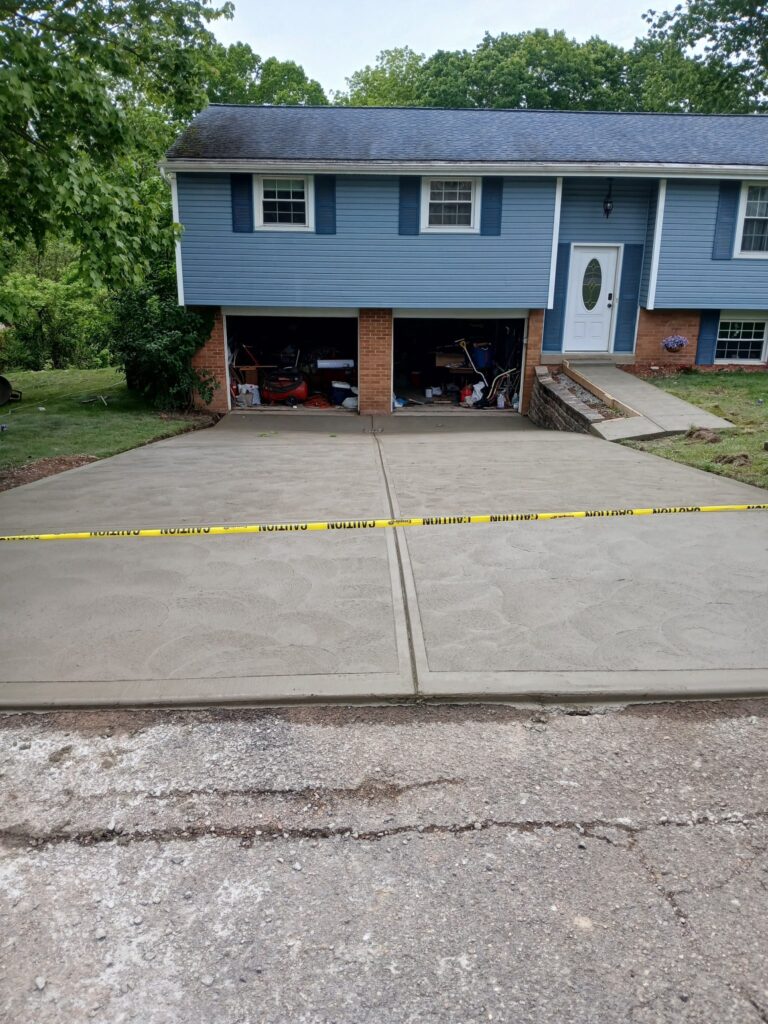
When the Concrete Base Is Too Far Gone to Resurface Instead of Replace
A sound base is the entire foundation of any successful resurfacing project. Overlays are only as strong as the concrete they bond to, so a crumbling or delaminating slab simply cannot support a new surface. If you can chip away pieces of the existing concrete by hand or see large hollow spots where the surface has separated from the body, the base has failed. Bonding fresh material to weak concrete leads to early failure of the overlay and wasted money. In these situations, replacement is not just the better option; it is the only option that lasts. A contractor tests the soundness of the slab before committing to a resurfacing plan. This step protects you from investing in an overlay that was never going to hold.
Extensive damage across the whole slab also tips the scale toward replacement. Resurfacing makes sense when the problems are surface deep and reasonably contained. Once the majority of a slab is spalling, cracking, and breaking down, the cost and effort of preparing it for an overlay starts to approach the cost of replacement. At that point, a new slab gives you a longer service life and a cleaner result for a similar investment. Patching a slab that is failing in many places rarely delivers good value. A straightforward inspection reveals how widespread the damage really is. When the failure is everywhere, starting fresh is the smarter financial decision.
Drainage and grade problems can also disqualify a slab from resurfacing. If water pools on the surface or runs toward your home because the slab was poured at the wrong slope, an overlay will not correct the underlying grade. Resurfacing follows the existing contour, so a bad slope stays a bad slope after the overlay is applied. Fixing drainage usually requires removing the slab and repouring it with proper pitch to move water away from structures. Ignoring these issues invites foundation and basement moisture problems over time. A professional looks at how water moves across your concrete before recommending a path. Solving drainage correctly often means replacement is the responsible choice.
Choosing Between Resurfacing and Replacing Concrete for Your Specific Surface
Driveways, patios, walkways, and garage floors each respond differently to wear, so the resurface or replace decision shifts with the application. A garage floor with surface staining and light pitting is often an ideal resurfacing candidate, since it carries weight but rarely suffers deep structural failure. A driveway exposed to heavy vehicles and decades of freeze and thaw might need a closer look at the base before any overlay goes down. Patios and walkways tend to be excellent resurfacing projects, because they carry lighter loads and the damage is usually cosmetic. Matching the right solution to the right surface protects your budget and your results. A contractor familiar with each application knows what to check for. Want a durable, refreshed garage floor? Click here for our garage floor services.
The age and history of the concrete also shape the decision in important ways. A slab that was well built and is simply showing surface wear is a strong resurfacing candidate even after many years. A slab that has been patched repeatedly, has a history of movement, or was poured over a poorly prepared base may be better off replaced. Knowing how the concrete has performed over time gives a contractor valuable clues about what lies beneath the surface. This history helps separate slabs that are tired but sound from slabs that are quietly failing. An honest assessment weighs the full picture rather than just the current appearance. The goal is a solution that lasts, not just one that looks good for a season.
Your long term plans for the property are worth factoring into the decision as well. If you intend to stay for years and want maximum lifespan, replacement of a marginal slab may make sense despite the higher upfront cost. If the slab is sound and you simply want a fresh, attractive surface, resurfacing delivers excellent value and a fast turnaround. Decorative overlay options also let you upgrade the look in ways that raise curb appeal and property value. A clear conversation about your goals helps a contractor recommend the right approach for your situation. There is no single answer that fits every home, which is exactly why a professional inspection matters. The best decision balances condition, cost, and the future you have in mind for the space.
Why You Need a Professional to Decide When to Resurface Concrete Instead of Replacing It
The line between a slab that can be saved and one that needs replacement is not always obvious to the untrained eye. Surface damage and structural damage can look surprisingly similar, and guessing wrong is expensive in either direction. A professional inspection reads the cracks, tests the base, checks the drainage, and considers the local climate before recommending a path. RMK Concrete Services brings that trained perspective to every Pittsburgh property we visit. Our free in person estimates give you a clear, honest assessment with no pressure attached. Getting an expert opinion early is the surest way to protect your concrete and your budget.
A Professional Inspection Tells You When to Resurface Concrete Instead of Replacing It
A trained contractor evaluates far more than the surface you can see from the curb. We sound the slab for hollow spots, measure crack width and depth, and check whether sections sit level with one another. We also look at how water drains across the surface and what the soil conditions suggest about the base. This thorough approach reveals whether your damage is cosmetic or structural, which is the heart of the resurface or replace decision. Skipping this step and guessing often leads to overlays that fail or replacements that were never needed. An accurate diagnosis up front is the foundation of a lasting result.
Our estimates spell out exactly what we find and why we recommend the path we do. You get a clear explanation of the slab condition, the options available, and the cost of each so you can make an informed choice. We never push a more expensive solution when a simpler one will serve you better. Family owned and operated, we treat your property and your money with the same care we would give our own. That transparency builds the trust our reputation is built on. An honest estimate is worth far more than a low number with surprises attached.
Reaching out early gives you the widest range of options and the lowest likely cost. Concrete problems do not improve on their own; surface damage spreads and water finds its way deeper with every freeze. The sooner we inspect your slab, the more likely resurfacing remains on the table as an affordable fix. A quick call today can save you from a far larger expense down the road. Our free estimates make it easy to find out where your concrete stands. There is no risk in getting the facts before you decide.
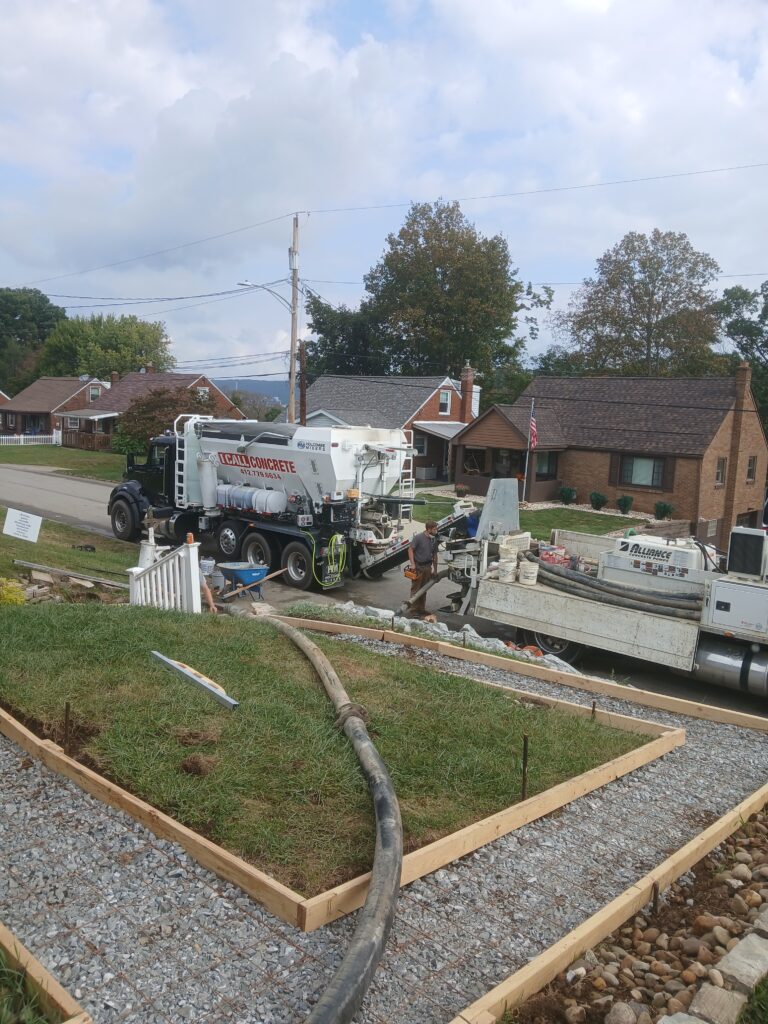
The Right Resurfacing or Replacement Work Protects Your Pittsburgh Property
Quality preparation is what separates a resurfacing job that lasts from one that peels within a year. We clean, profile, and repair the existing surface properly so the overlay bonds tightly and stays put. When replacement is the right call, we prepare and compact the base correctly so the new slab resists settling and heaving. These details are invisible in the finished product, yet they decide how long your concrete performs. Cutting corners on preparation is the most common reason concrete work fails early. Our crews do the unglamorous groundwork that makes the visible result hold up.
Sealing and finishing protect your investment long after the work is done. A properly sealed surface resists the salt, moisture, and freeze and thaw cycles that define Pittsburgh winters. We help you choose finishes and protective coatings suited to how you actually use the space. This attention to long term durability means your refreshed concrete keeps looking good and performing well for years. Protection applied at the right moment extends the life of the entire surface. Caring for the finish is the final step in a job done right.
Standing behind our work matters as much as the work itself. We are licensed and insured, and we offer discounts for veterans and seniors as a thank you for their service and loyalty. Serving Pittsburgh and a sixty mile radius, we treat every project as a chance to earn a customer for life. Our commitment to a five star experience shows up in how we communicate, how we work, and how we follow through. You can reach us anytime at (412) 902-5114 or info@rmkconcrete.com. A contractor who values its reputation gives you concrete you can count on.
Why Choose RMK Concrete Services to Resurface or Replace Your Concrete
RMK Concrete Services is a family owned and operated company that puts integrity at the core of everything we do. We built our name in Pittsburgh on honest assessments, quality workmanship, and treating customers the way we would want to be treated. When we tell you a slab can be resurfaced, it is because the slab truly qualifies, not because it is the easier sale. That ethos guides every estimate and every project we take on. Our neighbors trust us because we earn that trust one job at a time. Choosing a contractor who values honesty is the first step toward a result you can rely on.
Experience across the full range of concrete work means we see the whole picture, not just one product. From repairs and sealing to decorative overlays and complete replacement, we match the solution to your actual needs. This breadth lets us recommend the path that serves you best rather than the only service we happen to offer. Our crews bring skill and care to surfaces of every kind across the region. That versatility is a real advantage when your concrete needs an honest evaluation. You get advice grounded in what is right for your property.
Getting started is simple and carries no obligation on your part. Call us at (412) 902-5114 or email info@rmkconcrete.com to schedule your free in person estimate. We will inspect your concrete, explain your options clearly, and help you decide between resurfacing and replacement with confidence. Licensed, insured, and committed to five star service, we make the whole process straightforward from the first call to the finished surface. Veterans and seniors receive a discount as our way of saying thank you. Reach out today and let us help you make the smart choice for your concrete.